第28章無脊椎動物
Phylum Rotifera輪形動物門
The rotifers ("wheel-bearer") belong to a group of microscopic (about 100 µm to 2 mm) mostly aquatic animals that get their name from the corona—a pair of ciliated feeding structures that appear to rotate when viewed under the light microscope (Figure 28.17). Although their taxonomic status is currently in flux, one treatment places the rotifers in three classes: Bdelloidea, Monogononta, and Seisonidea. In addition, the parasitic “spiny headed worms” currently in phylum Acanthocephala, appear to be modified rotifers and will probably be placed into the group in the near future. Undoubtedly the rotifers will continue to be revised as more phylogenetic evidence becomes available.
英語のヒント
ワムシ(「車輪をもつもの」の意)は、大部分が水生の微小な動物の群で、大きさは約100 µm〜2 mmである。名前は、光学顕微鏡で見ると回転しているように見える、一対の繊毛のある摂食構造、輪器に由来する(図28.17)。分類上の位置づけは現在変動しているが、一つの扱いでは、ヒルガタワムシ綱、単生殖巣綱、セイソン綱の三つに分ける。さらに、現在は鉤頭動物門に置かれる寄生性の「棘のある頭の虫」も、変形したワムシであると考えられ、近い将来この群に含められる可能性が高い。系統を示す証拠が増えるにつれ、ワムシの分類は今後も改訂され続けるだろう。
The pseudocoelomate body of a rotifer is remarkably complex for such a small animal (roughly the size of a Paramecium) and is divided into three sections: a head (which contains the corona), a trunk (which contains most of the internal organs), and the foot. A cuticle, rigid in some species and flexible in others, covers the body surface. They have both skeletal muscle associated with locomotion and visceral muscles associated with the gut, both composed of single cells. Rotifers are typically free-swimming or planktonic (drifting) organisms, but the toes or extensions of the foot can secrete a sticky material to help them adhere to surfaces. The head contains a number of eyespots and a bilobed “brain,” with nerves extending into the body.
英語のヒント
ワムシの偽体腔をもつ体は、これほど小さい動物(およそゾウリムシほどの大きさ)としては驚くほど複雑で、頭部(輪器を含む)、胴部(内臓の大部分を含む)、足部の三つに分かれる。体表はクチクラで覆われ、種によって硬い場合と柔軟な場合がある。移動に関わる骨格筋と、腸に関わる内臓筋の両方をもち、どちらも単一の細胞で構成される。ワムシは通常、自由に泳ぐか、プランクトンとして漂う生物である。ただし、足の指状部または突起から粘着物質を分泌し、表面に付着することもできる。頭部には複数の眼点と二葉からなる「脳」があり、神経が体内へ伸びている。
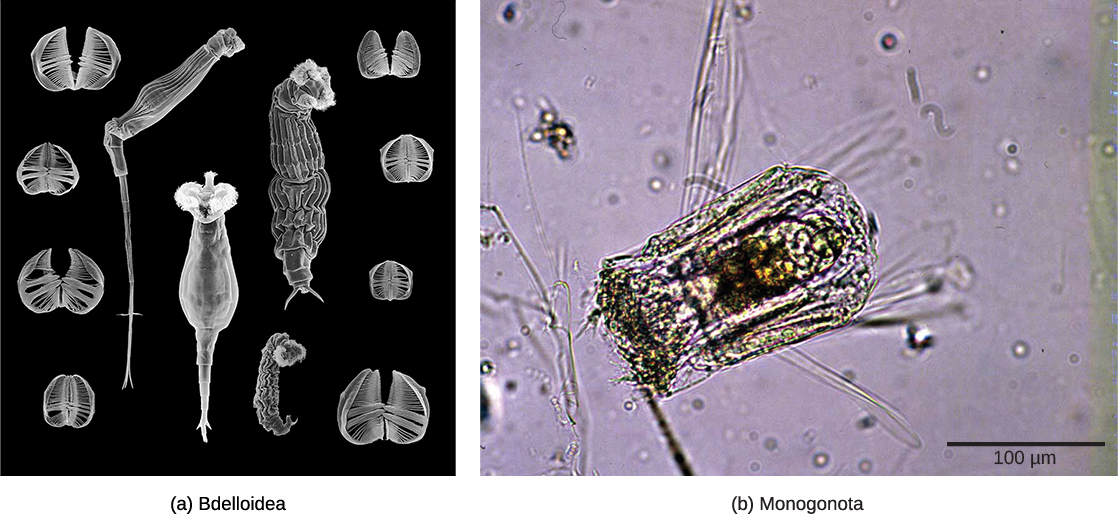
OpenStax, Rice University; Biology 2e. (credit a: modification of work by Diego Fontaneto; credit b: modification of work by U.S. EPA; scale-bar data from Cory Zanker) · CC BY 4.0 · Source出典
Figure 28.17図 28.17
Rotifers. Shown are examples from two of the three classes of rotifer. (a) Species from the class Bdelloidea are characterized by a large corona. The whole animals in the center of this scanning electron micrograph are shown surrounded by several sets of jaws from the mastax of rotifers. (b) Polyarthra, from the largest rotifer class Monogononta, has a smaller corona than bdelloid rotifers, and a single gonad, which give the class its name. (credit a: modification of work by Diego Fontaneto; credit b: modification of work by U.S. EPA; scale-bar data from Cory Zanker)
ワムシ。ワムシの三つの綱のうち、二つの例を示す。(a)ヒルガタワムシ綱は大きな輪器を特徴とする。走査型電子顕微鏡写真の中央に全身像があり、その周囲には、ワムシの咀嚼器にある顎がいくつか示されている。(b)最大の綱である単生殖巣綱の Polyarthra は、ヒルガタワムシより小さい輪器をもち、生殖腺が一つであることが綱名の由来となっている。(a:Diego Fontanetoの作品を改変。b:米国EPAの作品を改変。スケールバーのデータ:Cory Zanker)
Rotifers are commonly found in freshwater and some saltwater environments throughout the world. As filter feeders, they will eat dead material, algae, and other microscopic living organisms, and are therefore very important components of aquatic food webs. A rotifer's food is directed toward the mouth by the current created from the movement of the coronal cilia. The food particles enter the mouth and travel first to the mastax—a muscular pharynx with toothy jaw-like structures. Examples of the jaws of various rotifers are seen in Figure 28.17a. Masticated food passes near digestive and salivary glands, into the stomach, and then to the intestines. Digestive and excretory wastes are collected in a cloacal bladder before being released out the anus.
英語のヒント
ワムシは世界中の淡水環境や、一部の塩水環境で普通に見られる。ろ過摂食者として、死んだ物質、藻類、ほかの微小生物を食べるため、水界の食物網の非常に重要な構成要素である。輪器の繊毛運動がつくる流れによって、食物が口へ向かう。食物粒子は口に入り、まず、歯のある顎状構造を備えた筋肉質の咽頭、咀嚼器へ進む。さまざまなワムシの顎の例を図28.17aに示す。かみ砕かれた食物は消化腺と唾液腺の近くを通り、胃、続いて腸へ進む。消化の残渣と排泄物は総排泄腔の膀胱に集められた後、肛門から出される。
About 2,200 species of rotifers have been identified. Figure 28.18 shows the anatomy of a rotifer belonging to class Bdelloidea. Some rotifers are dioecious organisms and exhibit sexual dimorphism (males and females have different forms). In many dioecious species, males are short-lived and smaller with no digestive system and a single testis. Many rotifer species exhibit haplodiploidy, a method of sex determination in which a fertilized egg develops into a female and an unfertilized egg develops into a male. However, reproduction in the bdelloid rotifers is exclusively parthenogenetic and appears to have been so for millions of years: Thus, all bdelloid rotifers and their progeny are female! The bdelloids may compensate for this genetic insularity by borrowing genes from the DNA of other species. Up to 10% of a bdelloid genome comprises genes imported from related species. Some rotifer eggs are capable of extended dormancy for protection during harsh environmental conditions.
英語のヒント
ワムシは約2,200種が同定されている。図28.18に、ヒルガタワムシ綱のワムシの体の構造を示す。一部のワムシは雌雄異体で、雌雄の形が異なる性的二形を示す。雌雄異体の多くの種では、雄は短命で小さく、消化系をもたず、精巣が一つある。多くの種は半倍数性を示す。これは、受精卵から雌が、未受精卵から雄が生じる性決定方式である。しかし、ヒルガタワムシの生殖は専ら単為生殖で、何百万年もそうであったと考えられる。したがって、すべてのヒルガタワムシとその子孫は雌である。この遺伝的な孤立を、ほかの種のDNAから遺伝子を借りることで補っている可能性がある。ヒルガタワムシのゲノムの最大10%は、近縁種から取り込まれた遺伝子で構成される。一部のワムシの卵は、厳しい環境条件から身を守るため、長期間の休眠が可能である。
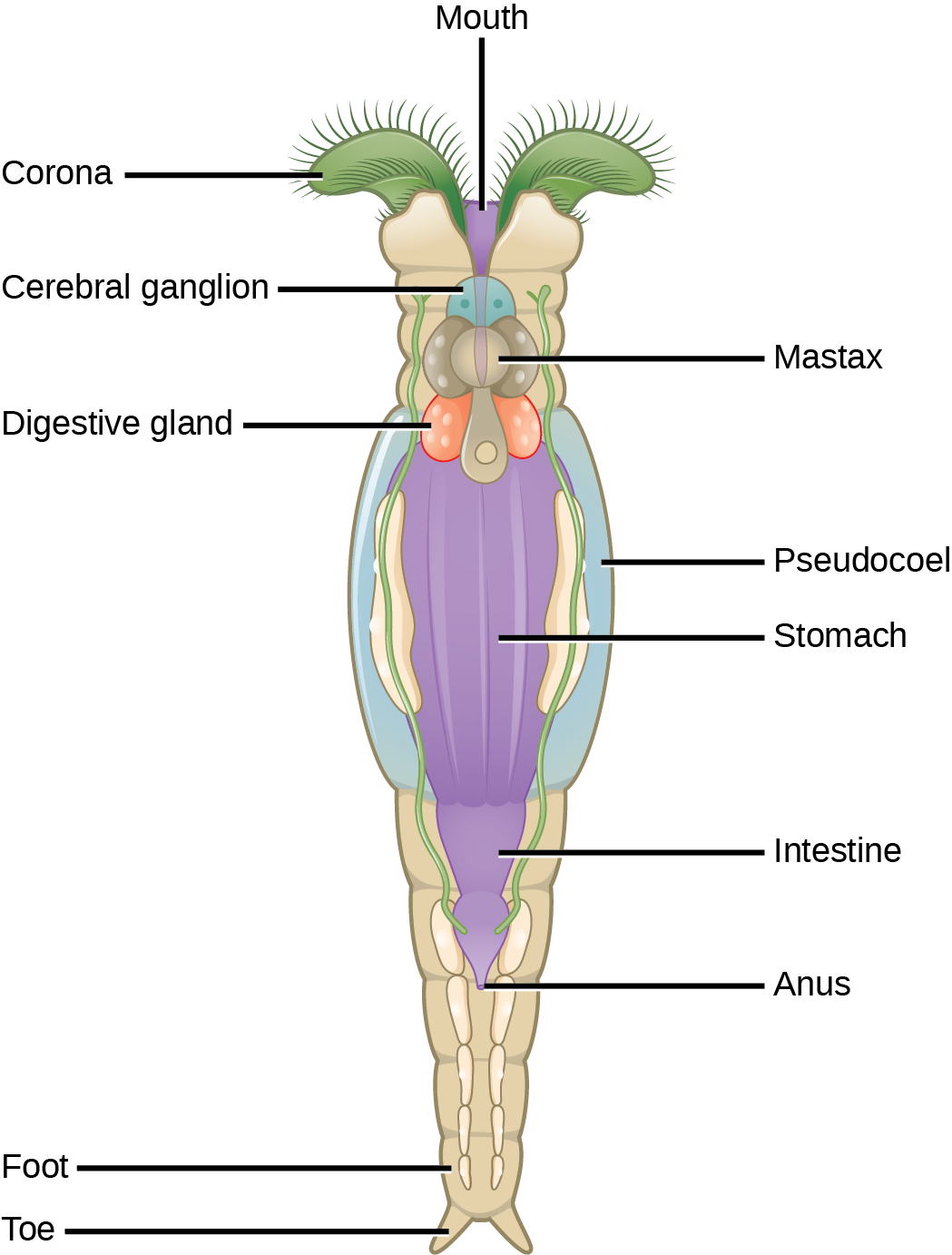


Figure 28.18図 28.18
A bdelloid rotifer. This illustration shows the anatomy of a bdelloid rotifer.
ヒルガタワムシ。この図はヒルガタワムシの体の構造を示す。
Phylum Nemertea紐形動物門
The Nemertea are colloquially known as ribbon worms or proboscis worms. Most species of phylum Nemertea are marine and predominantly benthic (bottom dwellers), with an estimated 900 known species. However, nemerteans have been recorded in freshwater and very damp terrestrial habitats as well. Most nemerteans are carnivores, feeding on worms, clams, and crustaceans. Some species are scavengers, and some, like Malacobdella grossa, have also evolved commensal relationships with mollusks. Economically important species have at times devastated commercial fishing of clams and crabs. Nemerteans have almost no predators and two species are sold as fish bait.
英語のヒント
紐形動物は一般に、リボン状の虫、または吻をもつ虫として知られる。紐形動物門の大部分は海産で、主に底生(海底に暮らす)であり、約900種が知られている。ただし、淡水や非常に湿った陸上の生息地でも記録されている。多くは肉食性で、虫類、二枚貝、甲殻類を食べる。一部は腐肉食性であり、Malacobdella grossa のように軟体動物と片利共生関係を進化させた種もある。経済上重要な種は、二枚貝やカニの商業漁業に壊滅的な被害を与えたこともある。紐形動物にはほとんど捕食者がなく、2種は釣り餌として販売されている。