第36章感覚系
Introductionはじめに
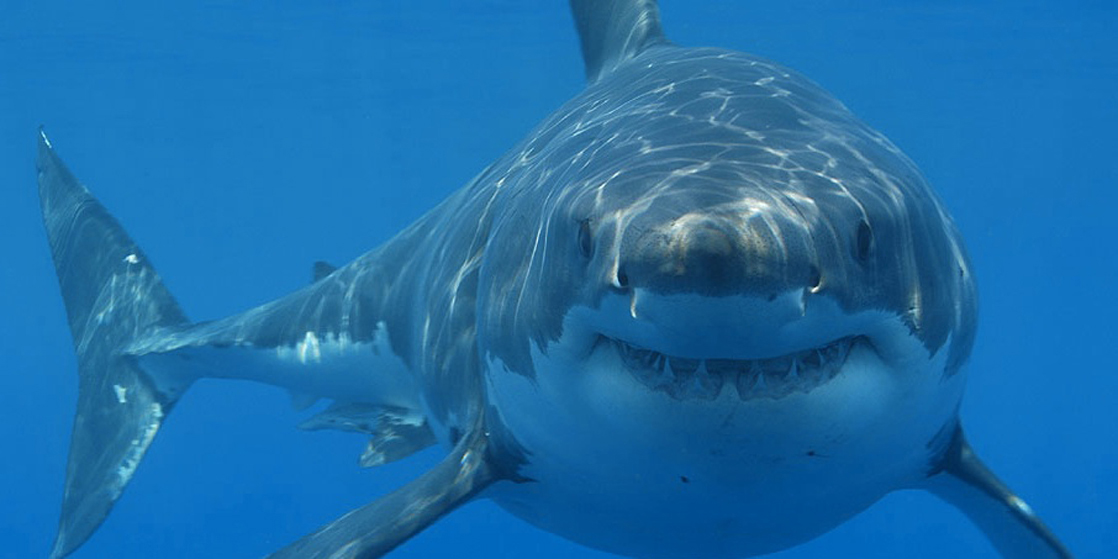
OpenStax, Rice University; Biology 2e. (credit: modification of work by Hermanus Backpackers Hostel, South Africa) · CC BY 4.0 · Source出典

Figure 36.1図 36.1
This shark uses its senses of sight, vibration (lateral-line system), and smell to hunt, but it also relies on its ability to sense the electric fields of prey, a sense not present in most land animals. (credit: modification of work by Hermanus Backpackers Hostel, South Africa)
このサメは、視覚、振動の感覚(側線系)、嗅覚を使って狩りをする。それに加え、獲物の電場を感じ取る能力にも頼っている。陸上動物の大部分にはない感覚である。(出典:南アフリカのHermanus Backpackers Hostelの作品を改変)
In more advanced animals, the senses are constantly at work, making the animal aware of stimuli—such as light, or sound, or the presence of a chemical substance in the external environment—and monitoring information about the organism’s internal environment. All bilaterally symmetric animals have a sensory system, and the development of any species’ sensory system has been driven by natural selection; thus, sensory systems differ among species according to the demands of their environments. The shark, unlike most fish predators, is electrosensitive—that is, sensitive to electrical fields produced by other animals in its environment. While it is helpful to this underwater predator, electrosensitivity is a sense not found in most land animals.
英語のヒント
より高度な動物では、感覚が絶えず働いている。外界の光、音、化学物質の存在などの刺激を知らせるとともに、体内環境の情報を監視している。左右相称の動物はすべて感覚系をもつ。それぞれの種の感覚系の発達は自然選択によって方向づけられてきたため、種ごとの環境の要求に応じて感覚系は異なる。サメは大部分の捕食性の魚と異なり、電気に感受性をもつ。すなわち、周囲の動物が生み出す電場を感じ取る。水中で暮らすこの捕食者には有用だが、陸上動物の大部分にはみられない感覚である。