第32章植物の生殖
Introductionはじめに
OpenStax, Rice University; Biology 2e. (credit a: modification of work by John Severns; credit b: modification of work by Charles J. Sharp; credit c: modification of work by "Galawebdesign"/Flickr) · CC BY 4.0 · Source出典

Figure 32.1図 32.1
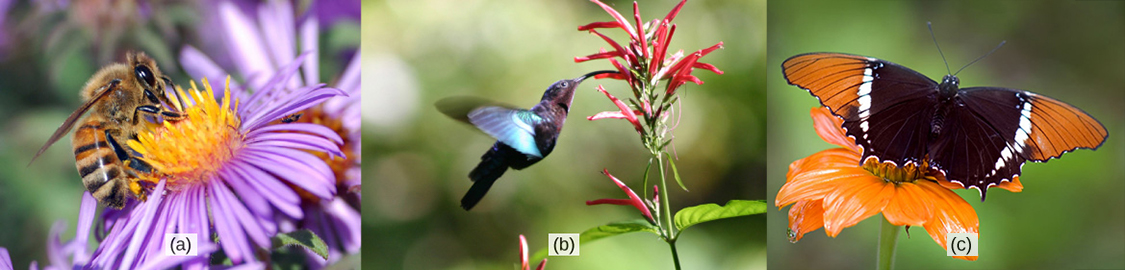
Plants that reproduce sexually often achieve fertilization with the help of pollinators such as (a) bees, (b) birds, and (c) butterflies. (credit a: modification of work by John Severns; credit b: modification of work by Charles J. Sharp; credit c: modification of work by "Galawebdesign"/Flickr)
有性生殖を行う植物は、(a)ハチ、(b)鳥、(c)チョウなどの送粉者の助けを借りて受精することが多い。(クレジットa:John Severnsの作品を改変;b:Charles J. Sharpの作品を改変;c:"Galawebdesign"/Flickrの作品を改変)
Plants have evolved different reproductive strategies for the continuation of their species. Some plants reproduce sexually, and others asexually, in contrast to animal species, which rely almost exclusively on sexual reproduction. Plant sexual reproduction usually depends on pollinating agents, while asexual reproduction is independent of these agents. Flowers are often the showiest or most strongly scented part of plants. With their bright colors, fragrances, and interesting shapes and sizes, flowers attract insects, birds, and animals to serve their pollination needs. Other plants pollinate via wind or water; still others self-pollinate.
英語のヒント
植物は、種を存続させるためにさまざまな生殖戦略を進化させてきた。ほぼ全面的に有性生殖に頼る動物の種とは対照的に、植物には有性生殖するものも無性生殖するものもある。植物の有性生殖は通常、花粉を運ぶものに依存するが、無性生殖はそれらに依存しない。花は、植物の中でもっとも目立ったり、もっとも強い香りを放ったりする部分であることが多い。鮮やかな色、香り、興味深い形や大きさによって、花は昆虫、鳥、その他の動物を引き寄せ、送粉を助けてもらう。風や水によって受粉する植物もあれば、自家受粉する植物もある。