第46章生態系
Introductionはじめに
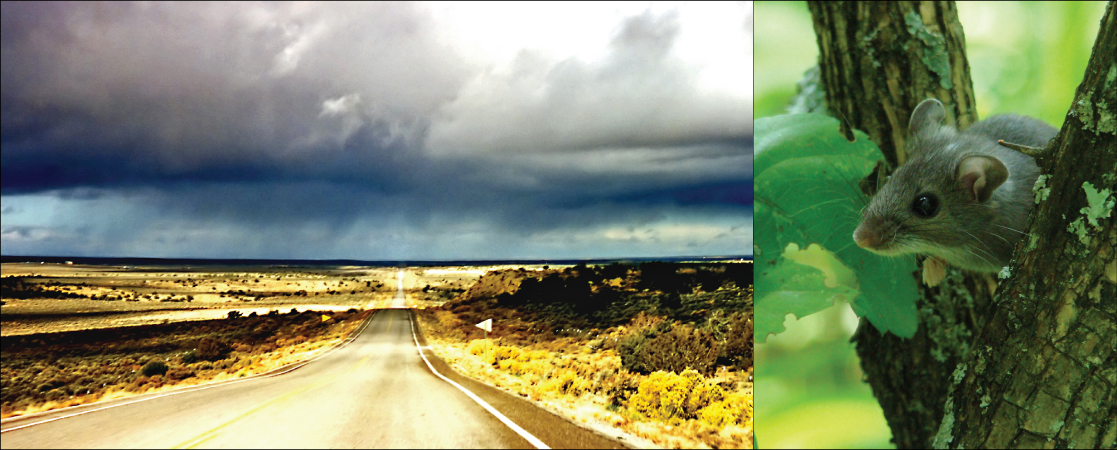
OpenStax, Rice University; Biology 2e. (credit "highway": modification of work by Phillip Capper; credit "mouse": modification of work by USFWS) · CC BY 4.0 · Source出典

Figure 46.1図 46.1
In the southwestern United States, rainy weather causes an increase in production of pinyon nuts, causing the deer mouse population to explode. Deer mice may carry a virus called Sin Nombre (a hantavirus) that causes respiratory disease in humans and has a high fatality rate. In 1992–1993, wet El Niño weather caused a Sin Nombre epidemic. Navajo healers, who were aware of the link between this disease and weather, predicted the outbreak. (credit "highway": modification of work by Phillip Capper; credit "mouse": modification of work by USFWS)
米国南西部では、雨の多い天候によってピニョンマツの実が増え、シロアシネズミ類の個体数が急増する。このネズミは、人に呼吸器疾患を引き起こし致死率の高いシンノンブレウイルス(ハンタウイルスの一種)を保有することがある。1992〜1993年には、雨の多いエルニーニョの天候がシンノンブレウイルス感染症の流行をもたらした。この病気と天候の関係を知っていたナバホの治療者たちは、流行を予測していた。(道路:Phillip Capperの作品を改変。ネズミ:USFWSの作品を改変)
In 1993, an interesting example of ecosystem dynamics occurred when a rare lung disease struck inhabitants of the southwestern United States. This disease had an alarming rate of fatalities, killing more than half of early patients, many of whom were Native Americans. These formerly healthy young adults died from complete respiratory failure. The disease was unknown, and the Centers for Disease Control (CDC), the United States government agency responsible for managing potential epidemics, was brought in to investigate. The scientists could have learned about the disease had they known to talk with the Navajo healers who lived in the area and who had observed the connection between rainfall and mice populations, thereby predicting the 1993 outbreak.
英語のヒント
1993年、米国南西部の住民の間でまれな肺疾患が発生し、生態系の動態を示す興味深い事例となった。この病気は恐ろしいほど死亡率が高く、初期の患者の半数以上が死亡した。患者の多くは先住民だった。それまで健康だった若い成人が、完全な呼吸不全で命を落とした。未知の病気だったため、感染症流行の可能性に対処する米国政府機関、疾病対策センター(CDC)が調査に当たった。科学者たちは、その地域のナバホの治療者に話を聞くということに気づいていれば、この病気について知ることができたはずだった。治療者たちは降雨とネズミの個体数のつながりを観察し、それによって1993年の流行を予測していた。
The cause of the disease, determined within a few weeks by the CDC investigators, was the hantavirus known as Sin Nombre, the virus with “no name.” With insights from traditional Navajo medicine, scientists were able to characterize the disease rapidly and institute effective health measures to prevent its spread. This example illustrates the importance of understanding the complexities of ecosystems and how they respond to changes in the environment.
英語のヒント
CDCの調査員は数週間以内に病気の原因を特定した。それは、シンノンブレ、つまり「名のない」ウイルスとして知られるハンタウイルスだった。ナバホの伝統医療から得た知見によって、科学者たちは病気の特徴を速やかに明らかにし、拡大を防ぐ効果的な保健対策を実施できた。この事例は、生態系の複雑さと、生態系が環境変化にどう応答するかを理解することの重要性を示している。