第43章動物の生殖と発生
Introductionはじめに
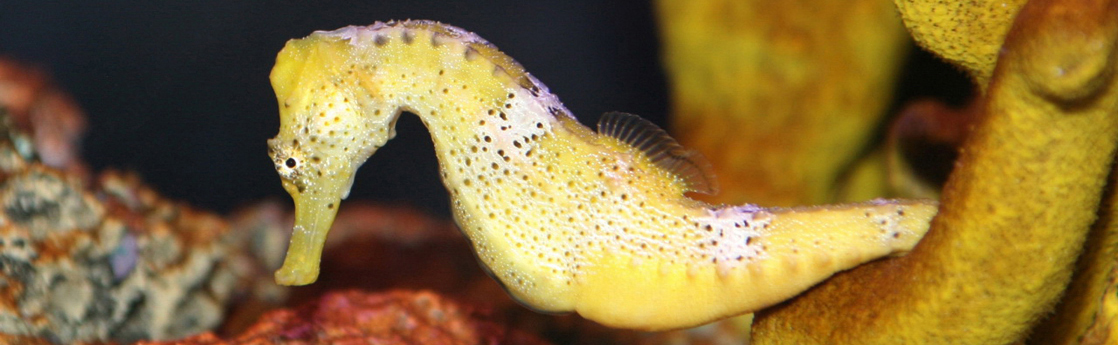
OpenStax, Rice University; Biology 2e. (credit: modification of work by "cliff1066"/Flickr) · CC BY 4.0 · Source出典

Figure 43.1図 43.1
Female seahorses produce eggs for reproduction that are then fertilized by the male. Unlike almost all other animals, the male seahorse then gestates the young until birth. (credit: modification of work by "cliff1066"/Flickr)
タツノオトシゴの雌は生殖のために卵を作り、雄がそれを受精させる。ほぼすべての他の動物とは異なり、その後は雄が出産まで子を育てる。(出典:「cliff1066」/Flickrの作品を改変)
Animal reproduction is necessary for the survival of a species. In the animal kingdom, there are innumerable ways that species reproduce. Asexual reproduction produces genetically identical organisms (clones), whereas in sexual reproduction, the genetic material of two individuals combines to produce offspring that are genetically different from their parents.
英語のヒント
動物の生殖は、種の存続に必要である。動物界には、種が繁殖する無数の方法がある。無性生殖では、遺伝的に同一の生物(クローン)が生じる。一方、有性生殖では、2個体の遺伝物質が組み合わされ、親とは遺伝的に異なる子が生じる。
Generally, the producers of sperm (the small gamete) are called males, producers of the eggs (the large gamete) are called females. Any other characteristics that may often be associated with sex, such as parental care or sexual behavior, are not universal throughout the animal kingdom. During sexual reproduction the male gamete (sperm) may be placed inside the female’s body for internal fertilization, or the sperm and eggs may be released into the environment for external fertilization. Seahorses, like the one shown in Figure 43.1, provide an example of the latter. Following a mating dance, the female lays eggs in the male seahorse’s abdominal brood pouch where they are fertilized. The eggs hatch and the offspring develop in the pouch for several weeks.
英語のヒント
一般に、精子(小さい配偶子)を作る個体を雄、卵(大きい配偶子)を作る個体を雌という。子の世話や性行動など、性と結び付くことの多いその他の特徴は、動物界全体に普遍的なものではない。有性生殖では、雄の配偶子(精子)が雌の体内へ入れられて体内受精する場合と、精子と卵が環境中へ放出されて体外受精する場合がある。図43.1に示すようなタツノオトシゴは、後者の例である。求愛のダンスの後、雌は雄の腹部の育児嚢に産卵し、そこで受精が起こる。卵は孵化し、子は数週間、育児嚢の中で発育する。