第43章動物の生殖と発生
43.4 Hormonal Control of Human Reproduction43.4 ヒトの生殖のホルモン調節
Learning Objectives学習目標
By the end of this chapter, you will be able to do the following:
この章を学ぶと、次のことができるようになる。
- Describe the roles of male and female reproductive hormones男性と女性の生殖ホルモンの役割を説明する。
- Discuss the interplay of the ovarian and menstrual cycles卵巣周期と月経周期の相互作用を論じる。
- Describe the process of menopause閉経の過程を説明する。
The human male and female reproductive cycles are controlled by the interaction of hormones from the hypothalamus and anterior pituitary with hormones from reproductive tissues and organs. In both sexes, the hypothalamus monitors and causes the release of hormones from the pituitary gland. When the reproductive hormone is required, the hypothalamus sends a gonadotropin-releasing hormone (GnRH) to the anterior pituitary. This causes the release of follicle stimulating hormone (FSH) and luteinizing hormone (LH) from the anterior pituitary into the blood. Note that the body must reach puberty in order for the adrenals to release the hormones that must be present for GnRH to be produced. Although FSH and LH are named after their functions in female reproduction, they are produced in both sexes and play important roles in controlling reproduction. Other hormones have specific functions in the male and female reproductive systems.
英語のヒント
ヒトの男性と女性の生殖周期は、視床下部と下垂体前葉からのホルモンが、生殖組織や生殖器官からのホルモンと相互作用することで調節される。男女ともに、視床下部が下垂体からのホルモン放出を監視し、引き起こす。生殖ホルモンが必要になると、視床下部は性腺刺激ホルモン放出ホルモン(GnRH)を下垂体前葉へ送る。これによって下垂体前葉から血液中へ、卵胞刺激ホルモン(FSH)と黄体形成ホルモン(LH)が放出される。GnRHの生成に必要なホルモンを副腎が放出するためには、体が思春期に達していなければならない点に注意しよう。FSHとLHの名称は女性の生殖での機能に由来するが、どちらの性でも作られ、生殖の調節に重要な役割を果たす。ほかのホルモンも、男性と女性の生殖系で特有の機能を果たす。
Male Hormones男性のホルモン
At the onset of puberty, the hypothalamus causes the release of FSH and LH into the male system for the first time. FSH enters the testes and stimulates the Sertoli cells to begin facilitating spermatogenesis using negative feedback, as illustrated in Figure 43.14. LH also enters the testes and stimulates the interstitial cells of Leydig to make and release testosterone into the testes and the blood.
英語のヒント
思春期の始まりに、視床下部は初めて、男性の体内へFSHとLHを放出させる。FSHは精巣に入り、図43.14に示すような負のフィードバックを用いて、セルトリ細胞に精子形成の促進を開始させる。LHも精巣に入り、ライディッヒ間細胞を刺激してテストステロンを作らせ、精巣内と血液中へ放出させる。
Testosterone, the hormone responsible for the secondary sexual characteristics that develop in the male during adolescence, stimulates spermatogenesis. These secondary sex characteristics include a deepening of the voice, the growth of facial, axillary, and pubic hair, and the beginnings of the sex drive.
英語のヒント
テストステロンは、男性の思春期に発達する二次性徴を生じさせるホルモンで、精子形成を刺激する。二次性徴には、声が低くなること、顔・腋窩・恥部の発毛、および性欲が生じ始めることが含まれる。
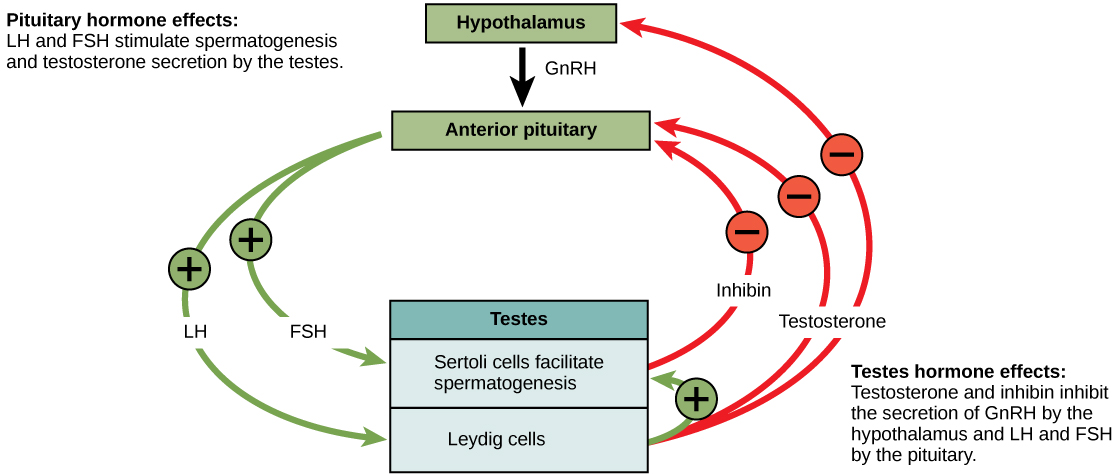

Figure 43.14図 43.14
Hormones control sperm production in a negative feedback system.
ホルモンは、負のフィードバック系によって精子の生成を調節する。
A negative feedback system occurs in the male with rising levels of testosterone acting on the hypothalamus and anterior pituitary to inhibit the release of GnRH, FSH, and LH. The Sertoli cells produce the hormone inhibin, which is released into the blood when the sperm count is too high. This inhibits the release of GnRH and FSH, which will cause spermatogenesis to slow down. If the sperm count reaches 20 million/ml, the Sertoli cells cease the release of inhibin, and the sperm count increases.
英語のヒント
男性には負のフィードバック系があり、上昇したテストステロン濃度が視床下部と下垂体前葉に作用して、GnRH、FSH、LHの放出を抑える。セルトリ細胞はインヒビンというホルモンを作り、精子数が多すぎると血液中へ放出する。インヒビンはGnRHとFSHの放出を抑え、精子形成を遅くする。精子数が1ミリリットル当たり2,000万個になると、セルトリ細胞はインヒビンの放出をやめ、精子数が増える。
Female Hormones女性のホルモン
The control of reproduction in females is more complex. As with the male, the anterior pituitary hormones cause the release of the hormones FSH and LH. In addition, estrogens and progesterone are released from the developing follicles. Estradiol is the reproductive hormone in females that assists in endometrial regrowth, ovulation, and calcium absorption; it is also responsible for the secondary sexual characteristics of females. These include breast development, flaring of the hips, and a shorter period necessary for bone maturation. Progesterone assists in endometrial regrowth and inhibition of FSH and LH release.
英語のヒント
女性の生殖の調節は、より複雑である。男性の場合と同様に、下垂体前葉のホルモンがFSHとLHの放出を引き起こす。さらに、発達中の卵胞からエストロゲン類とプロゲステロンが放出される。エストラジオールは女性の生殖ホルモンで、子宮内膜の再生、排卵、カルシウムの吸収を助け、女性の二次性徴も生じさせる。二次性徴には乳房の発達、腰幅の広がり、骨の成熟に必要な期間の短縮が含まれる。プロゲステロンは子宮内膜の再生を助け、FSHとLHの放出を抑制する。
In females, FSH stimulates development of egg cells, called ova, which develop in structures called follicles. Follicle cells produce the hormone inhibin, which inhibits FSH production. LH also plays a role in the development of ova, induction of ovulation, and stimulation of estradiol, the most potent and prevalent form of estrogen, and progesterone production by the ovaries. Estradiol and progesterone are steroid hormones that prepare the body for pregnancy. Estradiol produces secondary sex characteristics in females, while both estradiol and progesterone regulate the menstrual cycle.
英語のヒント
女性では、FSHは卵胞という構造の中で発達する卵細胞(卵)の発達を刺激する。卵胞細胞は、FSHの生成を抑えるホルモン、インヒビンを作る。LHも卵の発達や排卵の誘発に関わり、卵巣によるエストラジオールとプロゲステロンの生成を刺激する。エストラジオールは、エストロゲンの中で最も作用が強く、最も多く存在する形態である。エストラジオールとプロゲステロンは、体を妊娠に備えさせるステロイドホルモンである。エストラジオールは女性の二次性徴を生じさせ、月経周期の調節には両方のホルモンが関わる。
The Ovarian Cycle and the Menstrual Cycle卵巣周期と月経周期
The ovarian cycle governs the preparation of endocrine tissues and release of eggs, while the menstrual cycle governs the preparation and maintenance of the uterine lining. These cycles occur concurrently and are coordinated over a 22–32 day cycle, with an average length of 28 days.
英語のヒント
卵巣周期は、内分泌組織の準備と卵の放出を調節し、月経周期は子宮内膜の準備と維持を調節する。両者は同時に進み、22~32日、平均28日の周期にわたって協調する。
The first half of the ovarian cycle is the follicular phase shown in Figure 43.15. Slowly rising levels of FSH and LH cause the growth of follicles on the surface of the ovary. This process prepares the egg for ovulation. As the follicles grow, they begin releasing estrogens and a low level of progesterone. At this stage, progesterone helps the thickening of the endometrium to make it receptive to implantation of the fertilized egg. If the fertilization of the egg happens, it takes place in the fallopian tube. The trip of a fertilized egg through the fallopian tube takes about seven days. At this stage of development, called the morula, there are 30-60 cells. If pregnancy implantation does not occur, the lining is sloughed off. After about five days, estrogen levels rise and the menstrual cycle enters the proliferative phase. The endometrium begins to regrow, replacing the blood vessels and glands that deteriorated during the end of the last cycle.
英語のヒント
卵巣周期の前半は、図43.15に示す卵胞期である。FSHとLHの濃度がゆっくり上がり、卵巣表面の卵胞を成長させる。この過程は卵を排卵に備えさせる。卵胞が成長すると、エストロゲン類と少量のプロゲステロンを放出し始める。この段階では、プロゲステロンが子宮内膜の肥厚を助け、受精卵が着床できる状態にする。卵の受精が起こるなら、その場所は卵管である。受精卵が卵管を通過するには約7日かかる。桑実胚と呼ばれるこの発生段階では、細胞数は30~60個である。妊娠に伴う着床が起こらなければ、内膜は剥がれ落ちる。約5日後、エストロゲン濃度が上がり、月経周期は増殖期に入る。子宮内膜は再生を始め、前の周期の終わりに衰えた血管と腺を作り直す。
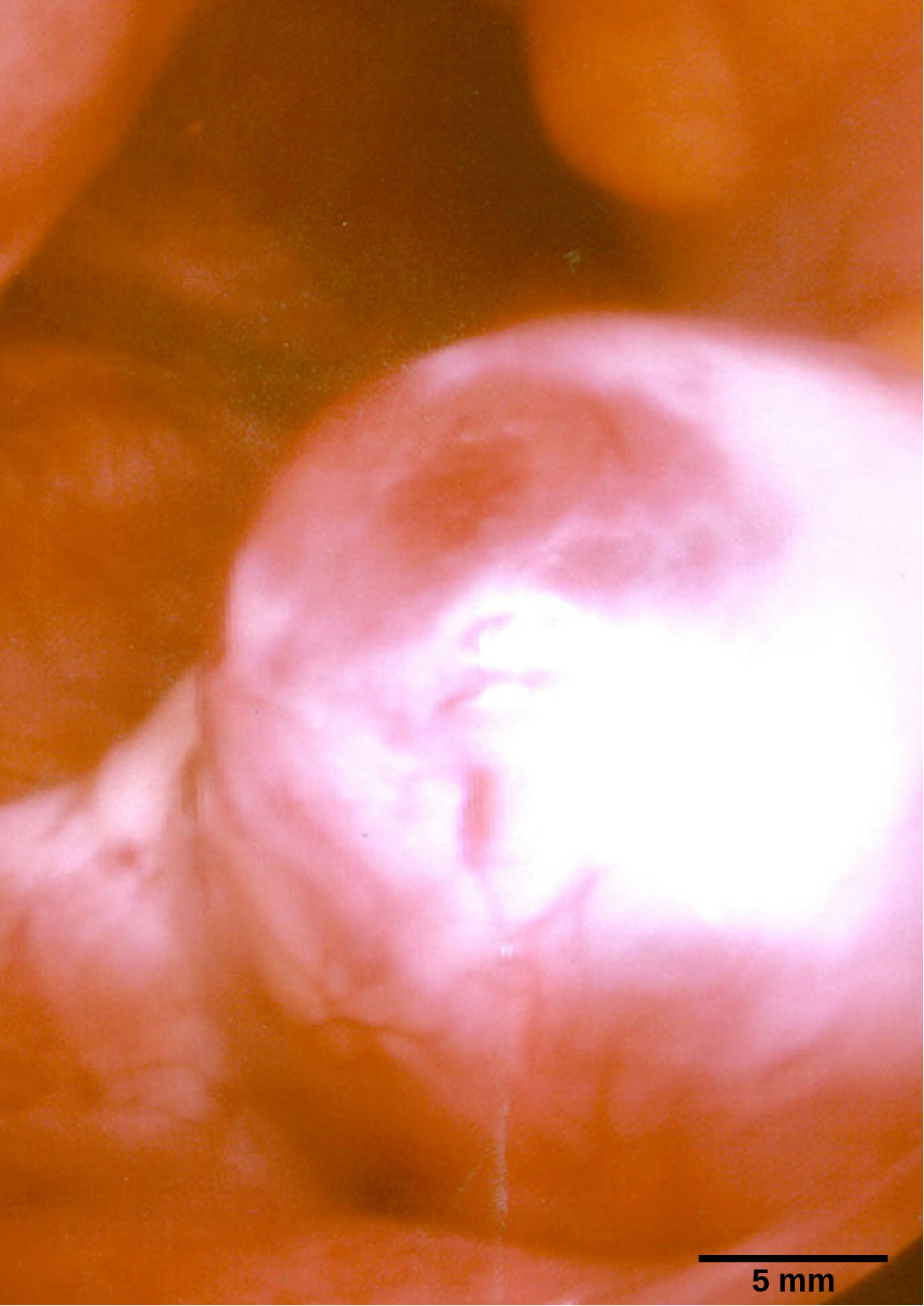
Just prior to the middle of the cycle (approximately day 14), the high level of estrogen causes FSH and especially LH to rise rapidly, then fall. The spike in LH causes ovulation: the most mature follicle, like that shown in Figure 43.16, ruptures and releases its egg. The follicles that did not rupture degenerate and their eggs are lost. The level of estrogen decreases when the extra follicles degenerate.
英語のヒント
周期の中間(およそ14日目)の直前に、高濃度のエストロゲンによってFSH、特にLHが急上昇し、その後低下する。LHの急増が排卵を引き起こす。図43.16のような最も成熟した卵胞が破裂し、卵を放出する。破裂しなかった卵胞は退化し、その卵も失われる。余分な卵胞が退化すると、エストロゲン濃度は低下する。
OpenStax, Rice University; Biology 2e. (credit: scale-bar data from Matt Russell) · CC BY 4.0 · Source出典

Figure 43.16図 43.16
This mature egg follicle may rupture and release an egg. (credit: scale-bar data from Matt Russell)
この成熟した卵胞は、破裂して卵を放出する可能性がある。(出典:スケールバーのデータはMatt Russell)
Following ovulation, the ovarian cycle enters its luteal phase, illustrated in Figure 43.15 and the menstrual cycle enters its secretory phase, both of which run from about day 15 to 28. The luteal and secretory phases refer to changes in the ruptured follicle. The cells in the follicle undergo physical changes and produce a structure called a corpus luteum. The corpus luteum produces estrogen and progesterone. The progesterone facilitates the regrowth of the uterine lining and inhibits the release of further FSH and LH. The uterus is being prepared to accept a fertilized egg, should it occur during this cycle. The inhibition of FSH and LH prevents any further eggs and follicles from developing, while the progesterone is elevated. The level of estrogen produced by the corpus luteum increases to a steady level for the next few days.
英語のヒント
排卵後、卵巣周期は図43.15に示す黄体期に入り、月経周期は分泌期に入る。どちらも、およそ15日目から28日目まで続く。黄体期と分泌期は、破裂した卵胞の変化を指す。卵胞内の細胞は形態を変え、黄体という構造を作る。黄体はエストロゲンとプロゲステロンを作る。プロゲステロンは子宮内膜の再生を促し、それ以上のFSHとLHの放出を抑える。この周期中に受精卵が生じた場合に、それを受け入れる準備が子宮で進んでいる。プロゲステロンが高濃度の間は、FSHとLHの抑制によって、さらに卵や卵胞が発達するのを防ぐ。黄体が作るエストロゲンの濃度は上がり、その後の数日間は一定の水準になる。
If no fertilized egg is implanted into the uterus, the corpus luteum degenerates and the levels of estrogen and progesterone decrease. The endometrium begins to degenerate as the progesterone levels drop, initiating the next menstrual cycle. The decrease in progesterone also allows the hypothalamus to send GnRH to the anterior pituitary, releasing FSH and LH and starting the cycles again. Figure 43.17 visually compares the ovarian and uterine cycles as well as the commensurate hormone levels.
英語のヒント
受精卵が子宮に着床しなければ、黄体は退化し、エストロゲンとプロゲステロンの濃度が下がる。プロゲステロンの低下に伴って子宮内膜が退化し始め、次の月経周期が始まる。プロゲステロンの低下によって、視床下部は再びGnRHを下垂体前葉へ送れるようになる。FSHとLHが放出され、周期が再開する。図43.17は、卵巣周期と子宮周期、およびそれに対応するホルモン濃度を視覚的に比較している。