第47章保全生物学と生物多様性
Introductionはじめに
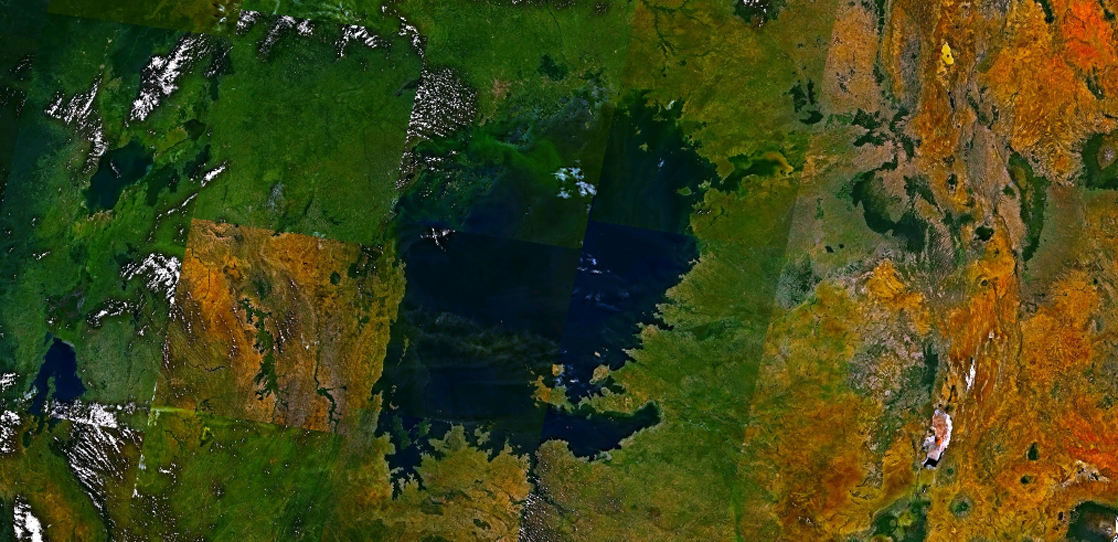
OpenStax, Rice University; Biology 2e. (credit: modification of work by Rishabh Tatiraju, using NASA World Wind software) · CC BY 4.0 · Source出典

Figure 47.1図 47.1
Lake Victoria in Africa, shown in this satellite image, was the site of one of the most extraordinary evolutionary findings on the planet, as well as a casualty of devastating biodiversity loss. (credit: modification of work by Rishabh Tatiraju, using NASA World Wind software)
衛星画像に示すアフリカのビクトリア湖は、地球上でも極めて驚くべき進化上の発見の舞台であり、同時に、壊滅的な生物多様性の喪失の被害を受けた場所でもある。(NASA World Windを用いたRishabh Tatirajuの作品を改変)
In the 1980s, biologists working in Lake Victoria in Africa discovered one of the most extraordinary products of evolution on the planet. Located in the Great Rift Valley, Lake Victoria is an enormous and deep lake about 68,900 km2 in area (larger than Lake Huron, the second largest of North America’s Great Lakes). Biologists were studying species of a family of fish called cichlids. When they sampled for fish in different locations of the lake, the researchers identified over 500 evolved species in total. However, the scientists soon discovered that the invasive Nile Perch was destroying the lake’s cichlid population, bringing hundreds of cichlid species to extinction with devastating rapidity.
英語のヒント
1980年代、アフリカのビクトリア湖で研究していた生物学者たちは、地球上で最も驚くべき進化の成果の1つを発見した。大地溝帯に位置するビクトリア湖は、面積約68,900 km2の巨大で深い湖であり、北米五大湖で2番目に大きいヒューロン湖よりも大きい。生物学者たちは、シクリッドと呼ばれる科の魚を調べていた。湖のさまざまな場所で魚を採集すると、進化によって生じた種が合計500種以上確認された。しかし間もなく、外来のナイルパーチがシクリッドの個体群を破壊し、数百種を壊滅的な速さで絶滅へ追いやっていることが分かった。