第16章遺伝子発現
Introductionはじめに
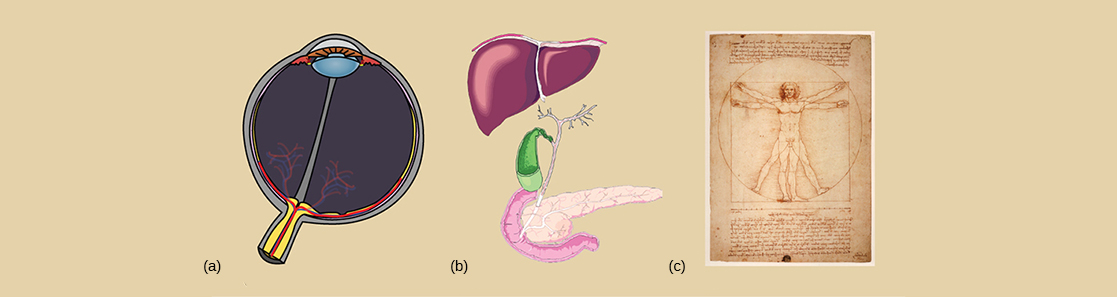

Figure 16.1図 16.1
The genetic content of each somatic cell in an organism is the same, but not all genes are expressed in every cell. The control of which genes are expressed dictates whether a cell is, for example, (a) an eye cell or (b) a liver cell. It is the differential gene expression patterns that arise in different cells that give rise to (c) a complete organism.
英語のヒント
生物の各体細胞がもつ遺伝情報は同じだが、すべての細胞ですべての遺伝子が発現しているわけではない。どの遺伝子を発現させるかという制御によって、たとえば(a)眼の細胞になるか、(b)肝臓の細胞になるかが決まる。異なる細胞に生じる遺伝子発現パターンの違いが、(c)生物個体全体を作り出す。
Each somatic cell in the body generally contains the same DNA. A few exceptions include red blood cells, which contain no DNA in their mature state, and some immune system cells that rearrange their DNA while producing antibodies. In general, however, the genes that determine whether you have green eyes, brown hair, and how fast you metabolize food are the same in the cells in your eyes and your liver, even though these organs function quite differently. If each cell has the same DNA, how is it that cells or organs are different? Why do cells in the eye differ so dramatically from cells in the liver?
英語のヒント
体内の各体細胞には、一般に同じDNAが含まれる。少数の例外として、成熟するとDNAをもたない赤血球や、抗体を作る際にDNAを再構成する一部の免疫系の細胞がある。しかし一般には、眼が緑色か、髪が茶色か、食物をどれくらい速く代謝するかを決める遺伝子は、眼の細胞でも肝臓の細胞でも同じである。それぞれの器官は、まったく違う働きをするにもかかわらずである。各細胞が同じDNAをもつなら、なぜ細胞や器官は異なるのだろうか。なぜ眼の細胞は、肝臓の細胞とこれほど大きく違うのだろうか。
Whereas each cell shares the same genome and DNA sequence, each cell does not turn on, or express, the same set of genes. Each cell type needs a different set of proteins to perform its function. Therefore, only a small subset of proteins is expressed in a cell. For the proteins to be expressed, the DNA must be transcribed into RNA and the RNA must be translated into protein. In a given cell type, not all genes encoded in the DNA are transcribed into RNA or translated into protein because specific cells in our body have specific functions. Specialized proteins that make up the eye (iris, lens, and cornea) are only expressed in the eye, whereas the specialized proteins in the heart (pacemaker cells, heart muscle, and valves) are only expressed in the heart. At any given time, only a subset of all of the genes encoded by our DNA are expressed and translated into proteins. The expression of specific genes is a highly regulated process with many levels and stages of control. This complexity ensures the proper expression in the proper cell at the proper time.
英語のヒント
各細胞は同じゲノムとDNA配列を共有するが、同じ一組の遺伝子をオンにして、すなわち発現させているわけではない。各細胞型が機能を果たすには、それぞれ異なるタンパク質群が必要である。そのため、ある細胞で発現するのは、タンパク質全体のごく一部である。タンパク質が発現するには、DNAがRNAへ転写され、そのRNAがタンパク質へ翻訳されなければならない。体内の特定の細胞には特定の機能があるため、どの細胞型でも、DNAにコードされたすべての遺伝子がRNAに転写されたり、タンパク質に翻訳されたりするわけではない。眼(虹彩、水晶体、角膜)を構成する特殊なタンパク質は眼でだけ発現し、心臓(ペースメーカー細胞、心筋、弁)の特殊なタンパク質は心臓でだけ発現する。どの時点でも、DNAにコードされた全遺伝子のうち、一部だけが発現し、タンパク質へ翻訳されている。特定の遺伝子の発現は、多くの水準や段階で制御される、高度に調節された過程である。この複雑さによって、適切な時に、適切な細胞で、適切な発現が行われる。