第20章系統と生命の歴史
Introductionはじめに
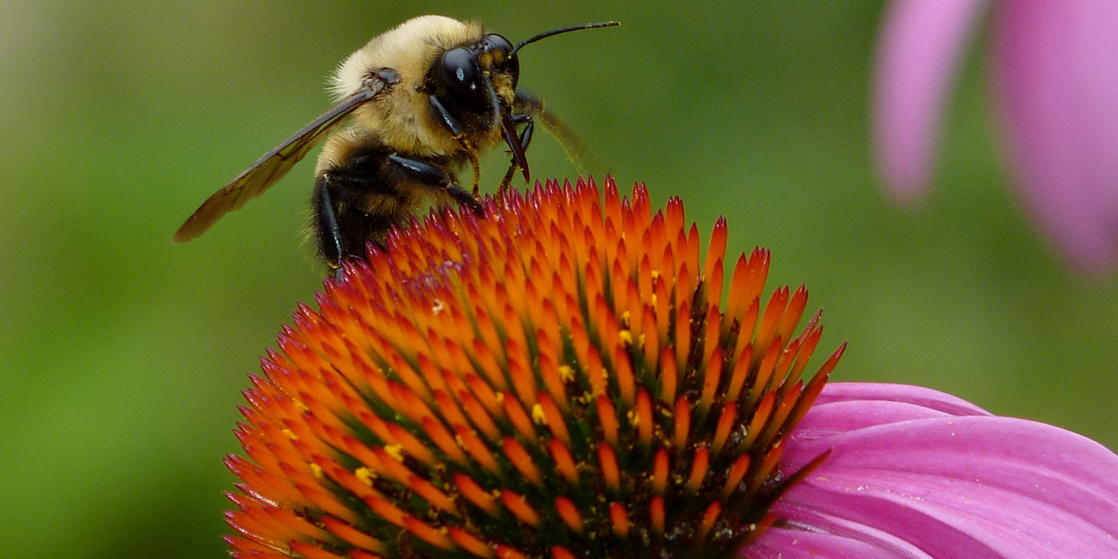
OpenStax, Rice University; Biology 2e. (credit: modification of work by John Beetham) · CC BY 4.0 · Source出典

Figure 20.1図 20.1
A bee's life is very different from a flower's, but the two organisms are related. Both are members of the domain Eukarya and have cells containing many similar organelles, genes, and proteins. (credit: modification of work by John Beetham)
ハチの暮らしは花の暮らしと大きく異なるが、この2つの生物には類縁関係がある。どちらも真核生物ドメインに属し、細胞にはよく似た多くの細胞小器官、遺伝子、タンパク質が含まれている。(クレジット:John Beethamの作品を改変)
This bee and Echinacea flower (Figure 20.1) could not look more different, yet they are related, as are all living organisms on Earth. By following pathways of similarities and changes—both visible and genetic—scientists seek to map the evolutionary past of how life developed from single-celled organisms to the tremendous collection of creatures that have germinated, crawled, floated, swum, flown, and walked on this planet.
英語のヒント
このハチとエキナセアの花(図20.1)は、これ以上ないほど違って見える。それでも両者は、地球上のすべての生物と同様、互いに類縁関係をもつ。科学者は、目に見えるものと遺伝的なものの両方について、類似と変化の道筋をたどる。そうすることで、単細胞生物から、この惑星で芽生え、はい、浮かび、泳ぎ、飛び、歩いてきた途方もなく多様な生物へと生命が発展した、その進化の過去を描こうとしている。