第30章植物の形態と生理
Introductionはじめに
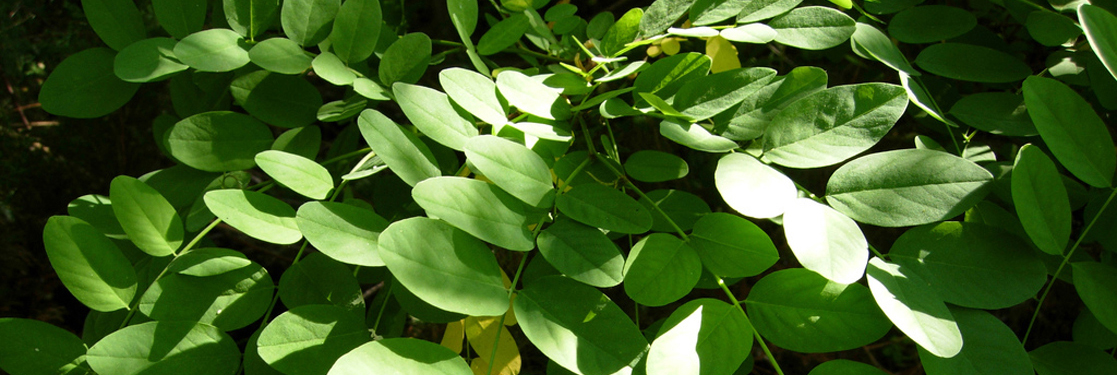
OpenStax, Rice University; Biology 2e. (credit: modification of work by Todd Petit) · CC BY 4.0 · Source出典

Figure 30.1図 30.1
A locust leaf consists of leaflets arrayed along a central midrib. Each leaflet is a complex photosynthetic machine, exquisitely adapted to capture sunlight and carbon dioxide. An intricate vascular system supplies the leaf with water and minerals, and exports the products of photosynthesis. (credit: modification of work by Todd Petit)
ニセアカシアの葉は、中央の中肋に沿って並ぶ小葉からなる。それぞれの小葉は、日光と二酸化炭素をとらえるのに巧みに適応した、複雑な光合成装置である。入り組んだ維管束系が、葉に水と無機栄養分を供給し、光合成の産物を運び出す。(クレジット:Todd Petit の作品を改変)
Plants are as essential to human existence as land, water, and air. Without plants, our day-to-day lives would be impossible because without oxygen from photosynthesis, aerobic life cannot be sustained. From providing food and shelter to serving as a source of medicines, oils, perfumes, and industrial products, plants provide humans with numerous valuable resources.
英語のヒント
植物は、陸地、水、空気と同じくらい、人間の存在に不可欠である。植物なしでは、私たちの日々の生活は成り立たない。光合成による酸素がなければ、好気性の生命を維持できないからである。食物や住まいを提供することから、医薬品、油、香料、工業製品の原料になることまで、植物は人間に数多くの貴重な資源をもたらしている。
When you think of plants, most of the organisms that come to mind are vascular plants. These plants have tissues that conduct food and water, and most of them have seeds. Seed plants are divided into gymnosperms and angiosperms. Gymnosperms include the needle-leaved conifers—spruce, fir, and pine—as well as less familiar plants, such as ginkgos and cycads. Their seeds are not enclosed by a fleshy fruit. Angiosperms, also called flowering plants, constitute the majority of seed plants. They include broadleaved trees (such as maple, oak, and elm), vegetables (such as potatoes, lettuce, and carrots), grasses, and plants known for the beauty of their flowers (roses, irises, and daffodils, for example).
英語のヒント
植物と聞いて思い浮かぶ生物の大部分は、維管束植物だろう。これらの植物は、養分や水を運ぶ組織をもち、大部分は種子をつくる。種子植物は、裸子植物と被子植物に分かれる。裸子植物には、トウヒ、モミ、マツという針葉樹に加え、イチョウやソテツなど、ややなじみの薄い植物が含まれる。その種子は多肉質の果実に包まれない。花を咲かせる植物とも呼ばれる被子植物は、種子植物の大部分を占める。カエデ、オーク、ニレなどの広葉樹、ジャガイモ、レタス、ニンジンなどの野菜、イネ科植物、そしてバラ、アヤメ、スイセンのように花の美しさで知られる植物が含まれる。
While individual plant species are unique, all share a common structure: a plant body consisting of stems, roots, and leaves. They all transport water, minerals, and sugars produced through photosynthesis through the plant body in a similar manner. All plant species also respond to environmental factors, such as light, gravity, competition, temperature, and predation.
英語のヒント
植物の各種にはそれぞれ独自の特徴があるが、すべてに共通する構造がある。それは、茎、根、葉からなる植物体である。どの植物も、水、無機栄養分、そして光合成でつくった糖を、同様の方法で植物体内に運ぶ。また、すべての植物種は、光、重力、競争、温度、捕食などの環境要因に反応する。