第31章土壌と植物の栄養
Introductionはじめに
OpenStax, Rice University; Biology 2e. (credit a: modification of work by Julian Colton; credit b: modification of work by "Wildfeuer"/Wikimedia Commons) · CC BY 4.0 · Source出典

Figure 31.1図 31.1
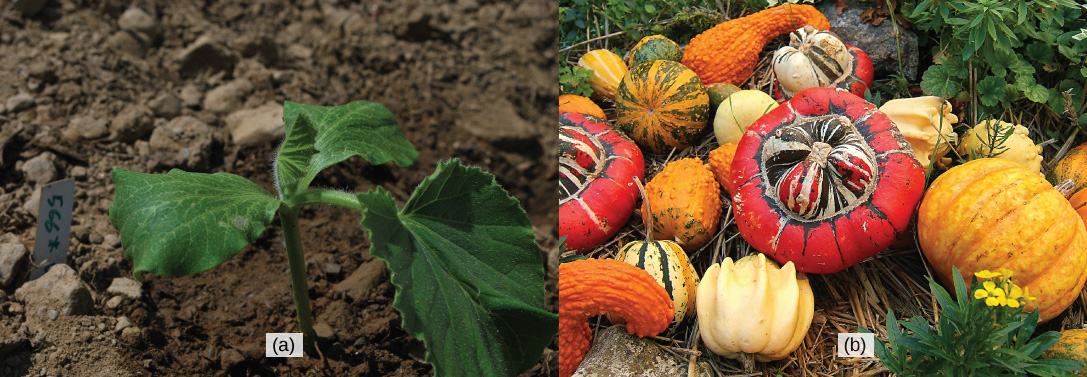
For this (a) squash seedling (Cucurbita maxima) to develop into a mature plant bearing its (b) fruit, numerous nutritional requirements must be met. (credit a: modification of work by Julian Colton; credit b: modification of work by "Wildfeuer"/Wikimedia Commons)
この(a)セイヨウカボチャ(Cucurbita maxima)の実生が、(b)果実をつける成熟した植物へ育つには、多くの栄養上の要求が満たされなければならない。(クレジットa:Julian Coltonの作品を改変;b:"Wildfeuer"/Wikimedia Commonsの作品を改変)
Cucurbitaceae is a family of plants first cultivated in Mesoamerica, although several species are native to North America. The family includes many edible species, such as squash and pumpkin, as well as inedible gourds. In order to grow and develop into mature, fruit-bearing plants, many requirements must be met and events must be coordinated. Seeds must germinate under the right conditions in the soil; therefore, temperature, moisture, and soil quality are important factors that play a role in germination and seedling development. Soil quality and climate are significant to plant distribution and growth. The young seedling will eventually grow into a mature plant, and the roots will absorb nutrients and water from the soil. At the same time, the aboveground parts of the plant will absorb carbon dioxide from the atmosphere and use energy from sunlight to produce organic compounds through photosynthesis. This chapter will explore the complex dynamics between plants and soils, and the adaptations that plants have evolved to make better use of nutritional resources.
英語のヒント
ウリ科はメソアメリカで初めて栽培された植物の科であるが、北アメリカ原産の種もいくつか含まれる。この科には、カボチャやパンプキンなど食用になる多くの種のほか、食べられないヒョウタン類も含まれる。成長して果実をつける成熟個体になるには、多くの条件が満たされ、さまざまな出来事が協調して進まなければならない。種子は、土壌中の適切な条件下で発芽する必要がある。そのため、温度、水分、土壌の質は、発芽や実生の発達に関わる重要な要因である。土壌の質と気候は、植物の分布と成長にとって重要である。若い実生はやがて成熟した植物になり、根は土壌から栄養分と水を吸収する。同時に、地上部は大気から二酸化炭素を吸収し、太陽光のエネルギーを使って光合成により有機化合物を作る。この章では、植物と土壌の間の複雑な相互作用と、栄養資源をよりよく利用するために植物が進化させてきた適応を探る。