第31章土壌と植物の栄養
Symbionts共生植物
A symbiont is a plant in a symbiotic relationship, with special adaptations such as mycorrhizae or nodule formation (Figure 31.12 and Figure 31.11).
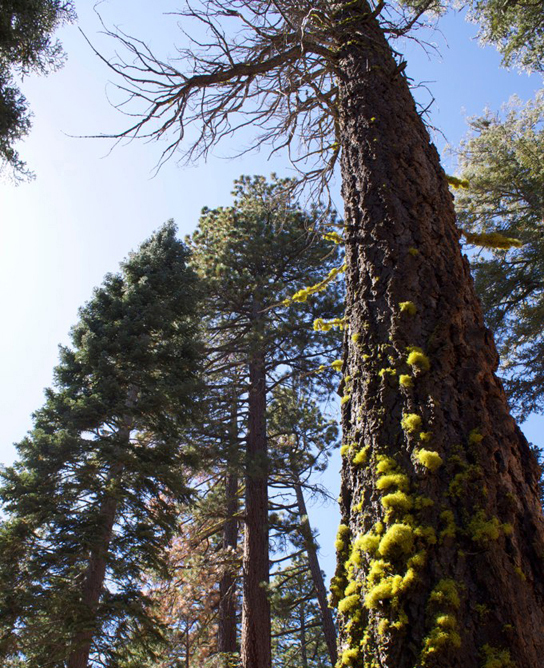
Figure 31.15図 31.15
Lichens, covered in Ecology of Fungi, which often have symbiotic relationships with other plants, can sometimes be found growing on trees. (credit: "benketaro"/Flickr)
「菌類の生態」で扱った地衣類は、ほかの植物と共生関係にあることが多く、ときに樹木上で育つ姿が見られる。(クレジット:"benketaro"/Flickr)
Epiphytes着生植物
An epiphyte is a plant that grows on other plants, but is not dependent upon the other plant for nutrition (Figure 31.16). Epiphytes have two types of roots: clinging aerial roots, which absorb nutrients from humus that accumulates in the crevices of trees; and aerial roots, which absorb moisture from the atmosphere.
着生植物は、ほかの植物の上で育つが、栄養をその植物に依存しない植物である(図31.16)。着生植物には2種類の根がある。一つは付着する気根で、樹木の割れ目にたまった腐植から栄養分を吸収する。もう一つは、大気から水分を吸収する気根である。
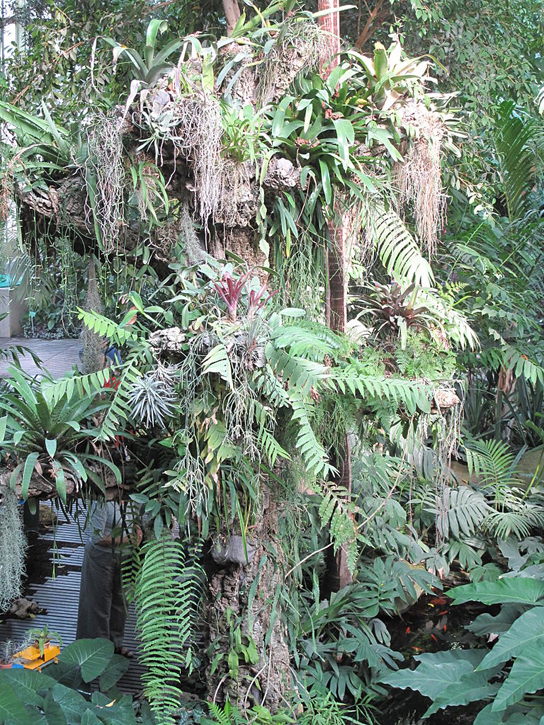
Figure 31.16図 31.16
These epiphyte plants grow in the main greenhouse of the Jardin des Plantes in Paris.
パリのジャルダン・デ・プラントの大温室で育つ着生植物。
Insectivorous Plants食虫植物
An insectivorous plant has specialized leaves to attract and digest insects. The Venus flytrap is popularly known for its insectivorous mode of nutrition, and has leaves that work as traps (Figure 31.17). The minerals it obtains from prey compensate for those lacking in the boggy (low pH) soil of its native North Carolina coastal plains. There are three sensitive hairs in the center of each half of each leaf. The edges of each leaf are covered with long spines. Nectar secreted by the plant attracts flies to the leaf. When a fly touches the sensory hairs, the leaf immediately closes. Next, fluids and enzymes break down the prey and minerals are absorbed by the leaf. Since this plant is popular in the horticultural trade, it is threatened in its original habitat.
英語のヒント
食虫植物は、昆虫を引き寄せて消化するために特殊化した葉をもつ。ハエトリソウは、昆虫から栄養を得ることで広く知られ、罠として働く葉をもつ(図31.17)。獲物から得る無機栄養分は、自生地であるノースカロライナ州の海岸平野の、湿地性でpHの低い土壌に不足する成分を補う。それぞれの葉の左右半分の中央には、感覚毛が3本ずつある。葉の縁は長い刺に覆われる。植物が分泌する蜜がハエを葉へ引き寄せ、ハエが感覚毛に触れると、葉は直ちに閉じる。続いて液体と酵素が獲物を分解し、無機栄養分が葉に吸収される。この植物は園芸取引で人気があるため、本来の生息地では脅威にさらされている。
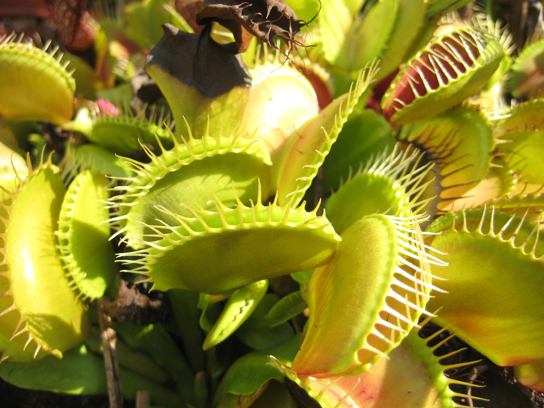


Figure 31.17図 31.17
A Venus flytrap has specialized leaves to trap insects. (credit: "Selena N. B. H."/Flickr)
ハエトリソウは、昆虫を捕らえるために特殊化した葉をもつ。(クレジット:"Selena N. B. H."/Flickr)
Section Summaryこの節のまとめ
Atmospheric nitrogen is the largest pool of available nitrogen in terrestrial ecosystems. However, plants cannot use this nitrogen because they do not have the necessary enzymes. Biological nitrogen fixation (BNF) is the conversion of atmospheric nitrogen to ammonia. The most important source of BNF is the symbiotic interaction between soil bacteria and legumes. The bacteria form nodules on the legume’s roots in which nitrogen fixation takes place. Fungi form symbiotic associations (mycorrhizae) with plants, becoming integrated into the physical structure of the root. Through mycorrhization, the plant obtains minerals from the soil and the fungus obtains photosynthate from the plant root. Ectomycorrhizae form an extensive dense sheath around the root, while endomycorrhizae are embedded within the root tissue. Some plants—parasites, saprophytes, symbionts, epiphytes, and insectivores—have evolved adaptations to obtain their organic or mineral nutrition from various sources.
大気中の窒素は、陸上生態系で利用可能な窒素の最大の貯蔵庫である。しかし植物は、必要な酵素をもたないため、その窒素を利用できない。生物的窒素固定(BNF)とは、大気中の窒素をアンモニアへ変換することである。BNFのもっとも重要な供給源は、土壌細菌とマメ科植物の共生的な相互作用である。細菌はマメ科植物の根に根粒を形成し、その中で窒素固定が行われる。菌類は植物と菌根という共生関係を作り、根の物理的な構造に組み込まれる。菌根形成によって、植物は土壌から無機栄養分を得て、菌類は根から光合成産物を得る。外生菌根は根の周囲に広く密な覆いを形成するが、内生菌根は根の組織内に埋め込まれる。寄生植物、腐生植物、共生植物、着生植物、食虫植物など、一部の植物は、さまざまな供給源から有機物や無機栄養分を得るための適応を進化させてきた。
Visual Connection Questions図を使った問題
Exercises 17練習問題 17
Exercise 17問題 17
Figure 31.10 Farmers often rotate corn (a cereal crop) and soy beans (a legume) planting a field with each crop in alternate seasons. What advantage might this crop rotation confer?
図31.10 農家はしばしば、穀類のトウモロコシとマメ科のダイズを、作期ごとに同じ畑へ交互に植える。この輪作は、どのような利点をもたらすだろうか。
Solution解き方
Figure 31.10 Soybeans are able to fix nitrogen in their roots, which are not harvested at the end of the growing season. The belowground nitrogen can be used in the next season by the corn.
図31.10 ダイズは根で窒素を固定できる。根は生育期の終わりにも収穫されないため、地中に残った窒素を、次の作期のトウモロコシが利用できる。
Review Questions確認問題
Exercises 18–21練習問題 18–21
Exercise 18問題 18
Which process produces an inorganic compound that plants can easily use?
植物が容易に利用できる無機化合物を作る過程は、どれか。
- photosynthesis光合成
- nitrogen fixation窒素固定
- mycorrhization菌根形成
- Calvin cycleカルビン回路
Solution解き方
B
B
Exercise 19問題 19
Through mycorrhization, a plant obtains important nutrients such as ________.
菌根形成によって、植物は________などの重要な栄養素を得る。
- phosphorus, zinc, and copperリン、亜鉛、銅
- phosphorus, zinc, and calciumリン、亜鉛、カルシウム
- nickel, calcium, and zincニッケル、カルシウム、亜鉛
- all of the above上記のすべて
Solution解き方
A
A
Exercise 20問題 20
What term describes a plant that requires nutrition from a living host plant?
生きた宿主植物から栄養を得る必要がある植物を、何というか。
- parasite寄生植物
- saprophyte腐生植物
- epiphyte着生植物
- insectivorous食虫植物
Solution解き方
A
A
Exercise 21問題 21
What is the term for the symbiotic association between fungi and cyanobacteria?
菌類とシアノバクテリアの共生体を、何というか。
- lichen地衣類
- mycorrhizae菌根
- epiphyte着生植物
- nitrogen-fixing nodule窒素固定を行う根粒
Solution解き方
A
A
Critical Thinking Questions考察問題
Exercises 22–24練習問題 22–24
Exercise 22問題 22
Why is biological nitrogen fixation an environmentally friendly way of fertilizing plants?
生物的窒素固定が、環境に優しい植物への施肥方法なのはなぜか。
Solution解き方
Because it is natural and does not require use of a nonrenewable resource, such as natural gas.
自然な過程であり、天然ガスなどの再生不可能な資源を使う必要がないからである。
Exercise 23問題 23
What is the main difference, from an energy point of view, between photosynthesis and biological nitrogen fixation?
エネルギーの観点から、光合成と生物的窒素固定の主な違いは何か。
Solution解き方
Photosynthesis harvests and stores energy, whereas biological nitrogen fixation requires energy.
光合成はエネルギーを取り込んで蓄えるが、生物的窒素固定はエネルギーを必要とする。
Exercise 24問題 24
Why is a root nodule a nutritional adaptation of a plant?
根粒が、植物の栄養に関する適応といえるのはなぜか。
Solution解き方
A nodule results from the symbiosis between a plant and bacterium. Within nodules, the process of nitrogen fixation allows the plant to obtain nitrogen from the air.
根粒は、植物と細菌の共生によって生じる。根粒内で窒素固定が行われることで、植物は空気中から窒素を得られる。
epiphyte
着生植物
plant that grows on other plants but is not dependent upon other plants for nutrition
ほかの植物の上で育つが、栄養をその植物に依存しない植物。
insectivorous plant
食虫植物
plant that has specialized leaves to attract and digest insects
昆虫を引き寄せて消化するために特殊化した葉をもつ植物。
nitrogenase
ニトロゲナーゼ
enzyme that is responsible for the reduction of atmospheric nitrogen to ammonia
大気中の窒素をアンモニアへ還元する酵素。
nodules
根粒
specialized structures that contain Rhizobia bacteria where nitrogen fixation takes place
根粒菌を含み、その中で窒素固定が行われる特殊な構造。
parasitic plant
寄生植物
plant that is dependent on its host for survival
生存を宿主に依存する植物。
rhizobia
根粒菌
soil bacteria that symbiotically interact with legume roots to form nodules and fix nitrogen
マメ科植物の根と共生的に相互作用し、根粒を形成して窒素を固定する土壌細菌。
saprophyte
腐生植物
plant that does not have chlorophyll and gets its food from dead matter
クロロフィルをもたず、生物の遺骸から食物を得る植物。
symbiont
共生植物
plant in a symbiotic relationship with bacteria or fungi
細菌や菌類と共生関係にある植物。