第24章菌類
24.3 Ecology of Fungi24.3 菌類の生態
Learning Objectives学習目標
By the end of this section, you will be able to do the following:
この節を学ぶと、次のことができるようになる。
- Describe the role of fungi in various ecosystemsさまざまな生態系における菌類の役割を説明する。
- Describe mutualistic relationships of fungi with plant roots and photosynthetic organisms菌類と植物の根や光合成生物との相利共生関係を説明する。
- Describe the beneficial relationship between some fungi and insects一部の菌類と昆虫の有益な関係を説明する。
Fungi play a crucial role in the constantly changing “balance” of ecosystems. They colonize most habitats on Earth, preferring dark, moist conditions. They can thrive in seemingly hostile environments, such as the tundra, thanks to a most successful symbiosis with photosynthetic organisms like algae to produce lichens. Within their communities, fungi are not as obvious as are large animals or tall trees. Like bacteria, they act behind the scenes as major decomposers. With their versatile metabolism, fungi break down organic matter, which would otherwise not be recycled.
英語のヒント
菌類は、絶えず変化する生態系の「バランス」に、極めて重要な役割を果たす。暗く湿った条件を好み、地球上の大部分の生息環境に定着する。藻類のような光合成生物との非常に成功した共生によって地衣類を作ることで、ツンドラなど、一見厳しい環境でも繁栄できる。群集の中で、菌類は大型動物や高木ほど目立たない。細菌のように、主要な分解者として舞台裏で働く。多様な代謝能力によって、そうでなければ再利用されない有機物を分解する。
Habitats生息環境
Although fungi are primarily associated with humid and cool environments that provide a supply of organic matter, they colonize a surprising diversity of habitats, from seawater to human skin and mucous membranes. Chytrids are found primarily in aquatic environments. Other fungi, such as Coccidioides immitis, which causes pneumonia when its spores are inhaled, thrive in the dry and sandy soil of the southwestern United States. Fungi that parasitize coral reefs live in the ocean. However, most members of the Kingdom Fungi grow on the forest floor, where the dark and damp environment is rich in decaying debris from plants and animals. In these environments, fungi play a major role as decomposers and recyclers, making it possible for members of the other kingdoms to be supplied with nutrients and live.
英語のヒント
菌類は、主に有機物の供給がある湿潤で冷涼な環境と結びつけられるが、海水からヒトの皮膚や粘膜まで、驚くほど多様な生息環境に定着する。ツボカビ類は、主に水中に見られる。一方、胞子を吸い込むと肺炎を起こすCoccidioides immitisなどは、米国南西部の乾燥した砂質土壌でよく育つ。サンゴ礁に寄生する菌類は、海にすむ。しかし、菌界の大部分は林床で成長する。そこは暗く湿り、動植物由来の腐敗した残骸が豊富である。こうした環境で、菌類は分解者と再利用者として大きな役割を担い、他の界の生物が栄養供給を受け、生きることを可能にする。
Decomposers and Recyclers分解者と再利用者
The food web would be incomplete without organisms that decompose organic matter (Figure 24.19). Some elements—such as nitrogen and phosphorus—are required in large quantities by biological systems, and yet are not abundant in the environment. The action of fungi releases these elements from decaying matter, making them available to other living organisms. Trace elements present in low amounts in many habitats are essential for growth, and would remain tied up in rotting organic matter if fungi and bacteria did not return them to the environment via their metabolic activity.
英語のヒント
有機物を分解する生物がいなければ、食物網は不完全になる(図24.19)。窒素やリンのような一部の元素は、生物系が大量に必要とするが、環境中には豊富ではない。菌類の作用は、腐敗物からこれらの元素を放出し、他の生物が利用できるようにする。多くの生息環境で少量しか存在しない微量元素も、成長に不可欠である。菌類や細菌が代謝活動を通じて環境へ戻さなければ、それらは腐敗する有機物に閉じ込められたままとなる。
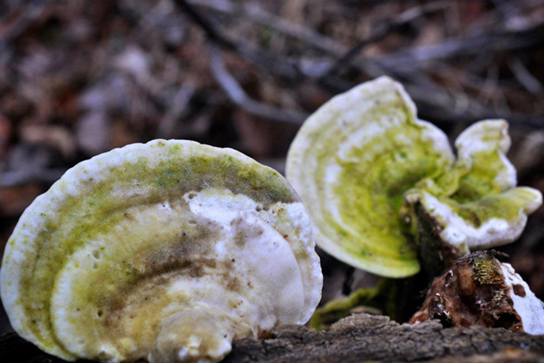
Figure 24.19図 24.19
Bracket fungi. Fungi are an important part of ecosystem nutrient cycles. These bracket fungi growing on the side of a tree are the fruiting structures of a basidiomycete. They receive their nutrients through their hyphae, which invade and decay the tree trunk. (credit: Cory Zanker)
棚状菌。菌類は、生態系の栄養循環の重要な一部である。樹木の側面に育つこれらの棚状菌は、担子菌の子実構造である。幹へ侵入して腐朽させる菌糸を通じて、栄養を得る。(クレジット:Cory Zanker)
The ability of fungi to degrade many large and insoluble molecules is due to their mode of nutrition. As seen earlier, digestion precedes ingestion. Fungi produce a variety of exoenzymes to digest nutrients. The enzymes are either released into the substrate or remain bound to the outside of the fungal cell wall. Large molecules are broken down into small molecules, which are transported into the cell by a system of protein carriers embedded in the cell membrane. Because the movement of small molecules and enzymes is dependent on the presence of water, active growth depends on a relatively high percentage of moisture in the environment.
英語のヒント
菌類が多くの大きな不溶性分子を分解できるのは、その栄養様式による。先に見たように、消化は摂取に先行する。菌類は、栄養分を消化する多様な菌体外酵素を作る。酵素は、基質へ放出されるか、細胞壁の外側に結合したまま働く。大分子は小分子へ分解され、細胞膜に埋め込まれたタンパク質輸送体の仕組みによって細胞へ運ばれる。小分子や酵素の移動は水の存在に依存するため、活発な成長には、環境中の比較的高い水分割合が必要である。
As saprobes, fungi help maintain a sustainable ecosystem for the animals and plants that share the same habitat. In addition to replenishing the environment with nutrients, fungi interact directly with other organisms in beneficial, and sometimes damaging, ways (Figure 24.20).
英語のヒント
腐生生物として、菌類は、同じ生息地を共有する動植物のために、持続可能な生態系の維持を助ける。環境に栄養分を補給するだけでなく、他の生物と直接、有益な、ときには有害な相互作用も行う(図24.20)。
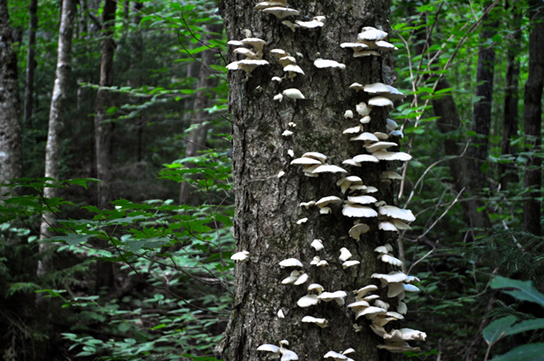


Figure 24.20図 24.20
Shelf fungi. Shelf fungi, so called because they grow on trees in a stack, attack and digest the trunk or branches of a tree. While some shelf fungi are found only on dead trees, others can parasitize living trees and cause eventual death, so they are considered serious tree pathogens. (credit: Cory Zanker)
棚状菌。木に重なり合って育つことから名づけられた棚状菌は、幹や枝を攻撃して消化する。枯れ木だけに見られるものもいるが、生きた木に寄生して最終的に枯死させるものもあり、重大な樹木病原体と見なされる。(クレジット:Cory Zanker)
Mutualistic Relationships相利共生関係
Symbiosis is the ecological interaction between two organisms that live together. This definition does not describe the type or quality of the interaction. When both members of the association benefit, the symbiotic relationship is called mutualistic. Fungi form mutualistic associations with many types of organisms, including cyanobacteria, algae, plants, and animals.
英語のヒント
共生とは、一緒に暮らす二つの生物間の生態的相互作用である。この定義は、相互作用の種類や性質を指定しない。両者が利益を得る場合、その共生関係を相利共生という。菌類は、シアノバクテリア、藻類、植物、動物を含む、多くの種類の生物と相利共生関係を作る。