第24章菌類
24.4 Fungal Parasites and Pathogens24.4 寄生者・病原体としての菌類
Learning Objectives学習目標
By the end of this section, you will be able to do the following:
この節を学ぶと、次のことができるようになる。
- Describe some fungal parasites and pathogens of plants植物の寄生者・病原体となる菌類の例を説明する。
- Describe the different types of fungal infections in humansヒトの真菌感染症のさまざまな型を説明する。
- Explain why antifungal therapy is hampered by the similarity between fungal and animal cells菌類細胞と動物細胞の類似が、抗真菌療法を難しくする理由を説明する。
Parasitism describes a symbiotic relationship in which one member of the association benefits at the expense of the other. Both parasites and pathogens harm the host; however, pathogens cause disease, damage to host tissues or physiology, whereas parasites usually do not, but can cause serious damage and death by competition for nutrients or other resources. Commensalism occurs when one member benefits without affecting the other.
英語のヒント
寄生は、一方が他方を犠牲にして利益を得る共生関係を表す。寄生者も病原体も宿主に害を与える。しかし、病原体は病気、すなわち宿主の組織や生理機能の損傷を引き起こすのに対し、寄生者は通常はそうしないが、栄養や他の資源をめぐる競争によって、深刻な損傷や死をもたらすことがある。一方が利益を得ても、他方には影響しない場合、片利共生という。
Plant Parasites and Pathogens植物の寄生者と病原体
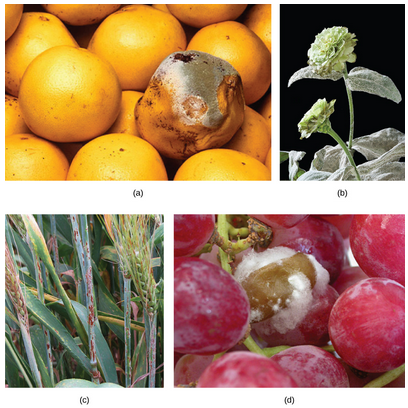
The production of sufficient high-quality crops is essential to human existence. Unfortunately, plant diseases have ruined many crops throughout human agricultural history, sometimes creating widespread famine. Many plant pathogens are fungi that cause tissue decay and the eventual death of the host (Figure 24.26). In addition to destroying plant tissue directly, some plant pathogens spoil crops by producing potent toxins that can further damage and kill the host plant. Fungi are also responsible for food spoilage and the rotting of stored crops. For example, the fungus Claviceps purpurea causes ergot, a disease of cereal crops (especially of rye). Although the fungus reduces the yield of cereals, the effects of the ergot's alkaloid toxins on humans and animals are of much greater significance. In animals, the disease is referred to as ergotism. The most common signs and symptoms are convulsions, hallucination, gangrene, and loss of milk in cattle. The active ingredient of ergot is lysergic acid, which is a precursor of the drug LSD. Smuts, rusts, and powdery or downy mildew are other examples of common fungal pathogens that affect crops.
英語のヒント
高品質の作物を十分に生産することは、ヒトの生存に不可欠である。残念ながら、植物の病気は農業の歴史を通じて多くの作物を損ない、ときに広範な飢饉を引き起こしてきた。多くの植物病原体は菌類で、組織を腐敗させ、最終的に宿主を死なせる(図24.26)。植物組織を直接破壊するだけでなく、強力な毒素を作って作物を損ない、宿主植物にさらなる損傷や死をもたらす病原体もある。菌類は、食品の変敗や貯蔵作物の腐敗も引き起こす。たとえば、Claviceps purpureaは、穀類、特にライムギの病気である麦角病を起こす。菌類は穀物の収量を減らすが、麦角のアルカロイド毒素がヒトや動物に及ぼす影響のほうが、はるかに重大である。動物では、この病気を麦角中毒という。最も一般的な徴候・症状は、けいれん、幻覚、壊疽、ウシの乳量喪失である。麦角の活性成分はリゼルギン酸で、薬物LSDの前駆体でもある。黒穂病、さび病、うどんこ病、べと病も、作物に影響する一般的な菌類病原体の例である。
OpenStax, Rice University; Biology 2e. (credit a: modification of work by Scott Bauer, USDA-ARS; credit b: modification of work by Stephen Ausmus, USDA-ARS; credit c: modification of work by David Marshall, USDA-ARS; credit d: modification of work by Joseph Smilanick, USDA-ARS) · CC BY 4.0 · Source出典

Figure 24.26図 24.26
Fungal pathogens. Some fungal pathogens include (a) green mold on grapefruit, (b) powdery mildew on a zinnia, (c) stem rust on a sheaf of barley, and (d) grey rot on grapes. In wet conditions Botrytis cinerea, the fungus that causes grey rot, can destroy a grape crop. However, controlled infection of grapes by Botrytis results in noble rot, a condition that produces strong and much-prized dessert wines. (credit a: modification of work by Scott Bauer, USDA-ARS; credit b: modification of work by Stephen Ausmus, USDA-ARS; credit c: modification of work by David Marshall, USDA-ARS; credit d: modification of work by Joseph Smilanick, USDA-ARS)
菌類病原体。例として、(a)グレープフルーツの緑色カビ、(b)ヒャクニチソウのうどんこ病、(c)オオムギの束の黒さび病、(d)ブドウの灰色かび病を示す。湿潤条件では、灰色かび病を起こすBotrytis cinereaが、ブドウの収穫を壊滅させることがある。しかし、感染を管理すると貴腐が起こり、濃厚で高く評価されるデザートワインを生む。(aのクレジット:USDA-ARSのScott Bauerによる作品を改変。b:USDA-ARSのStephen Ausmusによる作品を改変。c:USDA-ARSのDavid Marshallによる作品を改変。d:USDA-ARSのJoseph Smilanickによる作品を改変)
Aflatoxins are toxic, carcinogenic compounds released by fungi of the genus Aspergillus. Periodically, harvests of nuts and grains are tainted by aflatoxins, leading to massive recall of produce. This sometimes ruins producers and causes food shortages in developing countries.
英語のヒント
アフラトキシンは、Aspergillus属の菌類が放出する、有毒で発がん性のある化合物である。ナッツや穀物の収穫物は、ときおりアフラトキシンに汚染され、農産物の大規模な回収につながる。これは、ときに生産者を破産させ、発展途上国では食料不足を引き起こす。
Animal and Human Parasites and Pathogens動物とヒトの寄生者・病原体
Fungi can affect animals, including humans, in several ways. A mycosis is a fungal disease that results from infection and direct damage due to the growth and infiltration of the fungus. Fungi attack animals directly by colonizing and destroying tissues. Mycotoxicosis is the poisoning of humans (and other animals) by foods contaminated by fungal toxins (mycotoxins). Mycetismus specifically describes the ingestion of preformed toxins in poisonous mushrooms. In addition, individuals who display hypersensitivity to molds and spores may develop strong and dangerous allergic reactions. Fungal infections are generally very difficult to treat because, unlike bacteria, fungi are eukaryotes. Antibiotics only target prokaryotic cells, whereas compounds that kill fungi also harm the eukaryotic animal host.
英語のヒント
菌類は、ヒトを含む動物に、いくつかの方法で影響する。真菌症は、菌類の感染と、その成長・侵入による直接の損傷から生じる病気である。菌類は組織に定着して破壊し、動物を直接攻撃する。マイコトキシン中毒は、菌類毒素で汚染された食物による、ヒトや他の動物の中毒である。キノコ中毒は、特に、毒キノコの中ですでに作られていた毒素の摂取を指す。また、カビや胞子に過敏な人は、強く危険なアレルギー反応を起こすことがある。真菌感染症は、一般に治療が非常に難しい。菌類は細菌と異なり、真核生物だからである。抗生物質は原核細胞だけを標的とするが、菌類を殺す化合物は、真核生物である動物宿主も傷つける。
Many fungal infections are superficial; that is, they occur on the animal’s skin. Termed cutaneous (“skin”) mycoses, they can have devastating effects. For example, the decline of the world’s frog population in recent years is caused (in part) by the chytrid fungus Batrachochytrium dendrobatidis. This deadly fungus infects the skin of frogs and presumably interferes with cutaneous gaseous exchange, which is essential for amphibian survival. Similarly, more than a million bats in the United States have been killed by white-nose syndrome, which appears as a white ring around the mouth of the bat. It is caused by the cold-loving fungus Pseudogymnoascus destructans, which disseminates its deadly spores in caves where bats hibernate. Mycologists are researching the transmission, mechanism, and control of P. destructans to stop its spread.
英語のヒント
多くの真菌感染症は表在性で、動物の皮膚に起こる。皮膚真菌症と呼ばれ、甚大な影響をもたらすことがある。たとえば、近年の世界的なカエル個体数の減少は、その一部がツボカビBatrachochytrium dendrobatidisによって起こっている。この致死的な菌はカエルの皮膚に感染し、両生類の生存に不可欠な皮膚でのガス交換を、おそらく妨げる。同様に、米国では100万匹以上のコウモリが、口の周囲の白い輪として現れる白鼻症候群で死んだ。原因は低温を好むPseudogymnoascus destructansで、コウモリが冬眠する洞窟内に致死的な胞子を散布する。菌学者は、その拡大を止めるため、伝播、機構、防除を研究している。
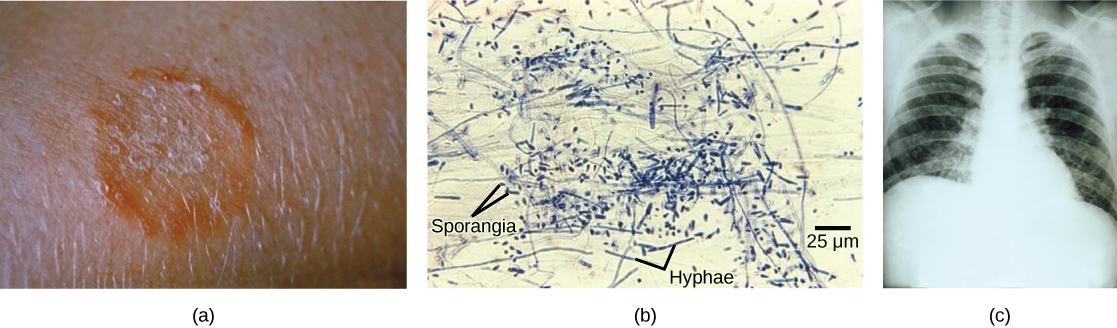
Fungi that cause the superficial mycoses of the epidermis, hair, and nails rarely spread to the underlying tissue (Figure 24.27). These fungi are often misnamed “dermatophytes”, from the Greek words dermis meaning skin and phyte meaning plant, although they are not plants. Dermatophytes are also called “ringworms” because of the red ring they cause on skin. They secrete extracellular enzymes that break down keratin (a protein found in hair, skin, and nails), causing conditions such as athlete’s foot and jock itch. These conditions are usually treated with over-the-counter topical creams and powders, and are easily cleared. More persistent superficial mycoses may require prescription oral medications.
英語のヒント
表皮、毛、爪に表在性真菌症を起こす菌類は、その下の組織へ広がることが少ない(図24.27)。これらの菌類は、植物ではないにもかかわらず、皮膚を意味するギリシャ語dermisと、植物を意味するphyteから、「dermatophytes(皮膚糸状菌)」という誤解を招く名で呼ばれることが多い。皮膚に赤い輪を作るため、「ringworms」とも呼ばれる。皮膚糸状菌は、毛、皮膚、爪にあるタンパク質ケラチンを分解する細胞外酵素を分泌し、水虫や股部白癬などを起こす。通常は、市販の外用クリームや粉末剤で治療され、容易に治る。より持続性の表在性真菌症では、処方される内服薬が必要なこともある。
OpenStax, Rice University; Biology 2e. (credit a: modification of work by Dr. Lucille K. Georg, CDC; credit b: modification of work by Dr. Lucille K. Georg, CDC; credit c: modification of work by M. Renz, CDC; scale-bar data from Matt Russell) · CC BY 4.0 · Source出典

Figure 24.27図 24.27
Fungal diseases of humans. (a) Ringworm presents as a red ring on skin; (b) Trichophyton violaceum, shown in this bright field light micrograph, causes superficial mycoses on the scalp; (c) Histoplasma capsulatum is an ascomycete that infects airways and causes symptoms similar to influenza. (credit a: modification of work by Dr. Lucille K. Georg, CDC; credit b: modification of work by Dr. Lucille K. Georg, CDC; credit c: modification of work by M. Renz, CDC; scale-bar data from Matt Russell)
ヒトの真菌性疾患。(a)白癬は皮膚の赤い輪として現れる。(b)明視野光学顕微鏡像のTrichophyton violaceumは、頭皮の表在性真菌症を起こす。(c)Histoplasma capsulatumは、気道に感染し、インフルエンザに似た症状を起こす子嚢菌である。(a、bのクレジット:CDCのDr. Lucille K. Georgによる作品を改変。c:CDCのM. Renzによる作品を改変。スケールバーのデータ:Matt Russell)
Systemic mycoses spread to internal organs, most commonly entering the body through the respiratory system. For example, coccidioidomycosis (often called valley fever) is commonly found in the southwestern United States, but as far north as Washington, where the fungus resides in the dust. Once inhaled, the spores develop in the lungs and cause symptoms similar to those of tuberculosis. Histoplasmosis is caused by the dimorphic fungus Histoplasma capsulatum. In its human host, Histoplasma grows as a yeast, causing pulmonary infections, and in rarer cases, swelling of the membranes of the brain and spinal cord. Treatment of these and many other fungal diseases requires the use of antifungal medications that have serious side effects.
英語のヒント
全身性真菌症は内臓へ広がり、体内への入口は呼吸器系であることが最も多い。たとえば、コクシジオイデス症(しばしば渓谷熱と呼ばれる)は、米国南西部によく見られるが、北はワシントン州まで分布し、菌は粉塵中に存在する。胞子は吸い込まれると肺で発育し、結核に似た症状を起こす。ヒストプラズマ症は、二形性菌Histoplasma capsulatumによって起こる。ヒト宿主の中では酵母として育ち、肺感染を起こし、よりまれには脳や脊髄の膜を腫脹させる。これらを含む多くの真菌性疾患の治療には、重い副作用をもつ抗真菌薬が必要である。
Opportunistic mycoses are fungal infections that are either common in all environments, or part of the normal biota. They mainly affect individuals who have a compromised immune system. Patients in the late stages of AIDS suffer from opportunistic mycoses that can be life threatening. The yeast Candida sp., a common member of the natural biota, can grow unchecked and infect the vagina or mouth (oral thrush) if the pH of the surrounding environment, the person’s immune defenses, or the normal population of bacteria are altered.
英語のヒント
日和見真菌症は、どの環境にも普通に存在するか、正常な生物相の一部である菌類による感染症である。主に、免疫系の働きが低下した人に起こる。エイズの末期患者は、生命を脅かすこともある日和見真菌症に苦しむ。自然な生物相の一般的な成員である酵母Candida属は、周囲のpH、その人の免疫防御、正常な細菌の個体群が変わると、抑えられずに増殖し、膣や口(口腔鵞口瘡)へ感染することがある。
Mycetismus can occur when poisonous mushrooms are eaten. It causes a number of human fatalities during mushroom-picking season. Many edible fruiting bodies of fungi resemble highly poisonous relatives, and amateur mushroom hunters are cautioned to carefully inspect their harvest and avoid eating mushrooms of doubtful origin. The adage “there are bold mushroom pickers and old mushroom pickers, but are there no old, bold mushroom pickers” is unfortunately true.
英語のヒント
毒キノコを食べると、キノコ中毒が起こることがある。キノコ狩りの季節には、多くの死者を出す。食用菌の子実体の多くは、強い毒をもつ近縁種に似ており、素人のキノコ採りは、採集物をよく調べ、由来の疑わしいキノコを食べないよう注意される。「大胆なキノコ採りも、年老いたキノコ採りもいるが、大胆で年老いたキノコ採りはいない」という格言は、残念ながら真実である。