第24章菌類
Lichens地衣類
Lichens display a range of colors and textures (Figure 24.23) and can survive in the most unusual and hostile habitats. They cover rocks, gravestones, tree bark, and the ground in the tundra where plant roots cannot penetrate. Lichens can survive extended periods of drought, when they become completely desiccated, and then rapidly become active once water is available again.
英語のヒント
地衣類は、多様な色と質感を示し(図24.23)、極めて特殊で厳しい生息環境でも生存できる。植物の根が入り込めないツンドラの岩、墓石、樹皮、地表を覆う。長い乾燥期には完全に乾燥して生き延び、水が再び利用できるようになると、速やかに活動を再開する。
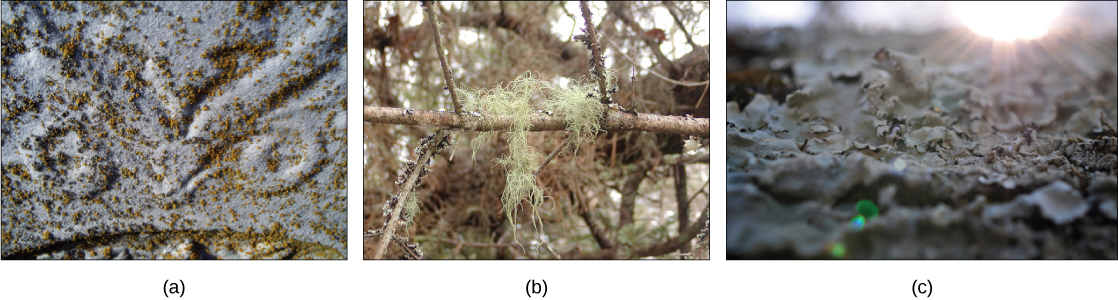
OpenStax, Rice University; Biology 2e. (credit a: modification of work by Jo Naylor; credit b: modification of work by "djpmapleferryman"/Flickr; credit c: modification of work by Cory Zanker) · CC BY 4.0 · Source出典
Figure 24.23図 24.23
Lichens. Lichens have many forms. They may be (a) crust-like, (b) hair-like, or (c) leaf-like. (credit a: modification of work by Jo Naylor; credit b: modification of work by "djpmapleferryman"/Flickr; credit c: modification of work by Cory Zanker)
地衣類。地衣類は、(a)かさぶた状、(b)毛状、(c)葉状など、多くの形をとる。(aのクレジット:Jo Naylorによる作品を改変。b:“djpmapleferryman”/Flickrによる作品を改変。c:Cory Zankerによる作品を改変)
It is important to note that lichens are not a single organism, but rather another wonderful example of a mutualism, in which a fungus (usually a member of the Ascomycota or Basidiomycota) lives in a physical and physiological relationship with a photosynthetic organism (a eukaryotic alga or a prokaryotic cyanobacterium) (Figure 24.24). Generally, neither the fungus nor the photosynthetic organism can survive alone outside of the symbiotic relationship. The body of a lichen, referred to as a thallus, is formed of hyphae wrapped around the photosynthetic partner. The photosynthetic organism provides carbon and energy in the form of carbohydrates. Some cyanobacteria additionally fix nitrogen from the atmosphere, contributing nitrogenous compounds to the association. In return, the fungus supplies minerals and protection from dryness and excessive light by encasing the algae in its mycelium. The fungus also attaches the lichen to its substrate.
英語のヒント
地衣類は単一の生物ではなく、相利共生のもう一つの優れた例であることが重要である。そこでは、菌類(通常は子嚢菌門か担子菌門の成員)が、光合成生物(真核の藻類または原核のシアノバクテリア)と、物理的・生理的な関係を結んで暮らす(図24.24)。一般に、菌類も光合成生物も、この共生関係の外で単独では生きられない。葉状体と呼ばれる地衣類の体は、光合成を行う相手を菌糸が包んで形成される。光合成生物は、炭水化物の形で炭素とエネルギーを供給する。一部のシアノバクテリアは、さらに大気中の窒素を固定し、窒素化合物を共生体に供給する。その見返りに、菌類は藻類を菌糸体で包み、無機養分を供給するとともに、乾燥や過剰な光から保護する。菌類は、地衣類を基質へ付着させる役割も担う。
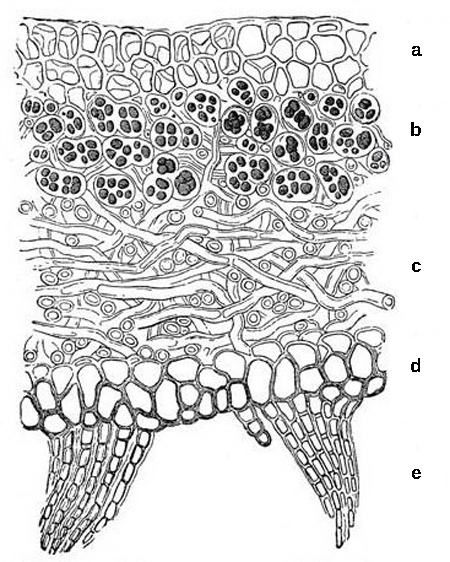
Figure 24.24図 24.24
Structure of a lichen. This cross-section of a lichen thallus shows the (a) upper cortex of fungal hyphae, which provides protection; the (b) algal zone where photosynthesis occurs, the (c) medulla of fungal hyphae, and the (d) lower cortex, which also provides protection and may have (e) rhizines to anchor the thallus to the substrate.
地衣類の構造。葉状体の断面は、(a)保護を担う菌糸の上皮層、(b)光合成が起こる藻類層、(c)菌糸の髄層、(d)同じく保護を担う下皮層を示す。下皮層には、葉状体を基質へ固定する(e)偽根がある場合がある。
The thallus of lichens grows very slowly, expanding its diameter a few millimeters per year. Both the fungus and the alga participate in the formation of dispersal units, called soredia—clusters of algal cells surrounded by mycelia. Soredia are dispersed by wind and water and form new lichens.
英語のヒント
地衣類の葉状体は非常にゆっくり成長し、直径は1年に数ミリメートル増える。菌類と藻類はともに、粉芽という散布単位の形成に関わる。粉芽は、菌糸体に囲まれた藻類細胞の集まりである。風や水で散布され、新しい地衣類を作る。
Lichens are extremely sensitive to air pollution, especially to abnormal levels of nitrogenous and sulfurous compounds. The U.S. Forest Service and National Park Service can monitor air quality by measuring the relative abundance and health of the lichen population in an area. Lichens fulfill many ecological roles. Caribou and reindeer eat lichens, and they provide cover for small invertebrates that hide in the mycelium. In the production of textiles, weavers used lichens to dye wool for many centuries until the advent of synthetic dyes. The pigments used in litmus paper are also extracted from lichens.
英語のヒント
地衣類は、大気汚染、特に異常な濃度の窒素化合物や硫黄化合物に、非常に敏感である。米国森林局と国立公園局は、ある地域の地衣類個体群の相対的な豊富さと健康状態を測ることで、大気の質を監視できる。地衣類は、多くの生態的役割を果たす。カリブーやトナカイは地衣類を食べ、菌糸体の中に隠れる小型無脊椎動物には、隠れ場所が与えられる。織物の生産では、合成染料が現れるまで何世紀もの間、織り手は地衣類で羊毛を染めていた。リトマス紙の色素も、地衣類から抽出される。
Fungus/Animal Mutualism菌類と動物の相利共生
Fungi have evolved mutualisms with numerous insects in Phylum Arthropoda: joint-legged invertebrates with a chitinous exoskeleton. Arthropods depend on the fungus for protection from predators and pathogens, while the fungus obtains nutrients and a way to disseminate spores into new environments. The association between species of Basidiomycota and scale insects is one example. The fungal mycelium covers and protects the insect colonies. The scale insects foster a flow of nutrients from the parasitized plant to the fungus.
英語のヒント
菌類は、節足動物門の多くの昆虫と、相利共生を進化させてきた。節足動物は、関節のある脚とキチン質の外骨格をもつ無脊椎動物である。節足動物は、捕食者や病原体からの保護を菌類に頼り、菌類は栄養分と、新しい環境へ胞子を散布する手段を得る。担子菌類の種とカイガラムシの関係は、その一例である。菌糸体は昆虫の集団を覆って保護する。カイガラムシは、寄生している植物から菌類へ、栄養が流れるのを促す。
In a second example, leaf-cutter ants of Central and South America literally farm fungi. They cut disks of leaves from plants and pile them up in subterranean gardens (Figure 24.25). Fungi are cultivated in these disk gardens, digesting the cellulose in the leaves that the ants cannot break down. Once smaller sugar molecules are produced and consumed by the fungi, the fungi in turn become a meal for the ants. The insects also patrol their garden, preying on competing fungi. Both ants and fungi benefit from this mutualistic association. The fungus receives a steady supply of leaves and freedom from competition, while the ants feed on the fungi they cultivate.
英語のヒント
第2の例として、中南米のハキリアリは、文字どおり菌類を栽培する。植物の葉を円盤状に切り取り、地下の庭に積み上げる(図24.25)。この葉の庭で菌類が育てられ、アリには分解できない葉のセルロースを消化する。小さな糖分子が生じて菌類に消費されると、今度は菌類がアリの食事となる。アリは庭を巡回し、競争相手の菌類を捕食もする。この相利共生関係は、アリと菌類の両方に利益をもたらす。菌類は、安定した葉の供給と競争からの解放を得て、アリは自分たちが栽培する菌類を食べる。
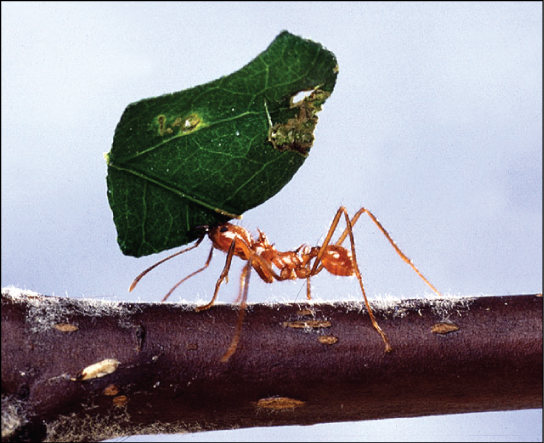


Figure 24.25図 24.25
Leaf-cutter ant. A leaf-cutter ant transports a leaf that will feed a farmed fungus. (credit: Scott Bauer, USDA-ARS)
ハキリアリ。ハキリアリが、栽培する菌類の餌となる葉を運ぶ。(クレジット:Scott Bauer、USDA-ARS)