第24章菌類
Fungus/Plant Mutualism菌類と植物の相利共生
One of the most remarkable associations between fungi and plants is the establishment of mycorrhizae. Mycorrhiza, which is derived from the Greek words myco meaning fungus and rhizo meaning root, refers to the fungal partner of a mutualistic association between vascular plant roots and their symbiotic fungi. Nearly 90 percent of all vascular plant species have mycorrhizal partners. In a mycorrhizal association, the fungal mycelia use their extensive network of hyphae and large surface area in contact with the soil to channel water and minerals from the soil into the plant. In exchange, the plant supplies the products of photosynthesis to fuel the metabolism of the fungus.
英語のヒント
菌類と植物の特に顕著な関係の一つが、菌根の形成である。mycorrhizaは、菌を意味するギリシャ語mycoと、根を意味するrhizoに由来し、維管束植物の根と共生菌の相利関係における、菌類側の相手を指す。全維管束植物種の約90%は、菌根の相手をもつ。菌根関係では、菌糸体は、広範な菌糸の網と、土に接する大きな表面積を利用して、土壌の水と無機養分を植物へ導く。その見返りに、植物は光合成産物を供給し、菌類の代謝を支える。
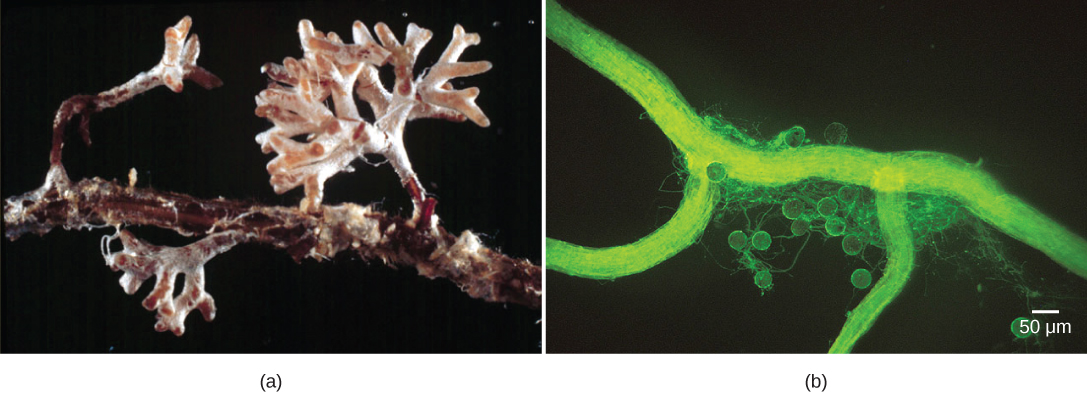
There are several basic types of mycorrhizae. Ectomycorrhizae (“outside” mycorrhizae) depend on fungi enveloping the roots in a sheath (called a mantle). Hyphae grow from the mantle into the root and envelope the outer layers of the root cells in a network of hyphae called a Hartig net (Figure 24.21). The fungal partner can belong to the Ascomycota, Basidiomycota or Zygomycota. Endomycorrhizae ("inside" mycorrhizae), also called arbuscular mycorrhizae, are produced when the fungi grow inside the root in a branched structure called an arbuscule (from the Latin for “little trees”). The fungal partners of endomycorrhizal associates all belong to the Glomeromycota. The fungal arbuscules penetrate root cells between the cell wall and the plasma membrane and are the site of the metabolic exchanges between the fungus and the host plant (Figure 24.21b and Figure 24.22b). Orchids rely on a third type of mycorrhiza. Orchids are epiphytes that typically produce very small airborne seeds without much storage to sustain germination and growth. Their seeds will not germinate without a mycorrhizal partner (usually a Basidiomycete). After nutrients in the seed are depleted, fungal symbionts support the growth of the orchid by providing necessary carbohydrates and minerals. Some orchids continue to be mycorrhizal throughout their life cycle.
英語のヒント
菌根には、いくつかの基本型がある。外生菌根(「外側の」菌根)は、菌類が根を菌鞘というさやで包むことに依存する。菌糸は菌鞘から根の内部へ伸び、ハルティヒネットと呼ばれる網で、根の外層の細胞を包む(図24.21)。菌類側の相手は、子嚢菌門、担子菌門、接合菌門のいずれかに属する。内生菌根(「内側の」菌根)は、アーバスキュラー菌根とも呼ばれ、菌類が根の内部で、樹枝状体(ラテン語の「小さな木」に由来)という枝分かれ構造を作ることで生じる。この菌根の菌類側の相手は、すべてグロムス菌門に属する。樹枝状体は、根の細胞の細胞壁と細胞膜の間へ入り込み、菌類と宿主植物の間で代謝物を交換する場所となる(図24.21b、図24.22b)。ランは、第3の型の菌根に依存する。ランは着生植物であり、通常、発芽と成長を支える貯蔵物が少ない、非常に小さな風散布種子を作る。その種子は、菌根の相手(通常は担子菌)がいなければ発芽しない。種子の栄養分が尽きると、共生菌が必要な炭水化物と無機養分を供給し、ランの成長を支える。一部のランは、生活環全体を通じて菌根関係を保つ。
OpenStax, Rice University; Biology 2e. (credit a: modification of work by Randy Molina, USDA; credit b: modification of work by Sara Wright, USDA-ARS; scale-bar data from Matt Russell) · CC BY 4.0 · Source出典

Figure 24.22図 24.22
Mycorrhizae. The (a) infection of Pinus radiata (Monterey pine) roots by the hyphae of Amanita muscaria (fly amanita) causes the pine tree to produce many small, branched rootlets. The Amanita hyphae cover these small roots with a white mantle. (b) Spores (the round bodies) and hyphae (thread-like structures) are evident in this light micrograph of an arbuscular mycorrhiza by a fungus on the root of a corn plant. (credit a: modification of work by Randy Molina, USDA; credit b: modification of work by Sara Wright, USDA-ARS; scale-bar data from Matt Russell)
菌根。(a)Pinus radiata(モントレーマツ)の根に、Amanita muscaria(ベニテングタケ)の菌糸が感染すると、小さく枝分かれした細根が多数作られる。Amanitaの菌糸は、これらの根を白い菌鞘で覆う。(b)トウモロコシの根に菌類が作ったアーバスキュラー菌根の光学顕微鏡像で、胞子(丸い構造)と菌糸(糸状構造)が明瞭に見える。(aのクレジット:USDAのRandy Molinaによる作品を改変。b:USDA-ARSのSara Wrightによる作品を改変。スケールバーのデータ:Matt Russell)
Other examples of fungus–plant mutualism include the endophytes: fungi that live inside tissue without damaging the host plant. Endophytes release toxins that repel herbivores, or confer resistance to environmental stress factors, such as infection by microorganisms, drought, or heavy metals in soil.
英語のヒント
菌類と植物の相利共生の別の例には、宿主植物を傷つけずに組織内で暮らす内生菌がある。内生菌は、草食動物を遠ざける毒素を放出したり、微生物感染、干ばつ、土壌中の重金属などの環境ストレス要因への抵抗性を与えたりする。