第17章バイオテクノロジーとゲノミクス
Introductionはじめに
OpenStax, Rice University; Biology 2e. (credit "map": modification of photo by NASA) · CC BY 4.0 · Source出典

Figure 17.1図 17.1
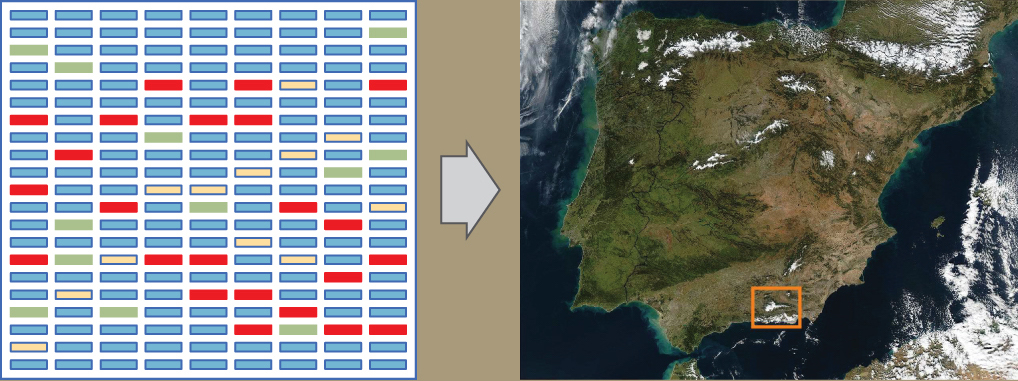
Genomics compares the DNA of different organisms, enabling scientists to create maps with which to navigate different organisms' DNA. (credit "map": modification of photo by NASA)
英語のヒント
ゲノミクスでは異なる生物のDNAを比較し、科学者がそれぞれの生物のDNAをたどるための地図を作れるようにする。(「地図」のクレジット:NASAの写真を改変)
The study of nucleic acids began with the discovery of DNA, progressed to the study of genes and small fragments, and has now exploded to the field of genomics. Genomics is the study of entire genomes, including the complete set of genes, their nucleotide sequence and organization, and their interactions within a species and with other species. DNA sequencing technology has contributed to advances in genomics. Just as information technology has led to Google maps that enable people to obtain detailed information about locations around the globe, researchers use genomic information to create similar DNA maps of different organisms. These findings have helped anthropologists to better understand human migration and have aided the medical field through mapping human genetic diseases. Genomic information can contribute to scientific understanding in various ways and knowledge in the field is quickly growing.
英語のヒント
核酸の研究はDNAの発見に始まり、遺伝子や小さな断片の研究へと進み、現在ではゲノミクスという分野へと爆発的に広がっている。ゲノミクスはゲノム全体の研究であり、遺伝子の完全な一式、そのヌクレオチド配列と配置、同じ種の中や他種との間での相互作用を含む。DNAの塩基配列決定技術は、ゲノミクスの進歩に貢献してきた。情報技術がGoogleマップを生み、人々が世界各地の場所に関する詳しい情報を得られるようになったのと同じように、研究者はゲノム情報を用いて、異なる生物のDNAの地図を作る。これらの成果は、人類学者による人類の移動の理解を深め、ヒトの遺伝性疾患を地図に対応づけることで医学にも役立ってきた。ゲノム情報はさまざまな形で科学的理解に貢献でき、この分野の知識は急速に増えている。