第17章バイオテクノロジーとゲノミクス
Transgenic Animalsトランスジェニック動物
Although several recombinant proteins in medicine are successfully produced in bacteria, some proteins require a eukaryotic animal host for proper processing. For this reason, the desired genes are cloned and expressed in animals, such as sheep, goats, chickens, and mice. We call animals that have been modified to express recombinant DNA transgenic animals. Several human proteins are expressed in transgenic sheep and goat milk, and some are expressed in chicken eggs. Scientists have used mice extensively for expressing and studying recombinant gene and mutation effects.
英語のヒント
医療に使ういくつかの組換えタンパク質は、細菌でうまく生産されているが、一部のタンパク質は、適切に加工されるために真核生物である動物の宿主を必要とする。このため、目的の遺伝子をクローニングし、ヒツジ、ヤギ、ニワトリ、マウスなどの動物で発現させる。組換えDNAを発現するように改変された動物を、トランスジェニック動物と呼ぶ。いくつかのヒトタンパク質は、トランスジェニックなヒツジやヤギの乳中で発現し、一部はニワトリの卵で発現する。科学者は、組換え遺伝子を発現させ、その遺伝子や変異の影響を調べるために、マウスを広く利用してきた。
Transgenic Plantsトランスジェニック植物
Manipulating the DNA of plants (i.e., creating GMOs) has helped to create desirable traits, such as disease resistance, herbicide and pesticide resistance, better nutritional value, and better shelf-life (Figure 17.10). Plants are the most important source of food for the human population. Farmers developed ways to select for plant varieties with desirable traits long before modern-day biotechnology practices were established.
英語のヒント
植物のDNAを操作すること(すなわちGMOを作ること)は、耐病性、除草剤や農薬への耐性、栄養価の向上、保存性の向上など、望ましい形質を作るのに役立ってきた(図17.10)。植物は人類にとって最も重要な食料源である。現代のバイオテクノロジーの手法が確立されるはるか以前から、農家は望ましい形質をもつ植物の品種を選ぶ方法を発達させてきた。
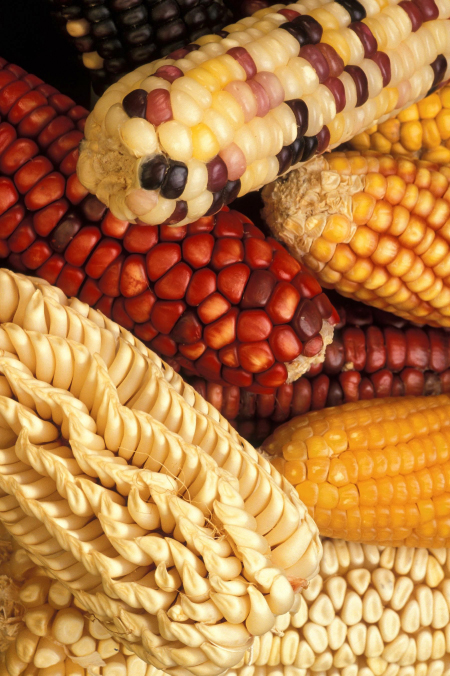

Figure 17.10図 17.10
Corn, a major agricultural crop used to create products for a variety of industries, is often modified through plant biotechnology. (credit: Keith Weller, USDA)
さまざまな産業の製品の原料となる主要作物のトウモロコシは、植物バイオテクノロジーによって改変されることが多い。(クレジット:Keith Weller、USDA)
We call plants that have received recombinant DNA from other species transgenic plants. Because they are not natural, government agencies closely monitor transgenic plants and other GMOs to ensure that they are fit for human consumption and do not endanger other plant and animal life. Because foreign genes can spread to other species in the environment, extensive testing is required to ensure ecological stability. Staples like corn, potatoes, and tomatoes were the first crop plants that scientists genetically engineered.
英語のヒント
別の種から組換えDNAを受け取った植物を、トランスジェニック植物と呼ぶ。これらは自然のものではないため、政府機関は、ヒトの食用に適し、ほかの動植物を危険にさらさないことを確かめるため、トランスジェニック植物などのGMOを厳しく監視する。外来遺伝子が環境中の別の種へ広がる可能性があるため、生態系の安定を確かめるには広範な試験が必要である。トウモロコシ、ジャガイモ、トマトなどの主要作物が、科学者が最初に遺伝子工学で改変した作物だった。
Transformation of Plants Using Agrobacterium tumefaciensAgrobacterium tumefaciensを用いた植物の形質転換
Gene transfer occurs naturally between species in microbial populations. Many viruses that cause human diseases, such as cancer, act by incorporating their DNA into the human genome. In plants, tumors caused by the bacterium Agrobacterium tumefaciens occur by DNA transfer from the bacterium to the plant. Although the tumors do not kill the plants, they stunt the plants and they become more susceptible to harsh environmental conditions. A. tumefaciens affects many plants such as walnuts, grapes, nut trees, and beets. Artificially introducing DNA into plant cells is more challenging than in animal cells because of the thick plant cell wall.
英語のヒント
微生物集団では、種を越えた遺伝子の移動が自然に起こる。がんなどヒトの病気を引き起こす多くのウイルスは、自分のDNAをヒトのゲノムに組み込むことで作用する。植物では、Agrobacterium tumefaciensという細菌が引き起こす腫瘍が、細菌から植物へのDNA移動によって生じる。腫瘍は植物を殺すわけではないが、成長を妨げ、植物は厳しい環境条件の影響を受けやすくなる。A. tumefaciensは、クルミ、ブドウ、堅果をつける樹木、ビートなど多くの植物に影響する。植物には厚い細胞壁があるため、植物細胞にDNAを人工的に導入するのは、動物細胞より難しい。
Researchers used the natural transfer of DNA from Agrobacterium to a plant host to introduce DNA fragments of their choice into plant hosts. In nature, the disease-causing A. tumefaciens have a set of plasmids, Ti plasmids (tumor-inducing plasmids), that contain genes to produce tumors in plants. DNA from the Ti plasmid integrates into the infected plant cell’s genome. Researchers manipulate the Ti plasmids to remove the tumor-causing genes and insert the desired DNA fragment for transfer into the plant genome. The Ti plasmids carry antibiotic resistance genes to aid selection and researchers can propagate them in E. coli cells as well.
英語のヒント
研究者は、Agrobacteriumから植物宿主への自然なDNA移動を利用して、自分たちが選んだDNA断片を植物宿主へ導入した。自然界では、病気を引き起こすA. tumefaciensは、植物に腫瘍を作る遺伝子を含むTiプラスミド(腫瘍誘導プラスミド)をもつ。TiプラスミドのDNAは、感染した植物細胞のゲノムへ組み込まれる。研究者はTiプラスミドを操作して、腫瘍を引き起こす遺伝子を除去し、植物のゲノムへ移すための目的のDNA断片を挿入する。Tiプラスミドは、選択を助ける抗生物質耐性遺伝子をもち、大腸菌の細胞内でも増やすことができる。
The Organic Insecticide Bacillus thuringiensis有機農業の殺虫剤Bacillus thuringiensis
Bacillus thuringiensis (Bt) is a bacterium that produces protein crystals during sporulation that are toxic to many insect species that affect plants. Insects need to ingest Bt toxin in order to activate the toxin. Insects that have eaten Bt toxin stop feeding on the plants within a few hours. After the toxin activates in the insects' intestines, they die within a couple of days. Modern biotechnology has allowed plants to encode their own crystal Bt toxin that acts against insects. Scientists have cloned the crystal toxin genes from Bt and introduced them into plants. Bt toxin is safe for the environment, nontoxic to humans and other mammals, and organic farmers have approved it as a natural insecticide.
英語のヒント
Bacillus thuringiensis(Bt)は、芽胞を形成する際に、植物に害を与える多くの昆虫種に対して毒性をもつタンパク質の結晶を作る細菌である。Bt毒素が活性化されるには、昆虫がそれを摂取する必要がある。Bt毒素を食べた昆虫は、数時間以内に植物を食べるのをやめる。毒素が腸内で活性化されると、昆虫は2日ほどで死ぬ。現代のバイオテクノロジーにより、植物自身に、昆虫へ作用する結晶性Bt毒素をコードさせることが可能になった。科学者はBtから結晶毒素の遺伝子をクローニングして、植物へ導入してきた。Bt毒素は環境に対して安全で、ヒトやほかの哺乳類には無毒であり、有機農家は天然の殺虫剤として認めている。
Flavr Savr Tomatoフレーバーセーバー・トマト
The first GM crop on the market was the Flavr Savr Tomato in 1994. Scientists used antisense RNA technology to slow the softening and rotting process caused by fungal infections, which led to increased shelf life of the GM tomatoes. Additional genetic modification improved the tomato's flavor. The Flavr Savr tomato did not successfully stay in the market because of problems maintaining and shipping the crop.
英語のヒント
市場に出た最初の遺伝子組換え作物は、1994年のフレーバーセーバー・トマトだった。科学者はアンチセンスRNA技術を用いて、菌類感染による軟化と腐敗の過程を遅らせ、遺伝子組換えトマトの保存期間を延ばした。さらに遺伝子を改変して、トマトの風味を改善した。フレーバーセーバー・トマトは、作物の管理と出荷の問題のため、市場に定着することができなかった。