第7章細胞呼吸
Introductionはじめに
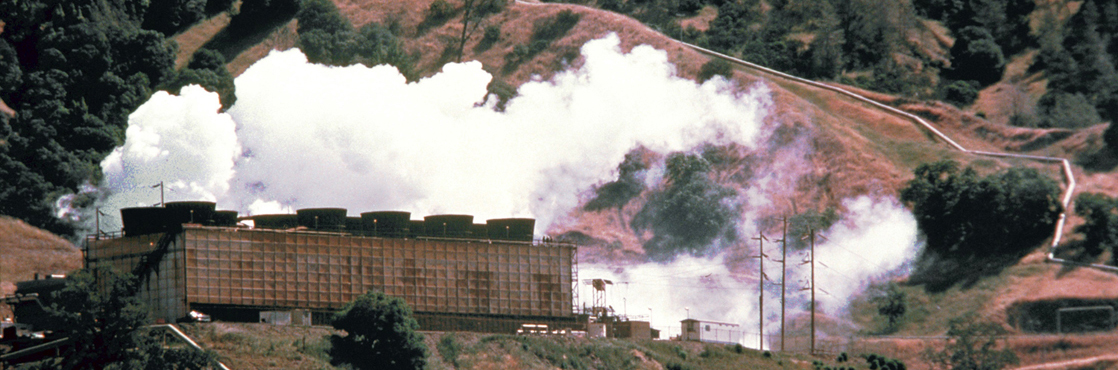
OpenStax, Rice University; Biology 2e. (credit: modification of work by the U.S. Department of Defense) · CC BY 4.0 · Source出典

Figure 7.1図 7.1
This geothermal energy plant transforms thermal energy from deep in the ground into electrical energy, which can be easily used. (credit: modification of work by the U.S. Department of Defense)
この地熱発電所は、地下深くの熱エネルギーを、使いやすい電気エネルギーへ変換している。(出典:米国国防総省の作品を改変)
The electrical energy plant in Figure 7.1 converts energy from one form to another form that can be more easily used. This type of generating plant starts with underground thermal energy (heat) and transforms it into electrical energy that will be transported to homes and factories. Like a generating plant, plants and animals also must take in energy from the environment and convert it into a form that their cells can use. Mass and its stored energy enter an organism’s body in one form and are converted into another form that can fuel the organism’s life functions. In the process of photosynthesis, plants and other photosynthetic producers take in energy in the form of light (solar energy) and convert it into chemical energy in the form of glucose, which stores this energy in its chemical bonds. Then, a series of metabolic pathways, collectively called cellular respiration, extracts the energy from the bonds in glucose and converts it into a form that all living things can use.
英語のヒント
図7.1の発電所は、エネルギーを一つの形から、より利用しやすい別の形へ変換する。この型の発電所は、地下の熱エネルギーを電気エネルギーへ変え、家庭や工場へ送る。発電所と同じように、植物や動物も環境からエネルギーを取り込み、細胞が使える形へ変換しなければならない。物質と、そこに蓄えられたエネルギーは、ある形で生物の体に入り、生命活動の動力となる別の形へ変えられる。光合成では、植物やほかの光合成を行う生産者が、光(太陽エネルギー)の形でエネルギーを取り込み、グルコースという形の化学エネルギーへ変換する。グルコースは、その化学結合にエネルギーを蓄える。続いて、まとめて細胞呼吸と呼ばれる一連の代謝経路が、グルコースの結合からエネルギーを取り出し、すべての生物が利用できる形へ変換する。