第7章細胞呼吸
Alcohol Fermentationアルコール発酵
Another familiar fermentation process is alcohol fermentation (Figure 7.17), which produces ethanol. The first chemical reaction of alcohol fermentation is the following (CO2 does not participate in the second reaction):
英語のヒント
もう一つの身近な発酵は、エタノールを生み出すアルコール発酵である(図7.17)。その最初の化学反応は次のとおりである。CO2は第2反応には関わらない。
The first reaction is catalyzed by pyruvate decarboxylase, a cytoplasmic enzyme, with a coenzyme of thiamine pyrophosphate (TPP, derived from vitamin B1 and also called thiamine). A carboxyl group is removed from pyruvic acid, releasing carbon dioxide as a gas. The loss of carbon dioxide reduces the size of the molecule by one carbon, producing acetaldehyde. The second reaction is catalyzed by alcohol dehydrogenase to oxidize NADH to NAD+ and reduce acetaldehyde to ethanol. The fermentation of pyruvic acid by yeast produces the ethanol found in alcoholic beverages. Ethanol tolerance of yeast is variable, ranging from about 5 percent to 21 percent, depending on the yeast strain and environmental conditions.
英語のヒント
最初の反応は、細胞質の酵素ピルビン酸デカルボキシラーゼが、チアミンピロリン酸(TPP)を補酵素として触媒する。TPPは、チアミンとも呼ばれるビタミンB1に由来する。ピルビン酸からカルボキシ基が取り除かれ、二酸化炭素が気体として放出される。その結果、炭素が1個減って分子が小さくなり、アセトアルデヒドができる。第2反応はアルコールデヒドロゲナーゼが触媒し、NADHをNAD+へ酸化するとともに、アセトアルデヒドをエタノールへ還元する。酵母によるピルビン酸の発酵が、酒類に含まれるエタノールを生み出す。酵母のエタノール耐性は、菌株と環境条件によって約5〜21パーセントと幅がある。
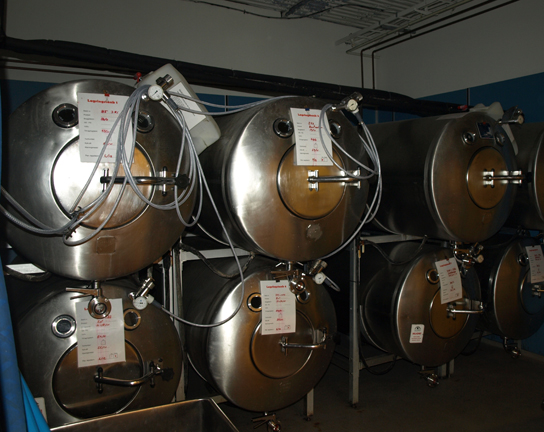

Figure 7.17図 7.17
Fermentation of grape juice into wine produces CO2 as a byproduct. Fermentation tanks have valves so that the pressure inside the tanks created by the carbon dioxide produced can be released.
ブドウ果汁をワインへ発酵させると、副産物としてCO2が生じる。発酵タンクには弁があり、発生した二酸化炭素による内部の圧力を逃がせるようになっている。
Other Types of Fermentationその他の発酵
Other fermentation methods take place in bacteria. We should note that many prokaryotes are facultatively anaerobic. This means that they can switch between aerobic respiration and fermentation, depending on the availability of free oxygen. Certain prokaryotes, such as Clostridia, are obligate anaerobes. Obligate anaerobes live and grow in the absence of molecular oxygen. Oxygen is a poison to these microorganisms and kills them on exposure. We should also note that most forms of fermentation produce gas (an exception is lactic acid fermentation which, in most cases, does not result in gas production). The production of particular types of gas is used as an indicator of the fermentation of specific carbohydrates, which plays a role in the laboratory identification of the bacteria. Various methods of fermentation are used by assorted organisms to ensure an adequate supply of NAD+ for the sixth step in glycolysis. Without these pathways, this step would not occur, and ATP could not be harvested from the breakdown of glucose.
英語のヒント
細菌では、ほかの方法の発酵も起こる。多くの原核生物が通性嫌気性であることに注意せよ。つまり、遊離酸素が利用できるかに応じて、好気呼吸と発酵を切り替えられる。クロストリジウムなどの原核生物は、偏性嫌気性である。偏性嫌気性生物は、分子状酸素のないところで生存・増殖する。酸素はこれらの微生物には毒で、曝露されると死んでしまう。また、発酵の多くは気体を発生する。例外の乳酸発酵では、通常、気体が生じない。特定の気体の発生は、特定の炭水化物が発酵している指標となり、実験室で細菌を同定する際に役立つ。さまざまな生物が異なる発酵方法を利用し、解糖系の第6段階に十分なNAD+を供給する。これらの経路がなければその段階は起こらず、グルコースの分解からATPを得られない。
Section Summary節のまとめ
If NADH cannot be oxidized through aerobic respiration, another electron acceptor is used. Most organisms will use some form of fermentation to accomplish the regeneration of NAD+, ensuring the continuation of glycolysis. The regeneration of NAD+ in fermentation is not accompanied by ATP production; therefore, the potential of NADH to produce ATP using an electron transport chain is not utilized.
好気呼吸でNADHを酸化できない場合、別の電子受容体が使われる。ほとんどの生物は、何らかの発酵でNAD+を再生し、解糖系が続くようにする。発酵におけるNAD+の再生にはATP生産が伴わないため、NADHが電子伝達系を使ってATPを生み出す能力は利用されない。
Visual Connection Questions図を使った問題
Exercises 18練習問題 18
Exercise 18問題 18
Figure 7.16 Tremetol, a metabolic poison found in the white snake root plant, prevents the metabolism of lactate. When cows eat this plant, tremetol is concentrated in the milk they produce. Humans who consume the milk can become seriously ill. Symptoms of this disease, which include vomiting, abdominal pain, and tremors, become worse after exercise. Why do you think this is the case?
図7.16 シロバナフジバカマに含まれる代謝毒トレメトールは、乳酸の代謝を妨げる。ウシがこの植物を食べると、乳中にトレメトールが濃縮される。その乳を飲んだ人は重い病気になることがある。嘔吐、腹痛、震えなどの症状は、運動後に悪化する。なぜだと思うか。
Solution解き方
Figure 7.16 The illness is caused by lactate accumulation. Lactate levels rise after exercise, making the symptoms worse. Milk sickness is rare today but was common in the midwestern United States in the early 1800s.
図7.16 病気は乳酸の蓄積によって起こる。運動後は乳酸が増え、症状が悪化する。ミルク病は現在ではまれであるが、1800年代初頭の米国中西部ではよく見られた。
Review Questions確認問題
Exercises 19練習問題 19
Exercise 19問題 19
Which of the following fermentation methods can occur in animal skeletal muscles?
動物の骨格筋で起こりうる発酵は、次のどれか。
- lactic acid fermentation乳酸発酵
- alcohol fermentationアルコール発酵
- mixed acid fermentation混合酸発酵
- propionic fermentationプロピオン酸発酵
Solution解き方
A
A
Critical Thinking Questions考察問題
Exercises 20練習問題 20
Exercise 20問題 20
What is the primary difference between fermentation and anaerobic respiration?
発酵と嫌気呼吸の主な違いは何か。
Solution解き方
Fermentation uses glycolysis only. Anaerobic respiration uses all three parts of cellular respiration, including the parts in the mitochondria like the citric acid cycle and electron transport; it also uses a different final electron acceptor instead of oxygen gas.
発酵は解糖系だけを使う。嫌気呼吸は、クエン酸回路や電子伝達など、ミトコンドリア内の部分を含む細胞呼吸の三つの部分すべてを使い、酸素ガスの代わりに別の最終電子受容体を用いる。
anaerobic cellular respiration
嫌気的な細胞呼吸
process in which organisms convert energy for their use in the absence of oxygen
生物が酸素なしで、利用するためのエネルギーを変換する過程。
fermentation
発酵
process of regenerating NAD+ with either an inorganic or organic compound serving as the final electron acceptor; occurs in the absence of oxygen
無機または有機化合物を最終電子受容体としてNAD+を再生する過程。酸素のない状態で起こる。