第6章代謝
Introductionはじめに
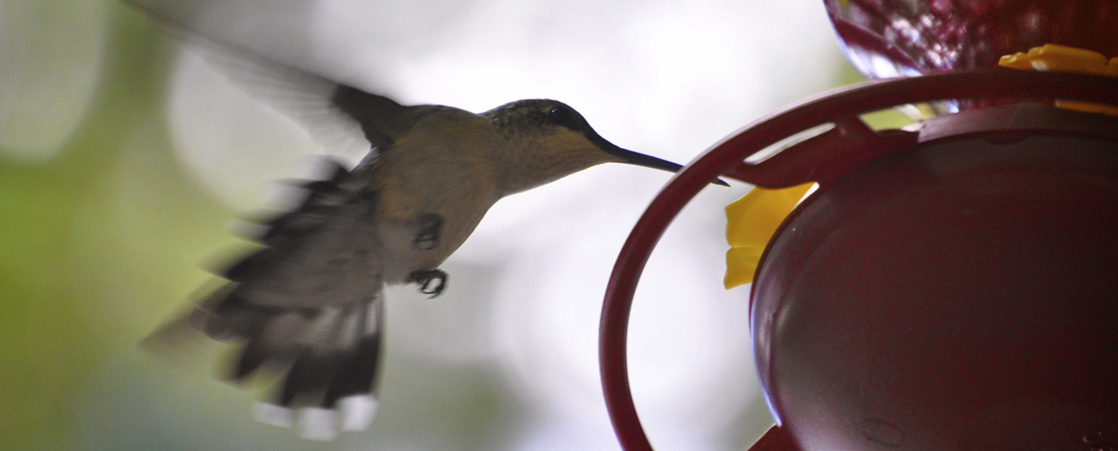
OpenStax, Rice University; Biology 2e. (credit: modification of work by Cory Zanker) · CC BY 4.0 · Source出典

Figure 6.1図 6.1
A hummingbird needs energy to maintain prolonged periods of flight. The bird obtains its energy from taking in food and transforming the nutrients into energy through a series of biochemical reactions. The flight muscles in birds are extremely efficient in energy production. (credit: modification of work by Cory Zanker)
ハチドリは、長時間飛び続けるためのエネルギーを必要とする。食物を取り込み、一連の生化学反応を通じて栄養素をエネルギーに変える。鳥の飛翔筋は、エネルギー産生の効率が極めて高い。(クレジット:Cory Zankerの作品を改変)
Virtually every task performed by living organisms requires energy. Organisms require energy to perform heavy labor and exercise, but humans also use considerable energy while thinking, and even during sleep. Every organism's living cells constantly use energy. Organisms import nutrients and other molecules. They metabolize (break down) and possibly synthesize into new molecules. If necessary, molecules modify, move around the cell and may distribute themselves to the entire organism. For example, the large proteins that make up muscles are actively built from smaller molecules. Complex carbohydrates break down into simple sugars that the cell uses for energy. Just as energy is required to both build and demolish a building, energy is required to synthesize and break down molecules. Additionally, signaling molecules such as hormones and neurotransmitters transport between cells. Cells ingest and break down bacteria and viruses. Cells must also export waste and toxins to stay healthy, and many cells must swim or move surrounding materials via the beating motion of cellular appendages like cilia and flagella.
英語のヒント
生物が行うほぼすべての仕事には、エネルギーが必要である。重労働や運動だけでなく、ヒトは考えているときや睡眠中にもかなりのエネルギーを使う。あらゆる生物の生きた細胞は、絶えずエネルギーを使っている。生物は栄養素などの分子を取り込み、代謝によって分解し、ときには新しい分子へ合成する。必要に応じて分子は修飾され、細胞内を移動し、生物全体へ分配されることもある。例えば、筋肉を作る大きなタンパク質は、小さな分子から活発に組み立てられる。複雑な糖質は、細胞がエネルギーに使う単糖へ分解される。建物を建てるにも壊すにもエネルギーが必要なのと同じく、分子の合成と分解にもエネルギーが必要である。さらに、ホルモンや神経伝達物質などのシグナル分子が細胞間を運ばれる。細胞は細菌やウイルスを取り込んで分解する。健康を保つために老廃物や毒素も排出しなければならない。多くの細胞は、繊毛や鞭毛のような付属構造を打ち振ることで、泳いだり、周囲の物質を動かしたりする必要もある。
The cellular processes that we listed above require a steady supply of energy. From where, and in what form, does this energy come? How do living cells obtain energy, and how do they use it? This chapter will discuss different forms of energy and the physical laws that govern energy transfer. This chapter will also describe how cells use energy and replenish it, and how chemical reactions in the cell perform with great efficiency.
英語のヒント
これらの細胞内の過程には、安定したエネルギー供給が必要である。エネルギーはどこから、どのような形で来るのだろうか。生きた細胞はエネルギーをどのように得て、どう使うのだろうか。この章では、エネルギーのさまざまな形と、その移動を支配する物理法則を扱う。さらに、細胞がエネルギーを使い、補充する仕組みと、細胞内の化学反応が高い効率で進む仕組みを説明する。