第6章代謝
6.2 Potential, Kinetic, Free, and Activation Energy6.2 位置エネルギー、運動エネルギー、自由エネルギー、活性化エネルギー
Learning Objectives学習目標
By the end of this section, you will be able to do the following:
この節を学び終えると、次のことができるようになる。
- Define “energy”「エネルギー」を定義する。
- Explain the difference between kinetic and potential energy運動エネルギーと位置エネルギーの違いを説明する。
- Discuss the concepts of free energy and activation energy自由エネルギーと活性化エネルギーの概念を論じる。
- Describe endergonic and exergonic reactions吸エルゴン反応と発エルゴン反応を説明する。
We define energy as the ability to do work. As you’ve learned, energy exists in different forms. For example, electrical energy, light energy, and heat energy are all different energy types. While these are all familiar energy types that one can see or feel, there is another energy type that is much less tangible. Scientists associate this energy with something as simple as an object above the ground. In order to appreciate the way energy flows into and out of biological systems, it is important to understand more about the different energy types that exist in the physical world.
英語のヒント
エネルギーは、仕事をする能力と定義される。すでに学んだように、エネルギーにはさまざまな形がある。電気エネルギー、光エネルギー、熱エネルギーは、それぞれ異なる種類である。これらは見たり感じたりできる身近なものだが、もっと実感しにくい種類のエネルギーもある。そのエネルギーは、地面より高い場所にある物体という単純なものにも関係する。生体系へのエネルギーの出入りを理解するには、物理的な世界に存在するさまざまな種類のエネルギーを、さらに詳しく知ることが重要である。
Energy Typesエネルギーの種類
When an object is in motion, there is energy. For example, an airplane in flight produces considerable energy. This is because moving objects are capable of enacting a change, or doing work. Think of a wrecking ball. Even a slow-moving wrecking ball can do considerable damage to other objects. However, a wrecking ball that is not in motion is incapable of performing work. Energy with objects in motion is kinetic energy. A speeding bullet, a walking person, rapid molecule movement in the air (which produces heat), and electromagnetic radiation like light all have kinetic energy.
英語のヒント
物体が運動しているとき、そこにはエネルギーがある。例えば、飛んでいる飛行機はかなりのエネルギーを生み出す。動く物体は、変化を起こす、つまり仕事をすることができるからである。建物解体用の鉄球を考えてみよう。ゆっくり動く鉄球でも、ほかの物体に大きな損傷を与えられる。しかし、動いていない鉄球は仕事を行えない。運動する物体がもつエネルギーが、運動エネルギーである。高速の弾丸、歩く人、空気中の分子の速い運動(熱を生じる)、光のような電磁放射は、いずれも運動エネルギーをもつ。
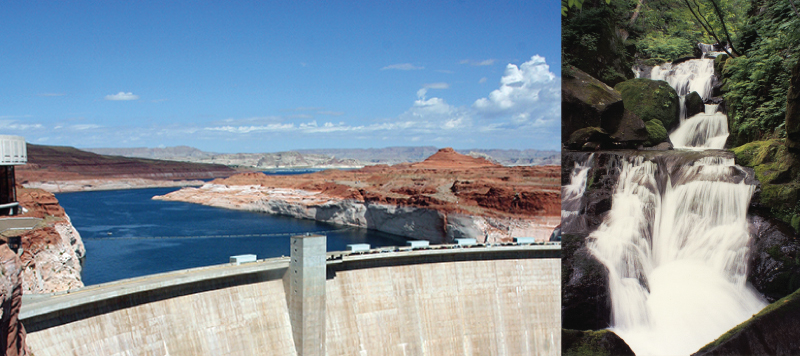
What if we lift that same motionless wrecking ball two stories above a car with a crane? If the suspended wrecking ball is unmoving, can we associate energy with it? The answer is yes. The suspended wrecking ball has associated energy that is fundamentally different from the kinetic energy of objects in motion. This energy form results from the potential for the wrecking ball to do work. If we release the ball it would do work. Because this energy type refers to the potential to do work, we call it potential energy. Objects transfer their energy between kinetic and potential in the following way: As the wrecking ball hangs motionless, it has 0 kinetic and 100 percent potential energy. Once it releases, its kinetic energy begins to increase because it builds speed due to gravity. Simultaneously, as it nears the ground, it loses potential energy. Somewhere mid-fall it has 50 percent kinetic and 50 percent potential energy. Just before it hits the ground, the ball has nearly lost its potential energy and has near-maximal kinetic energy. Other examples of potential energy include water's energy held behind a dam (Figure 6.6), or a person about to skydive from an airplane.
英語のヒント
同じ静止した鉄球を、クレーンで車の2階分ほど上へ持ち上げたらどうだろう。つり下げられた鉄球が動いていなくても、エネルギーはあるだろうか。答えは、ある。つり下げられた鉄球には、運動する物体の運動エネルギーとは根本的に違うエネルギーがある。このエネルギーは、鉄球が仕事をしうることから生じる。放せば、鉄球は仕事をする。仕事をする可能性に関わるため、これを位置エネルギーという。鉄球が動かずにつられているとき、運動エネルギーは0で、100パーセントが位置エネルギーである。放すと重力によって速くなり、運動エネルギーが増え始める。同時に、地面に近づくにつれて位置エネルギーを失う。落下途中のある点では、運動エネルギー50パーセント、位置エネルギー50パーセントになる。地面に当たる直前には位置エネルギーをほぼ失い、運動エネルギーがほぼ最大になる。位置エネルギーのほかの例には、ダムの背後に蓄えられた水(図6.6)や、飛行機からスカイダイビングをしようとする人がもつエネルギーがある。
OpenStax, Rice University; Biology 2e. (credit “dam”: modification of work by "Pascal"/Flickr; credit “waterfall”: modification of work by Frank Gualtieri) · CC BY 4.0 · Source出典

Figure 6.6図 6.6
Water behind a dam has potential energy. Moving water, such as in a waterfall or a rapidly flowing river, has kinetic energy. (credit “dam”: modification of work by "Pascal"/Flickr; credit “waterfall”: modification of work by Frank Gualtieri)
ダムの背後の水は位置エネルギーをもつ。滝や流れの速い川のように動く水は、運動エネルギーをもつ。(「ダム」のクレジット:「Pascal」/Flickrの作品を改変。「滝」のクレジット:Frank Gualtieriの作品を改変)
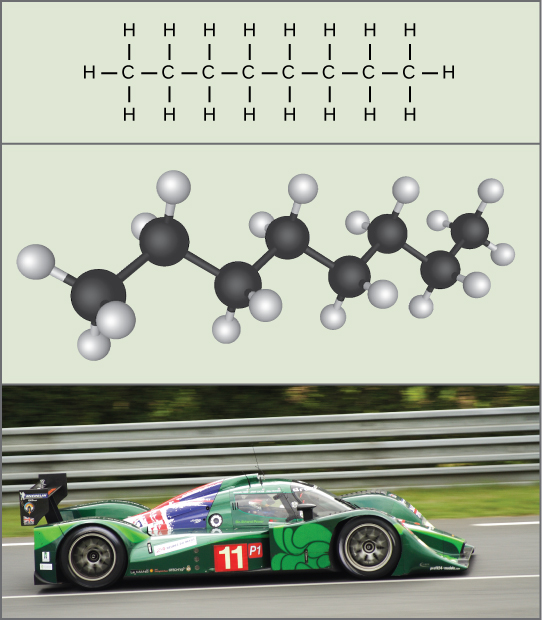
We associate potential energy not only with the matter's location (such as a child sitting on a tree branch), but also with the matter's structure. A spring on the ground has potential energy if it is compressed; so does a tautly pulled rubber band. The very existence of living cells relies heavily on structural potential energy. On a chemical level, the bonds that hold the molecules' atoms together have potential energy. Remember that anabolic cellular pathways require energy to synthesize complex molecules from simpler ones, and catabolic pathways release energy when complex molecules break down. That certain chemical bonds' breakdown can release energy implies that those bonds have potential energy. In fact, there is potential energy stored within the bonds of all the food molecules we eat, which we eventually harness for use. This is because these bonds can release energy when broken. Scientists call the potential energy type that exists within chemical bonds that releases when those bonds break chemical energy (Figure 6.7). Chemical energy is responsible for providing living cells with energy from food. Breaking the molecular bonds within fuel molecules brings about the energy's release.
英語のヒント
位置エネルギーは、木の枝に座る子どものような物体の位置だけでなく、物体の構造にも関わる。地面にあるばねも、圧縮されていれば位置エネルギーをもち、ぴんと引き伸ばした輪ゴムも同様である。生細胞の存在そのものが、構造に由来する位置エネルギーに大きく依存している。化学的な水準では、分子内の原子をつなぎ留める結合が位置エネルギーをもつ。同化経路は、単純な分子から複雑な分子を合成するためにエネルギーを必要とし、異化経路は複雑な分子を分解するときにエネルギーを放出することを思い出そう。特定の化学結合の分解でエネルギーが放出されることは、その結合が位置エネルギーをもつことを示唆する。実際、私たちが食べるすべての食物分子の結合には位置エネルギーが蓄えられ、最終的にそれを取り出して利用する。結合が切れるとエネルギーを放出できるためである。化学結合の中に存在し、その結合が切れたときに放出される種類の位置エネルギーを、化学エネルギーという(図6.7)。化学エネルギーは、生細胞が食物からエネルギーを得る源である。燃料分子内の結合を切ると、エネルギーが放出される。
OpenStax, Rice University; Biology 2e. (credit “car”: modification of work by Russell Trow) · CC BY 4.0 · Source出典

Figure 6.7図 6.7
The molecules in gasoline contain chemical energy within the chemical bonds. This energy transforms into kinetic energy that allows a car to race on a racetrack. (credit “car”: modification of work by Russell Trow)
ガソリンの分子は、化学結合に化学エネルギーを含む。このエネルギーが運動エネルギーに変わり、車をサーキットで走らせる。(「車」のクレジット:Russell Trowの作品を改変)