第13章遺伝についての現代的理解
Introductionはじめに
OpenStax, Rice University; Biology 2e. (credit: modification of work by “LPLT”/Wikimedia Commons; scale-bar data from Matt Russell) · CC BY 4.0 · Source出典

Figure 13.1図 13.1
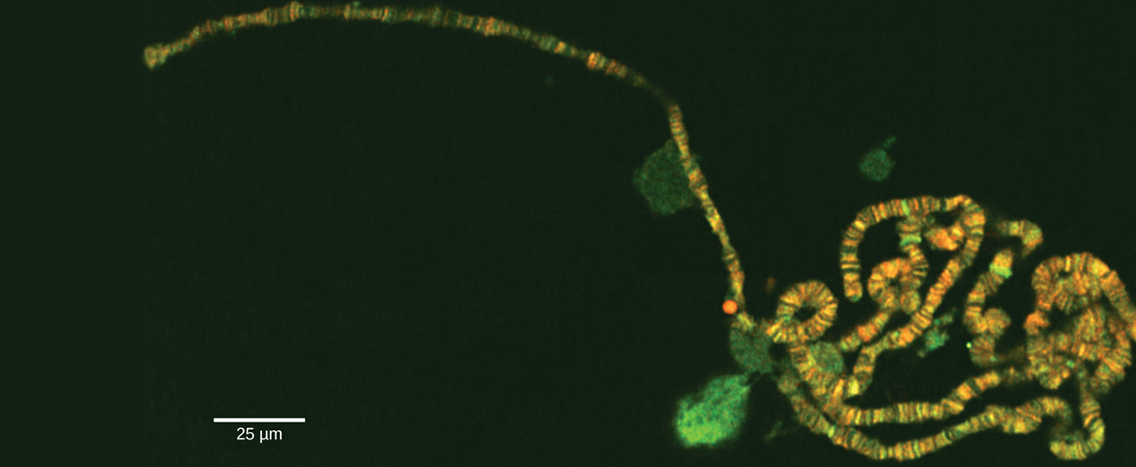
Chromosomes are threadlike nuclear structures consisting of DNA and proteins that serve as the repositories for genetic information. The chromosomes depicted here were isolated from a fruit fly’s salivary gland, stained with dye, and visualized under a microscope. Akin to miniature bar codes, chromosomes absorb different dyes to produce characteristic banding patterns, which allows for their routine identification. (credit: modification of work by “LPLT”/Wikimedia Commons; scale-bar data from Matt Russell)
染色体はDNAとタンパク質からなる核内の糸状構造で、遺伝情報の保管場所として働く。ここに示した染色体はショウジョウバエの唾液腺から単離し、色素で染めて顕微鏡で観察したもの。小さなバーコードのように、染色体は異なる色素を吸収して特徴的な縞模様を示すため、通常の同定ができる。(出典:LPLT/Wikimedia Commonsの作品を改変。スケールバーのデータ:Matt Russell)
The gene is the physical unit of inheritance, and genes are arranged in a linear order on chromosomes. Chromosome behavior and interaction during meiosis explain, at a cellular level, inheritance patterns that we observe in populations. Genetic disorders involving alterations in chromosome number or structure may have dramatic effects and can prevent a fertilized egg from developing.
英語のヒント
遺伝子は遺伝の物理的な単位であり、染色体上に直線的な順序で並ぶ。減数分裂中の染色体の振る舞いと相互作用は、個体群で観察される遺伝パターンを細胞の水準で説明する。染色体数や構造の変化に関わる遺伝性疾患は大きな影響を持ち、受精卵の発生を妨げることもある。