第37章内分泌系
Introductionはじめに
OpenStax, Rice University; Biology 2e. (credit "tadpole": modification of work by Brian Gratwicke) · CC BY 4.0 · Source出典

Figure 37.1図 37.1
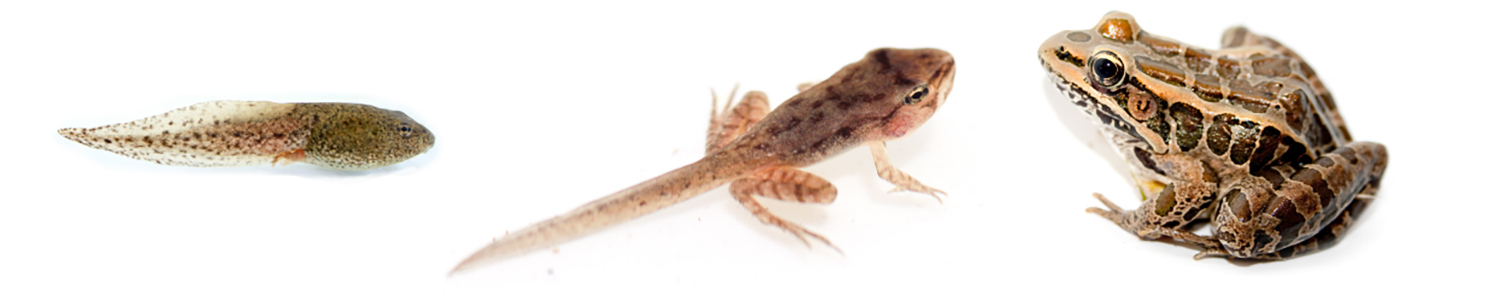
The process of amphibian metamorphosis, as seen in the tadpole-to-frog stages shown here, is driven by hormones. (credit "tadpole": modification of work by Brian Gratwicke)
ここに示すオタマジャクシからカエルへの段階のように、両生類の変態はホルモンによって進む。(「オタマジャクシ」の出典:Brian Gratwickeの作品を改変)
An animal’s endocrine system controls body processes through the production, secretion, and regulation of hormones, which serve as chemical “messengers” functioning in cellular and organ activity and, ultimately, maintaining the body’s homeostasis. The endocrine system plays a role in growth, metabolism, and sexual development. In humans, common endocrine system diseases include thyroid disease and diabetes mellitus. In organisms that undergo metamorphosis, the process is controlled by the endocrine system. The transformation from tadpole to frog, for example, is complex and nuanced to adapt to specific environments and ecological circumstances.
英語のヒント
動物の内分泌系は、ホルモンの産生、分泌、調節を通して体の過程を制御する。ホルモンは化学的な「伝令」として細胞や器官の活動に働き、最終的に体の恒常性を維持する。内分泌系は、成長、代謝、性発達に関わる。ヒトによくみられる内分泌系の疾患には、甲状腺疾患と糖尿病がある。変態する生物では、その過程も内分泌系が制御する。たとえばオタマジャクシからカエルへの変化は複雑かつ精緻で、特定の環境や生態学的な条件への適応をもたらす。