第37章内分泌系
Hormonal Regulation of the Reproductive System生殖系のホルモン調節
Regulation of the reproductive system is a process that requires the action of hormones from the pituitary gland, the adrenal cortex, and the gonads. During puberty in both males and females, the hypothalamus produces gonadotropin-releasing hormone (GnRH), which stimulates the production and release of follicle-stimulating hormone (FSH) and luteinizing hormone (LH) from the anterior pituitary gland. These hormones regulate the gonads (testes in males and ovaries in females) and therefore are called gonadotropins. In both males and females, FSH stimulates gamete production and LH stimulates production of hormones by the gonads. An increase in gonad hormone levels inhibits GnRH production through a negative feedback loop.
生殖系の調節には、下垂体、副腎皮質、生殖腺のホルモンが必要である。男女とも思春期には、視床下部が性腺刺激ホルモン放出ホルモン(GnRH)を産生する。これが下垂体前葉からの卵胞刺激ホルモン(FSH)と黄体形成ホルモン(LH)の産生・放出を刺激する。FSHとLHは、男性の精巣、女性の卵巣という生殖腺を調節するため、性腺刺激ホルモンと呼ばれる。男女ともFSHは配偶子の産生を、LHは生殖腺のホルモン産生を促す。生殖腺ホルモンの濃度が上がると、負のフィードバックでGnRHの産生が抑えられる。
Regulation of the Testicular Reproductive System精巣をもつ生殖系の調節
In the testes, FSH stimulates the maturation of sperm cells. FSH production is inhibited by the hormone inhibin, which is released by the testes. LH stimulates production of the sex hormones (androgens) by the interstitial cells of the testes and therefore is also called interstitial cell-stimulating hormone.
英語のヒント
精巣では、FSHが精子の成熟を促す。精巣から放出されるインヒビンが、FSHの産生を抑える。LHは精巣の間細胞による性ホルモン、すなわちアンドロゲンの産生を促すため、間細胞刺激ホルモンとも呼ばれる。
The most widely known androgen in males is testosterone. Testosterone promotes the production of sperm and a suite of secondary sex characteristics, such as the growth and development of the testes and penis, increased skeletal and muscular growth, enlargement of the larynx, increased growth and redistribution of body hair, and increased sexual drive. The adrenal cortex also produces small amounts of testosterone precursor, although the role of this additional hormone production is not fully understood. Testosterone secretion is regulated by both the hypothalamus and the anterior pituitary gland. The hypothalamus sends releasing hormones that stimulate the release of gonadotropins from the anterior pituitary gland.
英語のヒント
男性のアンドロゲンで最もよく知られるのはテストステロンである。精子の産生とともに、精巣と陰茎の成長・発達、骨格と筋肉の成長増加、喉頭の拡大、体毛の増加と分布の変化、性欲の増加といった、一連の二次性徴を促す。副腎皮質も少量のテストステロン前駆体をつくるが、この追加的な産生の役割は十分にわかっていない。テストステロンの分泌は視床下部と下垂体前葉の両方が調節する。視床下部は放出ホルモンを送り、前葉からの性腺刺激ホルモンの放出を促す。
Regulation of the Ovarian Reproductive System卵巣をもつ生殖系の調節
In the ovaries, FSH stimulates development of egg cells, called ova, which develop in structures called follicles. Follicle cells produce the hormone inhibin, which inhibits FSH production. LH also plays a role in the development of ova, induction of ovulation, and stimulation of estradiol and progesterone production by the ovaries (as well as testosterone production by the testes), as illustrated in Figure 37.9.Estradiol and progesterone are steroid hormones that serve several functions in the human body. Estradiol causes the egg to mature and release during the menstrual cycle, and thickens the uterine lining prior to egg implantation. Estradiol also helps with bone health, nitric oxide production, and brain function. (Low levels of estradiol have been connected to osteoporosis, mood swings, weight gain, and interrupted menstrual cycle. High levels of estradiol correlate with an increased risk of uterine and breast cancer, and cardiovascular disease.) During puberty, estradiol produces a suite of characteristics such as the increased development of breast tissue, redistribution of fat towards hips, legs, and breast, and the maturation of the uterus and vagina. Both estradiol and progesterone regulate the menstrual cycle.
英語のヒント
卵巣では、FSHが卵胞という構造内で発達する卵細胞、すなわち卵の発育を促す。卵胞細胞はインヒビンをつくり、FSH産生を抑える。LHも卵の発育、排卵の誘導、卵巣のエストラジオールとプロゲステロン産生の刺激に関わる(図37.9)。精巣でのテストステロン産生も刺激する。エストラジオールとプロゲステロンは、ヒトの体で複数の役割を果たすステロイドホルモンである。エストラジオールは月経周期中に卵を成熟・放出させ、着床に先立って子宮内膜を厚くする。また、骨の健康、一酸化窒素の産生、脳の働きにも役立つ。エストラジオールの低値は、骨粗鬆症、気分の変動、体重増加、月経周期の中断と関連づけられている。高値は、子宮がん、乳がん、心血管疾患のリスク上昇と相関する。思春期には、乳房組織の発達、臀部・脚・乳房への脂肪分布の変化、子宮と腟の成熟など、一連の特徴を生じさせる。エストラジオールとプロゲステロンは、どちらも月経周期を調節する。
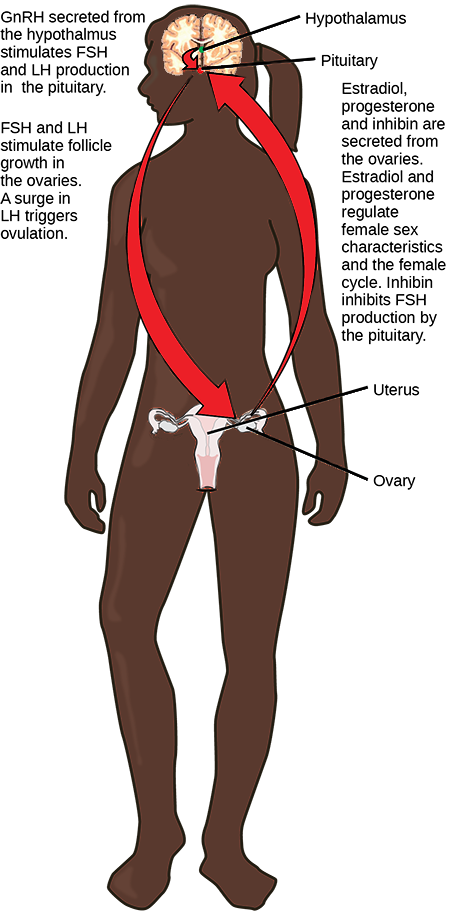

Figure 37.9図 37.9
Hormonal regulation of the ovarian reproductive system involves hormones from the hypothalamus, pituitary, and ovaries.
卵巣をもつ生殖系の調節には、視床下部、下垂体、卵巣のホルモンが関わる。
In addition to producing FSH and LH, the anterior portion of the pituitary gland also produces the hormone prolactin (PRL). Prolactin stimulates the production of milk by the mammary glands following childbirth. Prolactin release inhibits the release of GnRH from the hypothalamus, resulting in a loss of FSH and LH release from the anterior pituitary. Prolactin levels are regulated by the hypothalamic hormones prolactin-releasing hormone (PRH) and prolactin-inhibiting hormone (PIH), which is now known to be dopamine. PRH stimulates the release of prolactin and PIH inhibits it.
下垂体前葉はFSHとLHに加え、プロラクチン(PRL)もつくる。プロラクチンは出産後の乳腺による乳汁産生を促す。その放出は視床下部のGnRH放出を抑え、下垂体前葉からのFSHとLH放出を失わせる。濃度は、視床下部のプロラクチン放出ホルモン(PRH)とプロラクチン放出抑制ホルモン(PIH)により調節される。PIHは現在、ドーパミンとわかっている。PRHはプロラクチン放出を促し、PIHは抑える。
The posterior pituitary releases the hormone oxytocin, which stimulates uterine contractions during childbirth. The uterine smooth muscles are not very sensitive to oxytocin until late in pregnancy when the number of oxytocin receptors in the uterus peaks. Stretching of tissues in the uterus and cervix stimulates oxytocin release during childbirth. Contractions increase in intensity as blood levels of oxytocin rise via a positive feedback mechanism until the birth is complete. Oxytocin also stimulates the contraction of myoepithelial cells around the milk-producing mammary glands. As these cells contract, milk is forced from the secretory alveoli into milk ducts and is ejected from the breasts in milk ejection (“let-down”) reflex. Oxytocin release is stimulated by the suckling of an infant, which triggers the synthesis of oxytocin in the hypothalamus and its release into circulation at the posterior pituitary.
英語のヒント
下垂体後葉は、出産中の子宮収縮を刺激するオキシトシンを放出する。子宮平滑筋は、受容体数が最大になる妊娠後期までは、オキシトシンにあまり敏感ではない。出産時に子宮と子宮頸部の組織が伸びると、オキシトシンが放出される。正のフィードバックで血中濃度が上がるにつれ収縮が強まり、出産の完了まで続く。オキシトシンは、乳汁をつくる乳腺の周囲の筋上皮細胞の収縮も促す。細胞が縮むと乳汁が分泌腺胞から乳管へ押し出され、射乳反射によって乳房から出る。乳児が吸う刺激は、視床下部でのオキシトシン合成と、下垂体後葉から循環中への放出を引き起こす。