第37章内分泌系
Hormonal Regulation of Metabolism代謝のホルモン調節
Blood glucose levels vary widely over the course of a day as periods of food consumption alternate with periods of fasting. Insulin and glucagon are the two hormones primarily responsible for maintaining homeostasis of blood glucose levels. Additional regulation is mediated by the thyroid hormones.
一日の間に食事をとる時間と絶食の時間が交互に訪れるため、血糖値は大きく変動する。血糖の恒常性を主に維持するのは、インスリンとグルカゴンの二つのホルモンである。甲状腺ホルモンも追加的な調節を仲介する。
Regulation of Blood Glucose Levels by Insulin and Glucagonインスリンとグルカゴンによる血糖値の調節
Cells of the body require nutrients in order to function, and these nutrients are obtained through feeding. In order to manage nutrient intake, storing excess intake and utilizing reserves when necessary, the body uses hormones to moderate energy stores. Insulin is produced by the beta cells of the pancreas, which are stimulated to release insulin as blood glucose levels rise (for example, after a meal is consumed). Insulin lowers blood glucose levels by enhancing the rate of glucose uptake and utilization by target cells, which use glucose for ATP production. It also stimulates the liver to convert glucose to glycogen, which is then stored by cells for later use. Insulin also increases glucose transport into certain cells, such as muscle cells and the liver. This results from an insulin-mediated increase in the number of glucose transporter proteins in cell membranes, which remove glucose from circulation by facilitated diffusion. As insulin binds to its target cell via insulin receptors and signal transduction, it triggers the cell to incorporate glucose transport proteins into its membrane. This allows glucose to enter the cell, where it can be used as an energy source. However, this does not occur in all cells: some cells, including those in the kidneys and brain, can access glucose without the use of insulin. Insulin also stimulates the conversion of glucose to fat in adipocytes and the synthesis of proteins. These actions mediated by insulin cause blood glucose concentrations to fall, called a hypoglycemic “low sugar” effect, which inhibits further insulin release from beta cells through a negative feedback loop.
英語のヒント
体の細胞が働くには、食物から得られる栄養素が必要である。体はホルモンを使ってエネルギーの蓄えを調節し、摂取した栄養の余剰を貯蔵し、必要なときに使う。インスリンは膵臓のβ細胞でつくられる。食後などに血糖値が上昇すると、β細胞は刺激されてインスリンを放出する。インスリンは、標的細胞によるグルコースの取り込みと利用を速めて血糖を下げる。標的細胞はグルコースをATP産生に使う。また肝臓でグルコースをグリコーゲンへ変換させ、後で使うために貯蔵させる。筋細胞や肝臓などへのグルコース輸送も増やす。これは細胞膜のグルコース輸送タンパク質が増え、促進拡散によって循環中からグルコースが取り除かれるためである。インスリン受容体への結合と信号伝達によって、細胞は膜へ輸送タンパク質を組み込む。こうして入ったグルコースをエネルギー源として使える。ただし、すべての細胞で起こるわけではない。腎臓や脳などの細胞は、インスリンなしでもグルコースを利用できる。インスリンは、脂肪細胞でのグルコースから脂肪への変換と、タンパク質合成も促す。これらの作用は血糖値を下げるため、血糖降下作用と呼ばれる。血糖の低下は負のフィードバックを通して、β細胞からの追加のインスリン放出を抑える。
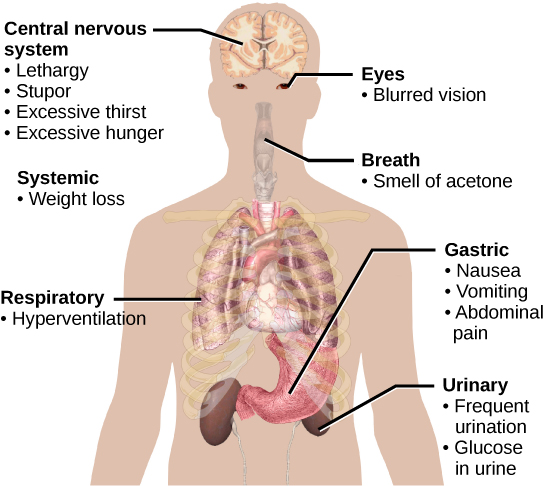
Impaired insulin function can lead to a condition called diabetes mellitus, the main symptoms of which are illustrated in Figure 37.10. This can be caused by low levels of insulin production by the beta cells of the pancreas, or by reduced sensitivity of tissue cells to insulin. This prevents glucose from being absorbed by cells, causing high levels of blood glucose, or hyperglycemia (high sugar). High blood glucose levels make it difficult for the kidneys to recover all the glucose from nascent urine, resulting in glucose being lost in urine. High glucose levels also result in less water being reabsorbed by the kidneys, causing high amounts of urine to be produced; this may result in dehydration. Over time, high blood glucose levels can cause nerve damage to the eyes and peripheral body tissues, as well as damage to the kidneys and cardiovascular system. Oversecretion of insulin can cause hypoglycemia, low blood glucose levels. This causes insufficient glucose availability to cells, often leading to muscle weakness, and can sometimes cause unconsciousness or death if left untreated.
英語のヒント
インスリンの機能が損なわれると、糖尿病という状態になる。主な症状は図37.10のとおりである。膵臓のβ細胞のインスリン産生低下か、組織の細胞のインスリン感受性低下が原因となる。細胞がグルコースを取り込めなくなり、血糖値が上がる高血糖を生じる。高血糖では腎臓が原尿からすべてのグルコースを回収しにくくなり、尿中に失われる。また、水の再吸収も減るため、多量の尿がつくられ、脱水につながる場合がある。長期的には、眼や体の末梢組織の神経、腎臓、心血管系を損傷しうる。インスリンの過剰分泌は、逆に血糖値が低い低血糖を起こす。細胞が利用できるグルコースが不足し、筋力低下を生じることが多い。未治療では意識喪失や死を起こす場合もある。
OpenStax, Rice University; Biology 2e. (credit: modification of work by Mikael Häggström) · CC BY 4.0 · Source出典

Figure 37.10図 37.10
The main symptoms of diabetes are shown. (credit: modification of work by Mikael Häggström)
糖尿病の主な症状。(出典:Mikael Häggströmの作品を改変)
When blood glucose levels decline below normal levels, for example between meals or when glucose is utilized rapidly during exercise, the hormone glucagon is released from the alpha cells of the pancreas. Glucagon raises blood glucose levels, eliciting what is called a hyperglycemic effect, by stimulating the breakdown of glycogen to glucose in skeletal muscle cells and liver cells in a process called glycogenolysis. Glucose can then be utilized as energy by muscle cells and released into circulation by the liver cells. Glucagon also stimulates absorption of amino acids from the blood by the liver, which then converts them to glucose. This process of glucose synthesis is called gluconeogenesis. Glucagon also stimulates adipose cells to release fatty acids into the blood. These actions mediated by glucagon result in an increase in blood glucose levels to normal homeostatic levels. Rising blood glucose levels inhibit further glucagon release by the pancreas via a negative feedback mechanism. In this way, insulin and glucagon work together to maintain homeostatic glucose levels, as shown in Figure 37.11.
英語のヒント
食間や、運動中にグルコースが急速に消費されるときなど、血糖値が正常値を下回ると、膵臓のα細胞がグルカゴンを放出する。グルカゴンは、骨格筋細胞と肝細胞でグリコーゲンをグルコースへ分解するグリコーゲン分解を促し、血糖上昇作用を起こす。筋細胞はグルコースをエネルギーに使い、肝細胞は循環中へ放出できる。グルカゴンは、肝臓による血中アミノ酸の取り込みも促す。肝臓はそれをグルコースへ変換する。この合成過程を糖新生という。脂肪細胞から血中への脂肪酸の放出も刺激する。これらの作用によって、血糖値は正常な恒常性の水準へ上がる。血糖の上昇は負のフィードバックで、膵臓からのグルカゴンの追加放出を抑える。図37.11のように、インスリンとグルカゴンは協働して血糖の恒常性を保つ。