第17章バイオテクノロジーとゲノミクス
Physical Maps物理地図
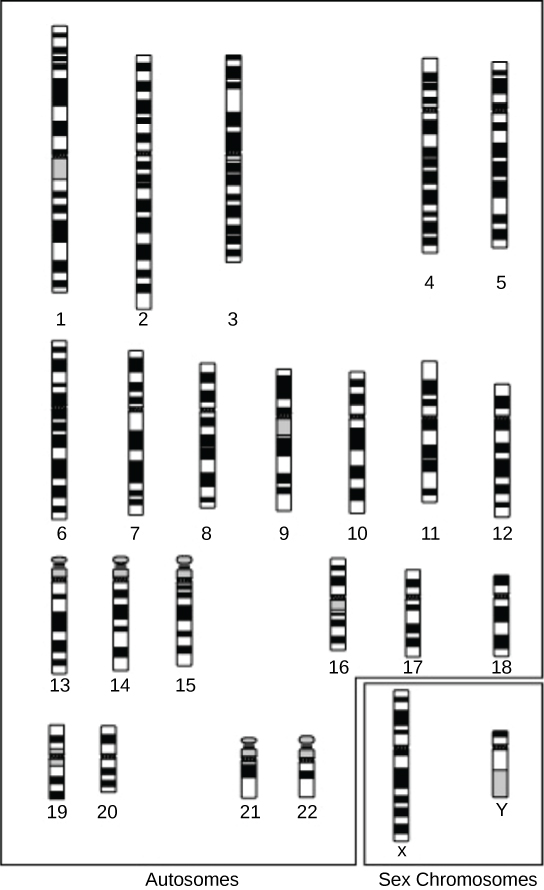
A physical map provides detail of the actual physical distance between genetic markers, as well as the number of nucleotides. There are three methods scientists use to create a physical map: cytogenetic mapping, radiation hybrid mapping, and sequence mapping. Cytogenetic mapping uses information from microscopic analysis of stained chromosome sections (Figure 17.12). It is possible to determine the approximate distance between genetic markers using cytogenetic mapping, but not the exact distance (number of base pairs). Radiation hybrid mapping uses radiation, such as x-rays, to break the DNA into fragments. We can adjust the radiation amount to create smaller or larger fragments. This technique overcomes the limitation of genetic mapping, and we can adjust the radiation so that increased or decreased recombination frequency does not affect it. Sequence mapping resulted from DNA sequencing technology that allowed for creating detailed physical maps with distances measured in terms of the number of base pairs. Creating genomic libraries and complementary DNA (cDNA) libraries (collections of cloned sequences or all DNA from a genome) has sped the physical mapping process. A genetic site that scientists use to generate a physical map with sequencing technology (a sequence-tagged site, or STS) is a unique sequence in the genome with a known exact chromosomal location. An expressed sequence tag (EST) and a single sequence length polymorphism (SSLP) are common STSs. An EST is a short STS that we can identify with cDNA libraries, while we obtain SSLPs from known genetic markers, which provide a link between genetic and physical maps.
英語のヒント
物理地図は、遺伝マーカー間の実際の物理的な距離とヌクレオチド数について、詳しい情報を示す。物理地図を作る方法には、細胞遺伝学的マッピング、放射線ハイブリッドマッピング、配列マッピングの三つがある。細胞遺伝学的マッピングは、染色した染色体の部分を顕微鏡で分析して得た情報を使う(図17.12)。この方法では遺伝マーカー間のおおよその距離は分かるが、正確な距離(塩基対数)は分からない。放射線ハイブリッドマッピングは、X線などの放射線でDNAを断片にする。放射線の量を調節すれば、より小さい断片や大きい断片を作れる。この技術は遺伝地図の限界を克服し、放射線を調節することで、組換え頻度の増減の影響を受けないようにできる。配列マッピングは、DNAの塩基配列決定技術から生まれた。これにより、距離を塩基対数で測った詳細な物理地図を作れるようになった。ゲノムライブラリーや相補的DNA(cDNA)ライブラリー(ゲノムのクローニング済み配列や全DNAのコレクション)の作製は、物理地図の作製を速めてきた。配列決定技術による物理地図の作製に使う遺伝的な部位、すなわち配列タグ部位(STS)は、染色体上の正確な位置が分かっている、ゲノム内で固有の配列である。発現配列タグ(EST)と単一配列長多型(SSLP)は、よく使われるSTSである。ESTはcDNAライブラリーで同定できる短いSTSであり、SSLPは既知の遺伝マーカーから得られる。これらのマーカーは、遺伝地図と物理地図を結びつける。
OpenStax, Rice University; Biology 2e. (credit: National Human Genome Research Institute) · CC BY 4.0 · Source出典

Figure 17.12図 17.12
A cytogenetic map shows the appearance of a chromosome after scientists stain and exam it under a microscope. (credit: National Human Genome Research Institute)
細胞遺伝学的地図は、染色体を染色して顕微鏡で調べたときの見え方を示す。(クレジット:National Human Genome Research Institute)
Genetic and Physical Maps Integration遺伝地図と物理地図の統合
Genetic maps provide the outline and physical maps provide the details. It is easy to understand why both genome mapping technique types are important to show the big picture. Scientists use information from each technique in combination to study the genome. Scientists are using genomic mapping with different model organisms for research. Genome mapping is still an ongoing process, and as researchers develop more advanced techniques, they expect more breakthroughs. Genome mapping is similar to completing a complicated puzzle using every piece of available data. Mapping information generated in laboratories all over the world goes into central databases, such as GenBank at the National Center for Biotechnology Information (NCBI). Researchers are making efforts for the information to be more easily accessible to other researchers and the general public. Just as we use global positioning systems instead of paper maps to navigate through roadways, NCBI has created a genome viewer tool to simplify the data-mining process.
英語のヒント
遺伝地図は概略を示し、物理地図は細部を示す。全体像を示すために、両方のゲノムマッピング技術が重要である理由は、容易に理解できる。科学者は、それぞれの技術の情報を組み合わせてゲノムを研究する。さまざまなモデル生物を使って、ゲノムマッピングの研究が行われている。ゲノムマッピングは今も続く過程であり、より高度な技術が開発されるにつれ、さらなる飛躍が期待される。利用可能なデータを一つ残らず使って、複雑なパズルを完成させるようなものである。世界中の研究室が生み出す地図情報は、米国国立生物工学情報センター(NCBI)のGenBankなどの中央データベースへ集められる。研究者たちは、ほかの研究者や一般の人々が、こうした情報をもっと簡単に利用できるよう取り組んでいる。私たちが紙の地図の代わりに全地球測位システムで道路をたどるように、NCBIは、データから情報を探し出す過程を簡単にするため、ゲノム閲覧ツールを作った。
Section Summaryこの節のまとめ
Genome mapping is similar to solving a big, complicated puzzle with pieces of information coming from laboratories all over the world. Genetic maps provide an outline for locating genes within a genome, and they estimate the distance between genes and genetic markers on the basis of recombination frequencies during meiosis. Physical maps provide detailed information about the physical distance between the genes. The most detailed information is available through sequence mapping. Researchers combine information from all mapping and sequencing sources to study an entire genome.
ゲノムマッピングは、世界中の研究室から来る情報の断片で、大きく複雑なパズルを解くことに似ている。遺伝地図は、ゲノム内での遺伝子の位置を示す概略を与え、減数分裂時の組換え頻度に基づいて、遺伝子や遺伝マーカーの間の距離を推定する。物理地図は、遺伝子間の物理的な距離について詳しい情報を与える。最も詳細な情報は、配列マッピングによって得られる。研究者は、地図作製や塩基配列決定のあらゆる情報源を組み合わせ、ゲノム全体を研究する。