第31章土壌と植物の栄養
Mycorrhizae: The Symbiotic Relationship between Fungi and Roots菌根:菌類と根の共生関係
A nutrient depletion zone can develop when there is rapid soil solution uptake, low nutrient concentration, low diffusion rate, or low soil moisture. These conditions are very common; therefore, most plants rely on fungi to facilitate the uptake of minerals from the soil. Fungi form symbiotic associations called mycorrhizae with plant roots, in which the fungi actually are integrated into the physical structure of the root. The fungi colonize the living root tissue during active plant growth.
英語のヒント
土壌溶液の取り込みが速い、栄養分の濃度が低い、拡散速度が低い、土壌水分が少ないといった条件では、栄養分が枯渇した領域が生じることがある。こうした条件はごく普通に見られるため、ほとんどの植物は、土壌から無機栄養分を取り込むのを菌類に助けてもらっている。菌類は植物の根と、菌根と呼ばれる共生関係を形成する。その際、菌類は根の物理的な構造に実際に組み込まれる。植物が盛んに成長している間に、菌類は生きた根の組織へ定着する。
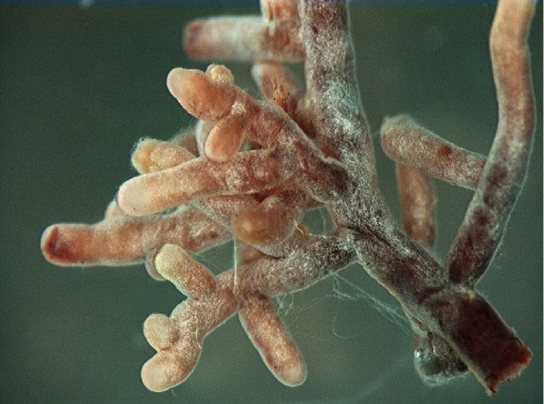
Through mycorrhization, the plant obtains mainly phosphate and other minerals, such as zinc and copper, from the soil. The fungus obtains nutrients, such as sugars, from the plant root (Figure 31.12). Mycorrhizae help increase the surface area of the plant root system because hyphae, which are narrow, can spread beyond the nutrient depletion zone. Hyphae can grow into small soil pores that allow access to phosphorus that would otherwise be unavailable to the plant. The beneficial effect on the plant is best observed in poor soils. The benefit to fungi is that they can obtain up to 20 percent of the total carbon accessed by plants. Mycorrhizae functions as a physical barrier to pathogens. It also provides an induction of generalized host defense mechanisms, and sometimes involves production of antibiotic compounds by the fungi.
英語のヒント
菌根の形成によって、植物は主にリン酸と、亜鉛や銅などの無機栄養分を土壌から得る。菌類は植物の根から糖などの栄養分を得る(図31.12)。細い菌糸は栄養分の枯渇した領域を越えて広がれるので、菌根は植物の根系の表面積を増やす助けとなる。菌糸は土壌の小さな孔隙へ入り込み、そうでなければ植物が利用できないリンに到達できる。植物への有益な効果は、やせた土壌でもっともよく観察される。菌類にとっての利益は、植物が獲得する全炭素の最大20%を得られることである。菌根は病原体に対する物理的障壁としても働く。また、宿主の全般的な防御機構を誘導し、ときには菌類による抗生物質の生産も伴う。
OpenStax, Rice University; Biology 2e. (credit: modification of work by Nilsson et al., BMC Bioinformatics 2005) · CC BY 4.0 · Source出典
Figure 31.12図 31.12
Root tips proliferate in the presence of mycorrhizal infection, which appears as off-white fuzz in this image. (credit: modification of work by Nilsson et al., BMC Bioinformatics 2005)
菌根菌の感染があると根の先端が増殖する。この画像では、感染した菌が白っぽい綿毛として見える。(クレジット:Nilssonほか、BMC Bioinformatics、2005年の作品を改変)
There are two types of mycorrhizae: ectomycorrhizae and endomycorrhizae. Ectomycorrhizae form an extensive dense sheath around the roots, called a mantle. Hyphae from the fungi extend from the mantle into the soil, which increases the surface area for water and mineral absorption. This type of mycorrhizae is found in forest trees, especially conifers, birches, and oaks. Endomycorrhizae, also called arbuscular mycorrhizae, do not form a dense sheath over the root. Instead, the fungal mycelium is embedded within the root tissue. Endomycorrhizae are found in the roots of more than 80 percent of terrestrial plants.
英語のヒント
菌根には、外生菌根と内生菌根の二つの型がある。外生菌根は、根の周囲に菌鞘と呼ばれる、広く密な覆いを形成する。菌類の菌糸は菌鞘から土壌へ伸び、水と無機栄養分を吸収する表面積を増やす。この型の菌根は、森林の樹木、とくに針葉樹、カバノキ類、オーク類に見られる。内生菌根はアーバスキュラー菌根とも呼ばれ、根を覆う密な菌鞘を形成しない。代わりに、菌糸体は根の組織の内部に埋め込まれる。内生菌根は、陸上植物の80%以上の根に見られる。
Nutrients from Other Sourcesほかの供給源から得る栄養分
Some plants cannot produce their own food and must obtain their nutrition from outside sources. This may occur with plants that are parasitic or saprophytic. Some plants are mutualistic symbionts, epiphytes, or insectivorous.
一部の植物は自分で食物を作れず、外部の供給源から栄養を得なければならない。寄生植物や腐生植物では、これが見られる。また、相利共生をする植物、着生植物、食虫植物もある。
Plant Parasites寄生植物
A parasitic plant depends on its host for survival. Some parasitic plants have no leaves. An example of this is the dodder (Figure 31.13), which has a weak, cylindrical stem that coils around the host and forms suckers. From these suckers, cells invade the host stem and grow to connect with the vascular bundles of the host. The parasitic plant obtains water and nutrients through these connections. The plant is a total parasite (a holoparasite) because it is completely dependent on its host. Other parasitic plants (hemiparasites) are fully photosynthetic and only use the host for water and minerals. There are about 4,100 species of parasitic plants.
寄生植物は、生存を宿主に依存する。葉をもたない寄生植物もある。その一例がネナシカズラ(図31.13)で、弱い円筒形の茎が宿主に巻きつき、吸器を形成する。吸器から細胞が宿主の茎へ侵入して成長し、宿主の維管束につながる。寄生植物は、このつながりを通して水と栄養分を得る。この植物は宿主に完全に依存しているため、全寄生植物である。ほかの寄生植物である半寄生植物は、十分に光合成を行い、水と無機栄養分を得るためだけに宿主を利用する。寄生植物は約4,100種ある。
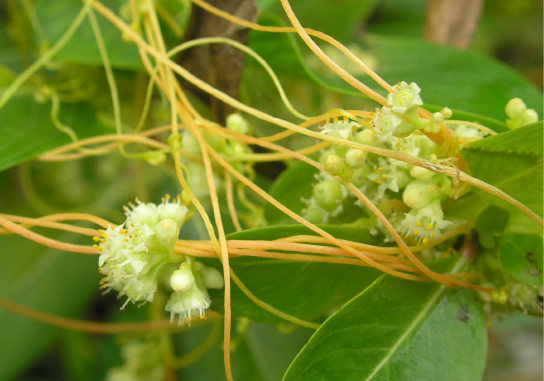


Figure 31.13図 31.13
The dodder is a holoparasite that penetrates the host’s vascular tissue and diverts nutrients for its own growth. Note that the vines of the dodder, which has white flowers, are beige. The dodder has no chlorophyll and cannot produce its own food. (credit: "Lalithamba"/Flickr)
ネナシカズラは全寄生植物で、宿主の維管束組織へ入り込み、栄養分を自分の成長のために奪う。白い花をつけるネナシカズラのつるが、ベージュ色であることに注目しよう。クロロフィルをもたず、自分で食物を作ることはできない。(クレジット:"Lalithamba"/Flickr)
Saprophytes腐生植物
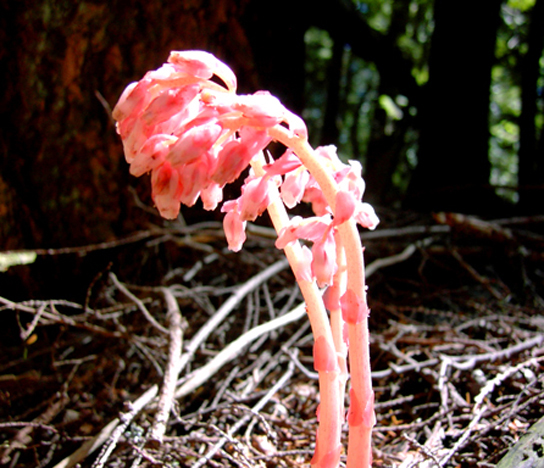
A saprophyte is a plant that does not have chlorophyll and gets its food from dead matter, similar to bacteria and fungi (note that fungi are often called saprophytes, which is incorrect, because fungi are not plants). Plants like these use enzymes to convert organic food materials into simpler forms from which they can absorb nutrients (Figure 31.14). Most saprophytes do not directly digest dead matter: instead, they parasitize fungi that digest dead matter, or are mycorrhizal, ultimately obtaining photosynthate from a fungus that derived photosynthate from its host. Saprophytic plants are uncommon; only a few species are described.
英語のヒント
腐生植物はクロロフィルをもたず、細菌や菌類と同じように、生物の遺骸から食物を得る植物である。なお、菌類も腐生植物と呼ばれることが多いが、菌類は植物ではないため、この呼び方は正しくない。こうした植物は、酵素を使って有機性の食物をより単純な形へ変え、そこから栄養分を吸収する(図31.14)。ほとんどの腐生植物は、遺骸を直接消化しない。代わりに、遺骸を分解する菌類や菌根菌に寄生する。後者では、宿主から光合成産物を得た菌類を介して、最終的にその光合成産物を得る。腐生植物はまれで、記載されているのはわずかな種だけである。
OpenStax, Rice University; Biology 2e. (credit: modification of work by Iwona Erskine-Kellie) · CC BY 4.0 · Source出典

Figure 31.14図 31.14
Saprophytes, like this Dutchmen’s pipe (Monotropa hypopitys), obtain their food from dead matter and do not have chlorophyll. (credit: modification of work by Iwona Erskine-Kellie)
このシャクジョウソウ(Monotropa hypopitys)のような腐生植物は、生物の遺骸から食物を得ており、クロロフィルをもたない。(クレジット:Iwona Erskine-Kellieの作品を改変)