By the end of this section, you will be able to do the following:
この節を終えると、次のことができるようになる。
Understand RNA splicing and explain its role in regulating gene expression
RNAスプライシングを理解し、遺伝子発現の調節におけるその役割を説明する。
Describe the importance of RNA stability in gene regulation
遺伝子調節におけるRNAの安定性の重要性を説明する。
RNA is transcribed, but must be processed into a mature form before translation can begin. This processing that takes place after an RNA molecule has been transcribed, but before it is translated into a protein, is called post-transcriptional modification. As with the epigenetic and transcriptional stages of processing, this post-transcriptional step can also be regulated to control gene expression in the cell. If the RNA is not processed, shuttled, or translated, then no protein will be synthesized.
RNA Splicing, the First Stage of Post-transcriptional ControlRNAスプライシング:転写後制御の最初の段階
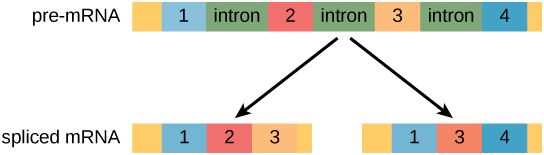
In eukaryotic cells, the RNA transcript often contains regions, called introns, that are removed prior to translation. The regions of RNA that code for protein are called exons. (Figure 16.11). After an RNA molecule has been transcribed, but prior to its departure from the nucleus to be translated, the RNA is processed and the introns are removed by splicing. Splicing is done by spliceosomes, ribonucleoprotein complexes that can recognize the two ends of the intron, cut the transcript at those two points, and bring the exons together for ligation.
Pre-mRNA can be alternatively spliced to create differently mature mRNAs which will ultimately lead to formation of different proteins from the same gene.