第47章保全生物学と生物多様性
Climate Change気候変動
Climate change, and specifically the anthropogenic (meaning, caused by humans) warming trend presently escalating, is recognized as a major extinction threat, particularly when combined with other threats such as habitat loss and the expansion of disease organisms. Scientists disagree about the likely magnitude of the effects, with extinction rate estimates ranging from 15 percent to 40 percent of species destined for extinction by 2050. Scientists do agree, however, that climate change will alter regional climates, including rainfall and snowfall patterns, making habitats less hospitable to the species living in them, in particular, the endemic species. The warming trend will shift colder climates toward the north and south poles, forcing species to move with their adapted climate norms while facing habitat gaps along the way. The shifting ranges will impose new competitive regimes on species as they find themselves in contact with other species not present in their historic range. One such unexpected species contact is between polar bears and grizzly bears. Previously, these two distinct species had separate ranges. Now, their ranges are overlapping and there are documented cases of these two species mating and producing viable offspring, which may or may not be viable crossing back to either parental species. Changing climates also throw off species’ delicate timed adaptations to seasonal food resources and breeding times. Many contemporary mismatches to shifts in resource availability and timing have already been documented.
英語のヒント
気候変動、とりわけ進行中の人為的な温暖化は、主要な絶滅の脅威と認識される。生息地喪失や病原体の拡大など、ほかの脅威と重なると特に重大である。影響の規模については科学者の間で見解が分かれ、2050年までに絶滅へ向かう種の推定割合は15〜40%と幅がある。しかし、気候変動が雨や雪の降り方を含む地域の気候を変え、そこにすむ種、特に固有種に適さない生息地にすることでは一致している。温暖化は寒い気候を南北の極へ押しやり、生物は適応してきた気候を追って移動しなければならなくなる。その途中には生息地の途切れもある。分布域の移動によって、もとの分布域にはいなかった種と接触し、新たな競争関係が生じる。予想外の接触例が、ホッキョクグマとハイイログマである。以前は別々の分布域をもった2種が、今では重なり、交尾して生存可能な子を生んだ記録もある。その子が親のいずれかの種と戻し交配した場合にも、生存可能な子ができるかどうかは分からない。気候変化は、季節的な食料資源や繁殖時期への、生物の繊細な時期の適応も乱す。資源が利用できる時期や量の変化に対する、現在の不適合はすでに多数記録されている。
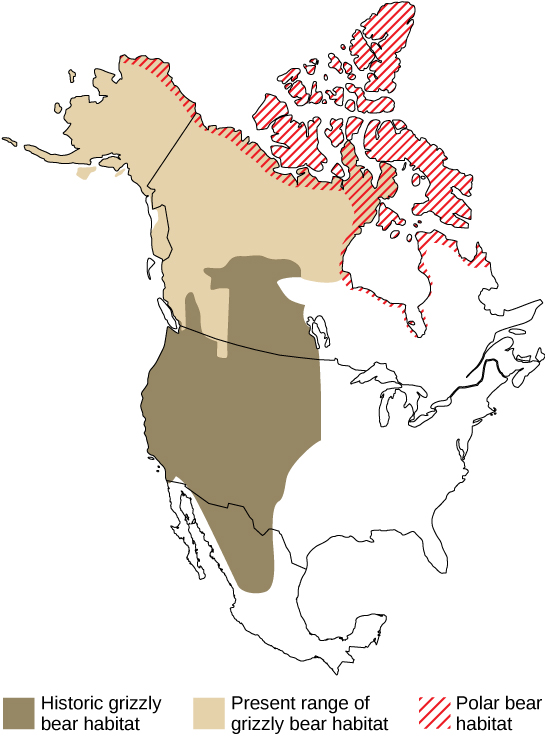

Figure 47.15図 47.15
Since 2008, grizzly bears (Ursus arctos horribilis) have been spotted farther north than their historic range, a possible consequence of climate change. As a result, grizzly bear habitat now overlaps polar bear (Ursus maritimus) habitat. The two species of bears, which are capable of mating and producing viable offspring, are considered separate “ecological” species because historically they lived in different habitats and never met. However, in 2006 a hunter shot a wild grizzly-polar bear hybrid known as a grolar bear, the first wild hybrid ever found.
2008年以降、ハイイログマ(Ursus arctos horribilis)は、かつての分布域より北で目撃されている。気候変動の結果かもしれない。そのため現在は、ホッキョクグマ(Ursus maritimus)の生息地と重なる。2種は交尾して生存可能な子を作れるが、過去には別の生息地にすみ、出会わなかったため、別々の「生態学的」な種と考えられる。しかし2006年、ハイイログマとホッキョクグマの野生の交雑個体、グローラーベアが猟師に撃たれた。発見された最初の野生交雑個体だった。
Range shifts are already being observed: for example, some European bird species ranges have moved 91 km northward. The same study suggested that the optimal shift based on warming trends was double that distance, suggesting that the populations are not moving quickly enough. Range shifts have also been observed in plants, butterflies, other insects, freshwater fishes, reptiles, and mammals.
英語のヒント
分布域の移動はすでに観察されている。たとえばヨーロッパの一部の鳥類では、分布域が91 km北へ移った。同じ研究では、温暖化の傾向に基づく最適な移動距離はその2倍とされ、個体群の移動が十分に速くないことを示唆する。植物、チョウ、ほかの昆虫、淡水魚、爬虫類、哺乳類でも、分布域の移動が観察される。
Climate gradients will also move up mountains, eventually crowding species higher in altitude and eliminating the habitat for those species adapted to the highest elevations. Some climates will completely disappear. The accelerating rate of warming in the arctic significantly reduces snowfall and the formation of sea ice. Without the ice, species like polar bears cannot successfully hunt seals, which are their only reliable source of food. Sea ice coverage has been decreasing since observations began in the mid-twentieth century, and the rate of decline observed in recent years is far greater than previously predicted.
英語のヒント
気候の勾配も山を上へ移動し、やがて種を高標高へ押し込み、最も高い場所に適応した種の生息地をなくす。一部の気候は完全に消える。北極圏で加速する温暖化は、降雪と海氷の形成を大きく減らす。氷がなければ、ホッキョクグマなどは、唯一の確実な食料源であるアザラシをうまく捕らえられない。海氷面積は20世紀半ばの観測開始以来減っており、近年の減少速度は、以前の予測を大幅に上回る。
Finally, global warming will raise ocean levels due to meltwater from glaciers and the greater volume of warmer water. Shorelines will be inundated, reducing island size, which will have an effect on some species, and a number of islands will disappear entirely. Additionally, the gradual melting and subsequent refreezing of the poles, glaciers, and higher elevation mountains—a cycle that has provided freshwater to environments for centuries—will also be jeopardized. This could result in an overabundance of salt water and a shortage of fresh water.
英語のヒント
最後に、地球温暖化は氷河の融解水と、温まった水の体積増加によって海水準を上昇させる。海岸線が水没して島が小さくなり、一部の種に影響する。完全に消える島もある。また、極地、氷河、高い山での緩やかな融解と再凍結の循環も危うくなる。この循環は何世紀にもわたって環境に淡水を供給してきたものである。その結果、塩水が過剰になり、淡水が不足する可能性がある。
Section Summary節のまとめ
The core threats to biodiversity are human population growth and unsustainable resource use. To date, the most significant causes of extinctions are habitat loss, introduction of exotic species, and overharvesting. Climate change is predicted to be a significant cause of extinctions in the coming century. Habitat loss occurs through deforestation, damming of rivers, and other disruptive human activities. Overharvesting is a threat particularly to aquatic species, while the taking of bush meat in the humid tropics threatens many species in Asia, Africa, and the Americas. Exotic species have been the cause of a number of extinctions and are especially damaging to islands and lakes. Exotic species’ introductions are increasing damaging native ecosystems around the world because of the increased mobility of human populations and growing global trade and transportation. Climate change is forcing range changes that may lead to extinction. It is also affecting adaptations to the timing of resource availability that negatively affects species in seasonal environments. The impacts of climate change are greatest in the arctic. Global warming will also raise sea levels, eliminating some islands and reducing the area of all others.
生物多様性への中心的な脅威は、人口増加と持続不可能な資源利用である。これまでの絶滅の主因は、生息地喪失、外来種の導入、過剰採取であり、今後1世紀には気候変動も重要になると予測される。生息地喪失は、森林伐採、河川のダム建設、ほかの破壊的な人間活動によって起こる。過剰採取は特に水生種を脅かす。一方、湿潤熱帯のブッシュミート採取は、アジア、アフリカ、南北アメリカの多くの種を脅かす。外来種は多数の絶滅を引き起こし、島や湖では特に有害である。人間の移動、世界の貿易と輸送の増加によって導入が増え、世界中の在来生態系を損なっている。気候変動は分布域の変化を強い、それが絶滅につながりうる。資源を利用できる時期への適応にも影響し、季節性のある環境の種に悪影響を与える。影響は北極圏で最大である。温暖化は海面も上昇させ、一部の島を消し、ほかのすべての島の面積を減らす。