第47章保全生物学と生物多様性
47.3 Threats to Biodiversity47.3 生物多様性への脅威
Learning Objectives学習目標
By the end of this section, you will be able to do the following:
この節を学び終えると、次のことができるようになる。
- Identify significant threats to biodiversity生物多様性への重大な脅威を挙げる。
- Explain the effects of habitat loss, the introduction of exotic species, and hunting on biodiversity生息地喪失、外来種の導入、狩猟が生物多様性に及ぼす影響を説明する。
- Identify the early and predicted effects of climate change on biodiversity気候変動が生物多様性にすでに与えた影響と、予測される影響を挙げる。
The core threat to biodiversity on the planet, and therefore a threat to human welfare, is the combination of human population growth and resource exploitation. The human population requires resources to survive and grow, and those resources are being removed unsustainably from the environment. The three greatest proximate threats to biodiversity are habitat loss, overharvesting, and the introduction of exotic species. The first two of these are a direct result of human population growth and resource use. The third results from increased mobility and trade. A fourth major cause of extinction, anthropogenic climate change, has not yet had a large impact, but it is predicted to become significant during this century. Global climate change is also a consequence of human population needs for energy and the use of fossil fuels to meet those needs (Figure 47.10). Environmental issues, such as toxic pollution, have specific targeted effects on species, but they are not generally seen as threats at the magnitude of the others.
英語のヒント
地球の生物多様性、ひいては人類の幸福への中心的な脅威は、人口増加と資源の開発・利用の組み合わせである。人間は生存と増加に資源を必要とし、その資源を持続不可能な形で環境から取り出している。多様性に対する最大の直接的な脅威は、生息地喪失、過剰採取、外来種の導入の3つである。最初の2つは人口増加と資源利用の直接の結果であり、3つ目は移動と貿易の増加による。第4の主要因である人為的気候変動は、まだ大きな影響を与えていないが、今世紀中に重要になると予測される。地球規模の気候変動も、人間のエネルギー需要と、それを満たす化石燃料の利用の結果である(図47.10)。有害物質による汚染などの環境問題も、特定の種へ影響するが、一般には前の要因ほど大規模な脅威とは見なされていない。
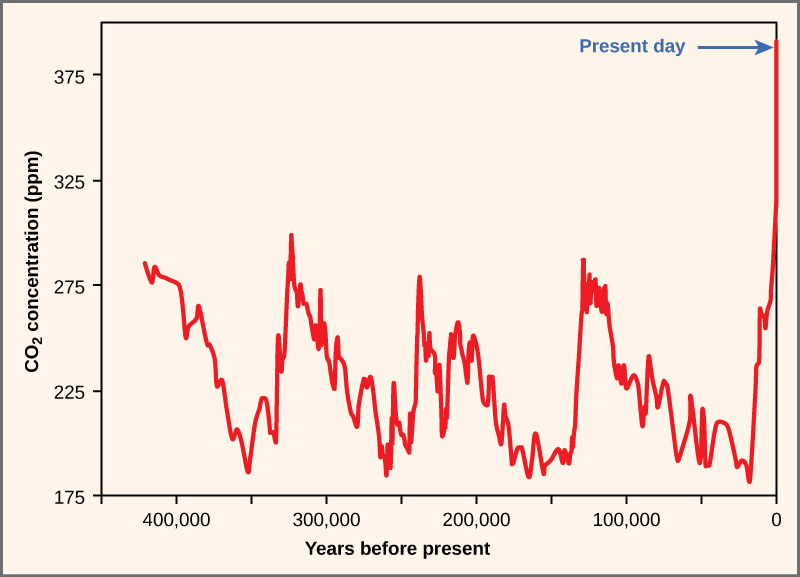

Figure 47.10図 47.10
Atmospheric carbon dioxide levels fluctuate in a cyclical manner. However, the burning of fossil fuels in recent history has caused a dramatic increase in the levels of carbon dioxide in the Earth’s atmosphere, which have now reached levels never before seen in human history. Scientists predict that the addition of this “greenhouse gas” to the atmosphere is resulting in climate change that will significantly impact biodiversity in the coming century.
大気中の二酸化炭素濃度は周期的に変動する。しかし、近年の化石燃料の燃焼で急増し、人類史上経験したことのない水準に達した。この「温室効果ガス」の大気への追加は気候変動をもたらし、今後1世紀の生物多様性に大きく影響すると科学者は予測している。
Habitat Loss生息地の喪失
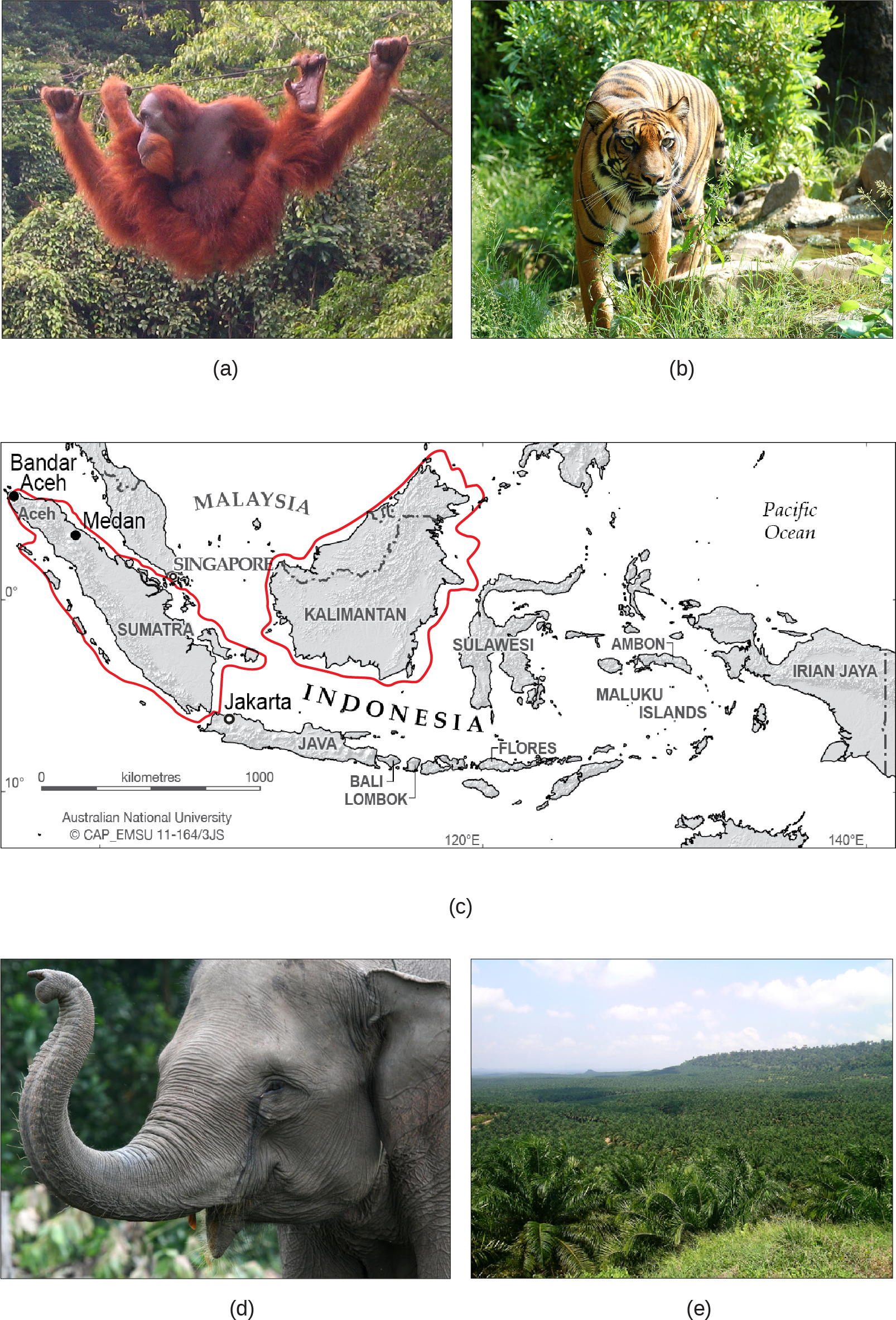
Humans rely on technology to modify their environment and replace certain functions that were once performed by the natural ecosystem. Other species cannot do this. Elimination of their ecosystem—whether it is a forest, a desert, a grassland, a freshwater estuarine, or a marine environment—will kill the individuals belonging to the species. The species will become extinct if we remove the entire habitat within the range of a species. Human destruction of habitats accelerated in the latter half of the twentieth century. Consider the exceptional biodiversity of Sumatra: it is home to one species of orangutan, a species of critically endangered elephant, and the Sumatran tiger, but half of Sumatra’s forest is now gone. The neighboring island of Borneo, home to the other species of orangutan, has lost a similar area of forest. Forest loss continues in protected areas of Borneo. All three species of orangutan are now listed as endangered by the International Union for Conservation of Nature (IUCN), but they are simply the most visible of thousands of species that will not survive the disappearance of the forests in Sumatra and Borneo. The forests are removed for timber and to plant palm oil plantations (Figure 47.11). Palm oil is used in many products including food products, cosmetics, and biodiesel in Europe. A five-year estimate of global forest cover loss for the years 2000–2005 was 3.1 percent. In the humid tropics where forest loss is primarily from timber extraction, 272,000 km2 was lost out of a global total of 11,564,000 km2 (or 2.4 percent). In the tropics, these losses certainly also represent the extinction of species because of high levels of endemism—species unique to a defined geographic location, and found nowhere else.
英語のヒント
人間は、技術によって環境を変え、かつて自然の生態系が担っていた機能の一部を置き換える。ほかの種にはそれができない。森林、砂漠、草原、淡水の河口域、海洋のどれであれ、生態系が取り除かれれば、そこに属する種の個体は死ぬ。種の分布域内の生息地をすべて取り除けば、その種は絶滅する。人間による生息地破壊は、20世紀後半に加速した。スマトラの並外れた生物多様性を考えてみよう。オランウータン1種、深刻な絶滅の危機にあるゾウ、スマトラトラがすむが、森林の半分はすでに失われた。別のオランウータン種がすむ隣のボルネオ島も、同程度の面積の森林を失った。ボルネオでは保護区内でも森林減少が続く。オランウータン3種はすべて、国際自然保護連合(IUCN)によって絶滅危惧種に指定されている。しかし、それらはスマトラとボルネオの森林消失を生き延びられない何千もの種の中で、最も目立つものにすぎない。森林は木材のため、またアブラヤシ農園を作るために伐採される(図47.11)。パーム油は、食品、化粧品、ヨーロッパのバイオディーゼルなど、多くの製品に使われる。2000〜2005年の5年間に世界の森林被覆が失われた割合は、3.1%と推定された。主に木材採取によって森林が減る湿潤熱帯では、世界全体の11,564,000 km2のうち272,000 km2、すなわち2.4%が失われた。熱帯は、特定の地域にしかいない固有種の割合が高いため、この喪失は確実に種の絶滅も意味する。
OpenStax, Rice University; Biology 2e. (credit a: modification of work by Thorsten Bachner; credit b: modification of work by Dick Mudde; credit c: modification of work by U.S. CIA World Factbook; credit d: modification of work by “Nonprofit Organizations”/Flickr; credit e: modification of work by Dr. Lian Pin Koh) · CC BY 4.0 · Source出典

Figure 47.11図 47.11
(a) One of three species of orangutan, Pongo pygmaeus, is found only in the rainforests of Borneo, and another species of orangutan (Pongo abelii) is found only in the rainforests of Sumatra. These animals are examples of the exceptional biodiversity of (c) the islands of Sumatra and Borneo. Other species include the (b) Sumatran tiger (Panthera tigris sumatrae) and the (d) Sumatran elephant (Elephas maximus sumatranus), both critically endangered species. Rainforest habitat is being removed to make way for (e) oil palm plantations such as this one in Borneo’s Sabah Province. (credit a: modification of work by Thorsten Bachner; credit b: modification of work by Dick Mudde; credit c: modification of work by U.S. CIA World Factbook; credit d: modification of work by “Nonprofit Organizations”/Flickr; credit e: modification of work by Dr. Lian Pin Koh)
(a)オランウータン3種の1つ、ボルネオオランウータン(Pongo pygmaeus)はボルネオの熱帯雨林だけにすみ、スマトラオランウータン(Pongo abelii)はスマトラの熱帯雨林だけにすむ。これらは(c)スマトラ島とボルネオ島の並外れた生物多様性の例である。ほかに(b)スマトラトラ(Panthera tigris sumatrae)と(d)スマトラゾウ(Elephas maximus sumatranus)がすみ、どちらも深刻な絶滅の危機にある。熱帯雨林の生息地は、(e)ボルネオのサバ州に見られるようなアブラヤシ農園のために取り除かれている。(a:Thorsten Bachnerの作品を改変。b:Dick Muddeの作品を改変。c:U.S. CIA World Factbookの作品を改変。d:「Nonprofit Organizations」/Flickrの作品を改変。e:Dr. Lian Pin Kohの作品を改変)
Habitat destruction can affect ecosystems other than forests. Rivers and streams are important ecosystems that are frequently modified through land development, damming, channelizing, or water removal. Damming affects the water flow to all parts of a river, which can reduce or eliminate populations that had adapted to the natural flow of the river. For example, an estimated 91 percent of United States rivers have been altered in some way. Modifications include dams, to create energy or store water; levees, to prevent flooding; and dredging or rerouting, to create land that is more suitable for human development. Many fish and amphibian species and numerous freshwater clams in the United States have seen declines caused by river damming and habitat loss. Habitat destruction, even when undertaken on behalf of humans, can lead to negative effects for us as well. Excessive soil erosion after forest removal, for example, can remove fertile soil and make river water toxic. Scientists and conservationists such as Wangari Maathai, who founded the Green Belt movement in Kenya, focus on replanting trees to repair habitats and prevent damage from deforestation. Maathai was awarded a Nobel Prize for her work, but unfortunately passed away in 2011.
英語のヒント
生息地破壊は森林以外の生態系にも影響する。河川は重要な生態系だが、土地開発、ダム建設、水路化、取水によって頻繁に改変される。ダムは川全体の水の流れを変え、自然な流れに適応した個体群を減らしたり、消滅させたりする。たとえば米国の河川の推定91%は、何らかの形で改変されている。発電や貯水のためのダム、洪水を防ぐ堤防、人間の開発に適した土地を作るための浚渫や流路変更などである。米国の多くの魚類、両生類、淡水二枚貝が、ダムや生息地喪失によって減っている。人間のための生息地破壊も、人間自身に悪影響をもたらしうる。たとえば森林伐採後の過度な土壌侵食は、肥沃な土を失わせ、河川の水を有害にする。ケニアでグリーンベルト運動を創設したワンガリ・マータイのような科学者や自然保護活動家は、生息地を修復し、森林減少による損害を防ぐため、植林に取り組む。マータイはその活動でノーベル賞を受賞したが、残念ながら2011年に亡くなった。