第43章動物の生殖と発生
43.5 Human Pregnancy and Birth43.5 ヒトの妊娠と出産
Learning Objectives学習目標
By the end of this section, you will be able to do the following:
この節を学ぶと、次のことができるようになる。
- Explain fetal development during the three trimesters of gestation妊娠初期・中期・後期における胎児の発育を説明する。
- Describe labor and delivery分娩と出産を説明する。
- Compare the efficacy and duration of various types of contraceptionさまざまな避妊法の有効性と持続期間を比較する。
- Discuss causes of infertility and the therapeutic options available不妊の原因と利用できる治療法を論じる。
Pregnancy begins with the fertilization of an egg and continues through to the birth of the individual. The length of time of gestation varies among animals, but is very similar among the great apes: human gestation is 266 days, while chimpanzee gestation is 237 days, a gorilla’s is 257 days, and orangutan gestation is 260 days long. The fox has a 57-day gestation. Dogs and cats have similar gestations averaging 60 days. The longest gestation for a land mammal is an African elephant at 640 days. The longest gestations among marine mammals are the beluga and sperm whales at 460 days.
英語のヒント
妊娠は卵の受精から始まり、個体の出生まで続く。妊娠期間の長さは動物によって異なるが、大型類人猿の間ではよく似ている。ヒトは266日、チンパンジーは237日、ゴリラは257日、オランウータンは260日である。キツネの妊娠期間は57日である。イヌとネコは似ていて、平均60日である。陸上哺乳類で最も長いのはアフリカゾウの640日である。海生哺乳類で最も長いのは、シロイルカとマッコウクジラの460日である。
Human Gestationヒトの妊娠期間
Twenty-four hours before fertilization, the egg has finished meiosis and becomes a mature oocyte. When fertilized (at conception) the egg becomes known as a zygote. The zygote travels through the oviduct to the uterus (Figure 43.18). The developing embryo must implant into the wall of the uterus within seven days, or it will deteriorate and die. The outer layers of the zygote (blastocyst) grow into the endometrium by digesting the endometrial cells, and wound healing of the endometrium closes up the blastocyst into the tissue. Another layer of the blastocyst, the chorion, begins releasing a hormone called human beta chorionic gonadotropin (β-HCG) which makes its way to the corpus luteum and keeps that structure active. This ensures adequate levels of progesterone that will maintain the endometrium of the uterus for the support of the developing embryo. Pregnancy tests determine the level of β-HCG in urine or serum. If the hormone is present, the test is positive.
英語のヒント
受精の24時間前、卵は減数分裂を終えて成熟した卵母細胞になる。受精すると、卵は接合子と呼ばれるようになる。接合子は卵管を通って子宮へ移動する(図43.18)。発生中の胚は7日以内に子宮壁へ着床しなければ、衰えて死滅する。接合子(胚盤胞)の外層は、子宮内膜の細胞を消化しながら内膜内へ伸び、内膜の傷が治癒すると胚盤胞は組織内に包み込まれる。胚盤胞の別の層である絨毛膜は、ヒトβ絨毛性性腺刺激ホルモン(β-HCG)というホルモンを放出し始める。このホルモンは黄体へ届き、その活動を維持する。これによって、発生中の胚を支える子宮内膜を維持するのに十分なプロゲステロン濃度が確保される。妊娠検査は、尿または血清中のβ-HCGの濃度を調べる。このホルモンが存在すれば、検査結果は陽性となる。
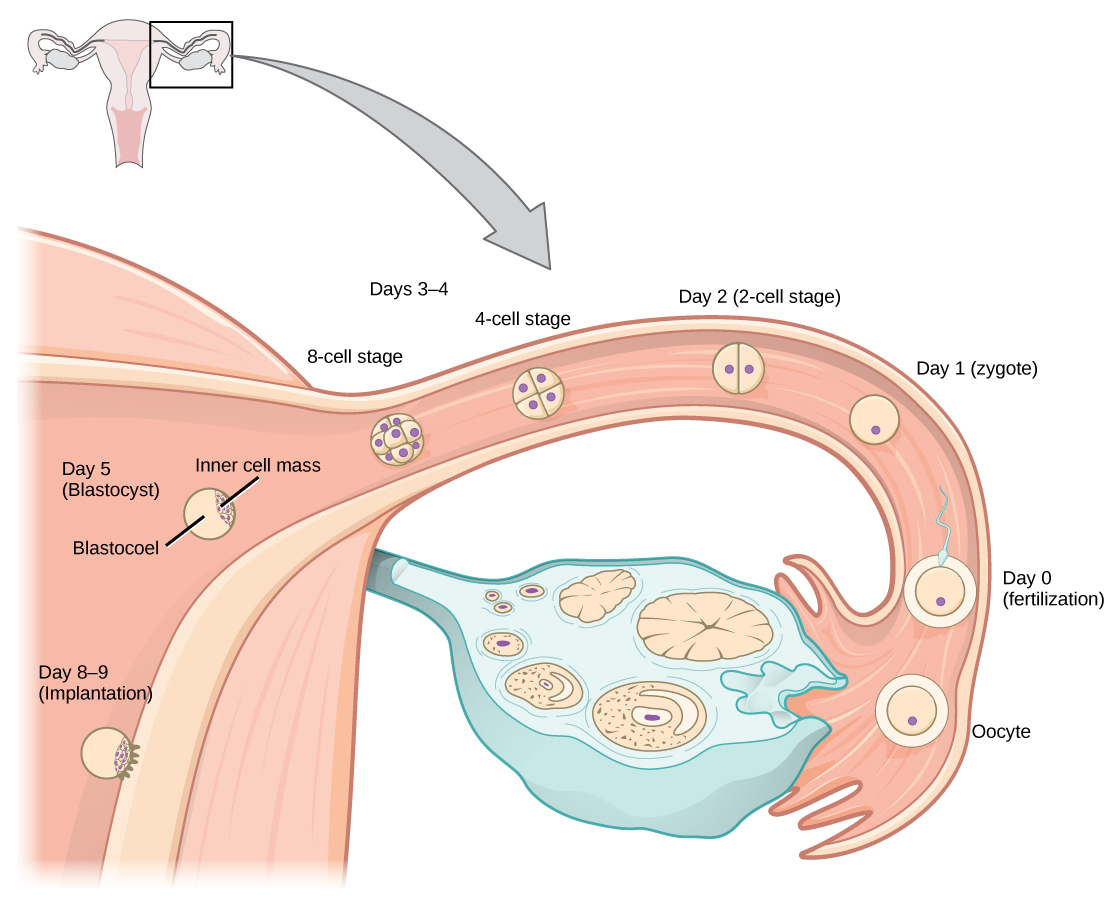
Figure 43.18図 43.18
In humans, fertilization occurs soon after the oocyte leaves the ovary. Implantation occurs eight or nine days later. (credit: Ed Uthman)
ヒトでは、卵母細胞が卵巣を出て間もなく受精が起こる。着床は8~9日後に起こる。(出典:Ed Uthman)
The gestation period is divided into three equal periods or trimesters. During the first two to four weeks of the first trimester, nutrition and waste are handled by the endometrial lining through diffusion. As the trimester progresses, the outer layer of the embryo begins to merge with the endometrium, and the placenta forms. This organ takes over the nutrient and waste requirements of the embryo and fetus, with the parent’s blood passing nutrients to the placenta and removing waste from it. Chemicals from the fetus, such as bilirubin, are processed by the parent’s liver for elimination. Some of the parent’s immunoglobulins will pass through the placenta, providing passive immunity against some potential infections.
英語のヒント
妊娠期間は、長さの等しい3つの時期、すなわち妊娠初期・中期・後期に分けられる。妊娠初期の最初の2~4週間は、子宮内膜が拡散によって栄養と老廃物をやり取りする。初期が進むにつれ、胚の外層が子宮内膜と融合し始め、胎盤が形成される。胎盤は胚と胎児の栄養供給と老廃物除去を引き継ぐ。母体の血液が胎盤へ栄養を渡し、胎盤から老廃物を取り去る。ビリルビンなど胎児に由来する化学物質は、排出のために母体の肝臓で処理される。母体の免疫グロブリンの一部は胎盤を通過し、感染の可能性がある一部の病原体に対する受動免疫を与える。
Internal organs and body structures begin to develop during the first trimester. By five weeks, limb buds, eyes, the heart, and liver have been basically formed. By eight weeks, the term fetus applies, and the body is essentially formed, as shown in Figure 43.19. The individual is about five centimeters (two inches) in length and many of the organs, such as the lungs and liver, are not yet functioning. Exposure to any toxins is especially dangerous during the first trimester, as all of the body’s organs and structures are going through initial development. Anything that affects that development can have a severe effect on the fetus’ survival.
英語のヒント
妊娠初期には、内臓と体の構造が発達し始める。5週までに肢芽、眼、心臓、肝臓が基本的に形成される。8週までには胎児と呼ばれるようになり、図43.19のように、体はおおむね形成されている。長さは約5センチメートル(2インチ)だが、肺や肝臓など多くの器官はまだ機能していない。体のすべての器官と構造が初期の発達を進めているため、妊娠初期に毒性物質へさらされることは、特に危険である。その発達に影響するものは、胎児の生存に深刻な影響を及ぼし得る。
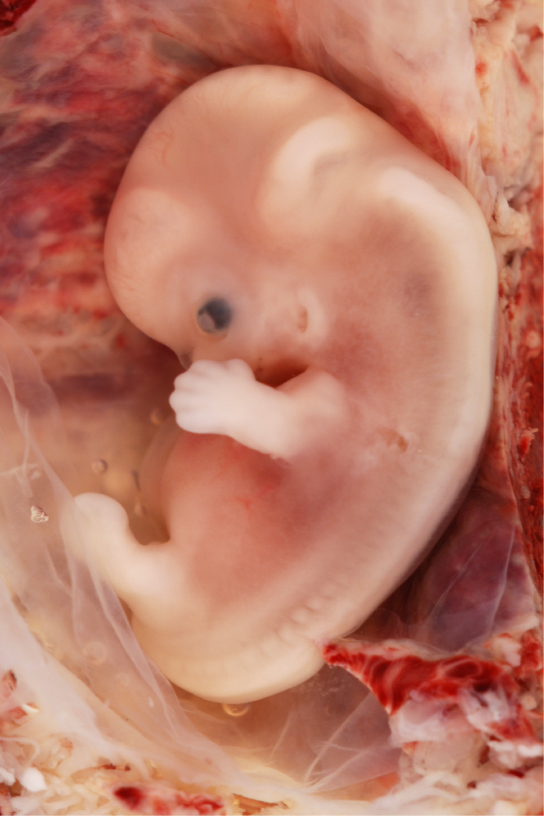


Figure 43.19図 43.19
Fetal development is shown at nine weeks gestation. (credit: Ed Uthman)
妊娠9週の胎児の発育。(出典:Ed Uthman)
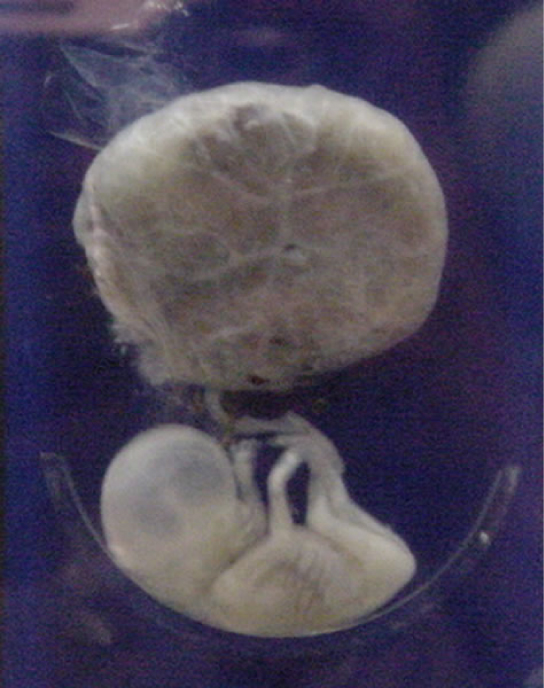
During the second trimester, the fetus grows to about 30 cm (12 inches), as shown in Figure 43.20. It becomes active and the pregnant person usually feels the first movements. All organs and structures continue to develop. The placenta has taken over the functions of nutrition and waste and the production of estrogen and progesterone from the corpus luteum, which has degenerated. The placenta will continue functioning up through the delivery of the baby.
英語のヒント
妊娠中期には、図43.20に示すように胎児が約30 cm(12インチ)まで成長する。活動が活発になり、妊娠している人は通常、初めて胎動を感じる。すべての器官と構造が発達を続ける。胎盤は、栄養供給と老廃物除去の機能を引き継ぎ、退化した黄体に代わってエストロゲンとプロゲステロンも作るようになる。胎盤は赤ちゃんの出産まで機能を続ける。
OpenStax, Rice University; Biology 2e. (credit: National Museum of Health and Medicine) · CC BY 4.0 · Source出典

Figure 43.20図 43.20
This fetus is just entering the second trimester, when the placenta takes over more of the functions performed as the baby develops. (credit: National Museum of Health and Medicine)
この胎児は妊娠中期に入ったところである。この時期には、赤ちゃんの発育に伴って果たされる機能を、胎盤がより多く引き継ぐ。(出典:National Museum of Health and Medicine)
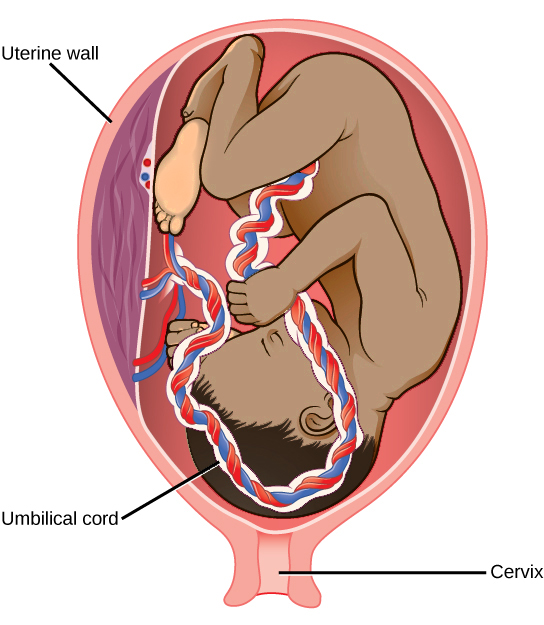
During the third trimester, the fetus grows to 3 to 4 kg (6 ½ -8 ½ lbs.) and about 50 cm (19-20 inches) long, as illustrated in Figure 43.21. This is the period of the most rapid growth during the pregnancy. Organ development continues to birth (and some systems, such as the nervous system and liver, continue to develop after birth). The pregnant person will be most uncomfortable during this trimester. They may urinate frequently due to pressure on the bladder from the fetus. There may also be intestinal blockage and circulatory problems, especially in the legs, where clots may form due to pressure from the fetus on returning veins as they enter the abdominal cavity.
英語のヒント
妊娠後期には、図43.21のように、胎児は体重3~4 kg(6½~8½ポンド)、体長約50 cm(19~20インチ)に成長する。妊娠中で最も成長が速い時期である。器官の発達は出生まで続き、神経系や肝臓などは出生後も発達を続ける。妊娠している人にとっては、この時期に最も不快感が強くなる。胎児が膀胱を圧迫するため、頻繁に排尿することがある。腸の閉塞や循環の問題も起こり得る。特に脚では、腹腔へ入る還流静脈を胎児が圧迫するため、血栓ができることがある。
OpenStax, Rice University; Biology 2e. (credit: modification of work by Gray’s Anatomy) · CC BY 4.0 · Source出典

Figure 43.21図 43.21
There is rapid fetal growth during the third trimester. (credit: modification of work by Gray’s Anatomy)
妊娠後期には胎児が急速に成長する。(出典:Gray’s Anatomyの作品を改変)