第43章動物の生殖と発生
Infertility不妊
Infertility is the inability to conceive a child or carry a child to birth. About 75 percent of causes of infertility can be identified; these include diseases, such as sexually transmitted diseases that can cause scarring of the reproductive tubes in males or females, or developmental problems frequently related to abnormal hormone levels in one of the individuals. Inadequate nutrition, especially starvation, can delay menstruation. Stress can also lead to infertility. Short-term stress can affect hormone levels, while long-term stress can delay puberty and cause less frequent menstrual cycles. Other factors that affect fertility include toxins (such as cadmium), tobacco smoking, marijuana use, gonadal injuries, and aging.
英語のヒント
不妊とは、子を妊娠できない、または出産まで妊娠を維持できないことである。不妊原因の約75%は特定できる。原因には、男性または女性の生殖管に瘢痕を生じさせる性感染症などの病気や、どちらかの異常なホルモン濃度と関連することの多い発達上の問題がある。不十分な栄養、特に飢餓は、月経を遅らせることがある。ストレスも不妊につながり得る。短期のストレスはホルモン濃度に影響し、長期のストレスは思春期を遅らせ、月経周期の頻度を減らすことがある。妊孕性に影響するほかの要因には、カドミウムなどの毒性物質、喫煙、大麻の使用、生殖腺の損傷、加齢がある。
If infertility is identified, several assisted reproductive technologies (ART) are available to aid conception. A common type of ART is in vitro fertilization (IVF) where an egg and sperm are combined outside the body and then placed in the uterus. This technique was first successfully performed in mice by Anne McLaren and John Biggers, whose work is credited as among the most significant in reproductive medicine. Eggs are obtained from the woman after extensive hormonal treatments that prepare mature eggs for fertilization and prepare the uterus for implantation of the fertilized egg. Sperm are obtained, combined with the eggs, and supported through several cell divisions to ensure viability of the zygotes. When the embryos have reached the eight-cell stage, one or more is implanted into the gestational parent's or carrier's uterus. If fertilization is not accomplished by simple IVF, a procedure that injects the sperm into an egg can be used. This is called intracytoplasmic sperm injection (ICSI) and is shown in Figure 43.22. IVF procedures produce a surplus of fertilized eggs and embryos that can be frozen and stored for future use. The procedures can also result in multiple births.
英語のヒント
不妊が確認された場合、妊娠を助ける生殖補助医療(ART)を利用できる。一般的な方法は体外受精(IVF)で、卵と精子を体外で結合させ、その後、子宮へ移す。この技術はアン・マクラーレンとジョン・ビガーズによってマウスで初めて成功した。2人の研究は、生殖医療で最も重要なものの1つと評価されている。成熟卵を受精に備えさせ、子宮を受精卵の着床に備えさせる十分なホルモン治療の後、女性から卵を採取する。精子を採取して卵と組み合わせ、接合子の生存可能性を確認するため、数回の細胞分裂を支える。胚が8細胞期に達したら、1個または複数個を、妊娠する親または妊娠を引き受ける人の子宮へ移植する。通常のIVFで受精できなければ、精子を卵へ注入する方法を用いることがある。これは卵細胞質内精子注入法(ICSI)といい、図43.22に示す。IVFでは余剰の受精卵や胚が生じ、将来使うために凍結保存できる。また、多胎出産につながる場合もある。
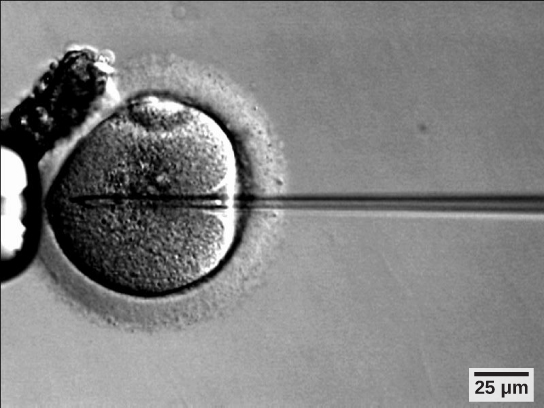
OpenStax, Rice University; Biology 2e. (credit: scale-bar data from Matt Russell) · CC BY 4.0 · Source出典

Figure 43.22図 43.22
A sperm is inserted into an egg for fertilization during intracytoplasmic sperm injection (ICSI). (credit: scale-bar data from Matt Russell)
卵細胞質内精子注入法(ICSI)では、受精のために精子を卵へ挿入する。(出典:スケールバーのデータはMatt Russell)
Section Summaryこの節のまとめ
Human pregnancy begins with fertilization of an egg and proceeds through the three trimesters of gestation. The labor process has three stages (contractions, delivery of the fetus, expulsion of the placenta), each propelled by hormones. The first trimester lays down the basic structures of the body, including the limb buds, heart, eyes, and the liver. The second trimester continues the development of all of the organs and systems. The third trimester exhibits the greatest growth of the fetus and culminates in labor and delivery. Prevention of a pregnancy can be accomplished through a variety of methods including barriers, hormones, or other means. Assisted reproductive technologies may help individuals who have infertility problems.
ヒトの妊娠は卵の受精から始まり、初期・中期・後期の3つの時期を経て進む。分娩には、収縮、胎児の娩出、胎盤の排出という3段階があり、それぞれがホルモンによって進められる。妊娠初期には、肢芽、心臓、眼、肝臓など、体の基本的な構造が形成される。中期には、すべての器官と器官系が発達を続ける。後期には胎児が最も大きく成長し、分娩と出産に至る。妊娠は、バリア法、ホルモン法、その他さまざまな方法で防げる。不妊の問題をもつ人には、生殖補助医療が役立つ場合がある。
Review Questions確認問題
Exercises 29–34練習問題 29–34
Exercise 29問題 29
Nutrient and waste requirements for the developing fetus are handled during the first few weeks by:
発育中の胎児への栄養供給と老廃物除去は、最初の数週間は何によって行われるか。
- the placenta胎盤
- diffusion through the endometrium子宮内膜を通した拡散
- the chorion絨毛膜
- the blastocyst胚盤胞
Solution解き方
B
B
Exercise 30問題 30
Progesterone is made during the third trimester by the:
妊娠後期にプロゲステロンを作るのはどれか。
- placenta胎盤
- endometrial lining子宮内膜
- chorion絨毛膜
- corpus luteum黄体
Solution解き方
A
A
Exercise 31問題 31
Which of these methods is regarded as permanent contraception?
永久的な避妊とみなされる方法はどれか。
- condomコンドーム
- oral hormonal methodsホルモン剤の内服
- sterilization不妊手術
- abstinence性交を控えること
Solution解き方
C
C
Exercise 32問題 32
Which type of short term contraceptive method is generally more effective than others?
短期間の避妊法のうち、一般にほかより効果が高いのはどの種類か。
- barrierバリア法
- hormonalホルモン法
- natural family planning自然家族計画法
- withdrawal膣外射精
Solution解き方
B
B
Exercise 33問題 33
Which hormone is primarily responsible for the contractions during labor?
分娩中の収縮を主に引き起こすホルモンはどれか。
- oxytocinオキシトシン
- estrogenエストロゲン
- β-HCGβ-HCG
- progesteroneプロゲステロン
Solution解き方
A
A
Exercise 34問題 34
Major organs begin to develop during which part of human gestation?
ヒトの妊娠期間のうち、主要な器官が発達し始めるのはいつか。
- fertilization受精時
- first trimester妊娠初期
- second trimester妊娠中期
- third trimester妊娠後期
Solution解き方
B
B
Critical Thinking Questions考察問題
Exercises 35–36練習問題 35–36
Exercise 35問題 35
Describe the major developments during each trimester of human gestation.
ヒトの妊娠初期・中期・後期に起こる主な発達を説明しなさい。
Solution解き方
The first trimester lays down the basic structures of the body, including the limb buds, heart, eyes, and the liver. The second trimester continues the development of all of the organs and systems established during the first trimester. The placenta takes over the production of estrogen and high levels of progesterone and handles the nutrient and waste requirements of the fetus. The third trimester exhibits the greatest growth of the fetus, culminating in labor and delivery.
妊娠初期には、肢芽、心臓、眼、肝臓など、体の基本的な構造が形成される。中期には、初期に形成されたすべての器官と器官系が発達を続ける。胎盤がエストロゲンと大量のプロゲステロンの生成を引き継ぎ、胎児への栄養供給と老廃物除去を担う。後期には胎児が最も大きく成長し、分娩と出産に至る。
Exercise 36問題 36
Describe the stages of labor.
分娩の各段階を説明しなさい。
Solution解き方
Stage one of labor results in the thinning of the cervix and the dilation of the cervical opening. Stage two delivers the baby, and stage three delivers the placenta.
分娩第1期には子宮頸部が薄くなり、その開口部が開く。第2期に赤ちゃんが生まれ、第3期に胎盤が排出される。
contraception
避妊
(also, birth control) various means used to prevent pregnancy
産児調節ともいう。妊娠を防ぐためのさまざまな手段。
gestation
妊娠期間
length of time for fetal development to birth
胎児が発育し、出生に至るまでの期間。
human beta chorionic gonadotropin (β-HCG)
ヒトβ絨毛性性腺刺激ホルモン(β-HCG)
hormone produced by the chorion of the zygote that helps to maintain the corpus luteum and elevated levels of progesterone
接合子の絨毛膜が作るホルモン。黄体と高いプロゲステロン濃度を維持するのを助ける。
infertility
不妊
inability to conceive, carry, and deliver children
妊娠し、妊娠を維持して、子を出産することができない状態。
morning sickness
つわり
condition in pregnant people during the first trimester; includes feelings of nausea
妊娠初期に見られる状態。吐き気などを伴う。
placenta
胎盤
organ that supports the diffusion of nutrients and waste between the pregnant person’s and fetus’ blood
妊娠している人と胎児の血液の間で、栄養物質と老廃物が拡散するのを支える器官。