第43章動物の生殖と発生
Parthenogenesis単為生殖
Parthenogenesis is a form of asexual reproduction where an egg develops into a complete individual without being fertilized. The resulting offspring can be either haploid or diploid, depending on the process and the species. Parthenogenesis occurs in invertebrates such as water fleas, rotifers, aphids, stick insects, some ants, wasps, and bees. Bees use parthenogenesis to produce haploid males (drones). If eggs are fertilized, diploid females develop, and if the fertilized eggs are fed a special diet (so called royal jelly), a queen is produced.
英語のヒント
単為生殖は、卵が受精せずに完全な個体へ発生する、無性生殖の一形態である。生じる子は、その過程や種によって半数体の場合も二倍体の場合もある。ミジンコ、ワムシ、アブラムシ、ナナフシ、一部のアリやハチなどの無脊椎動物で起こる。ミツバチは単為生殖によって半数体の雄バチを作る。卵が受精すると二倍体の雌が発生し、受精卵に特別な餌、いわゆるローヤルゼリーが与えられると、女王バチになる。
Some vertebrate animals—such as certain reptiles, amphibians, and fish—also reproduce through parthenogenesis. Although more common in plants, parthenogenesis has been observed in animal species that were segregated by sex in terrestrial or marine zoos. Two female Komodo dragons, a hammerhead shark, and a blacktop shark have produced parthenogenic young when the females have been isolated from males.
英語のヒント
特定の爬虫類、両生類、魚類など、一部の脊椎動物も単為生殖する。単為生殖は植物でより一般的だが、動物園や水族館で雌雄を分けて飼育されていた動物種でも観察されている。2頭の雌のコモドオオトカゲ、1頭のシュモクザメ、1頭のブラックトップシャークは、雄から隔離されている間に、単為生殖で子を生んだ。
Sexual Reproduction有性生殖
Sexual reproduction is the combination of (usually haploid) reproductive cells from two individuals to form a third (usually diploid) unique offspring. Sexual reproduction produces offspring with novel combinations of genes. This can be an adaptive advantage in unstable or unpredictable environments. As humans, we are used to thinking of animals as having two separate sexes—male and female—determined at conception. However, in the animal kingdom, there are many variations on this theme.
英語のヒント
有性生殖は、2個体に由来する、通常は半数体の生殖細胞が結合し、第3の独自の個体である、通常は二倍体の子を作ることである。新しい遺伝子の組み合わせをもつ子が生じるため、不安定な、または予測できない環境では、適応上の利点となり得る。人間である私たちは、動物には雄と雌という2つの別々の性があり、受精時に決まると考えることに慣れている。しかし、動物界にはこのあり方のさまざまな変形がある。
Hermaphroditism雌雄同体
Hermaphroditism occurs in animals where one individual has both male and female reproductive parts. Invertebrates such as earthworms, slugs, tapeworms and snails, shown in Figure 43.5, are often hermaphroditic. Hermaphrodites may self-fertilize or may mate with another of their species, fertilizing each other and both producing offspring. Self fertilization is common in animals that have limited mobility or are not motile, such as barnacles and clams.
英語のヒント
1個体が雄と雌の両方の生殖器官をもつ動物では、雌雄同体が見られる。ミミズ、ナメクジ、条虫、図43.5のカタツムリなどの無脊椎動物は、雌雄同体であることが多い。雌雄同体の個体は、自家受精する場合も、同じ種の別個体と交尾して互いに受精させ、両方が子を作る場合もある。自家受精は、フジツボや二枚貝など、移動能力が限られる、または移動しない動物によく見られる。
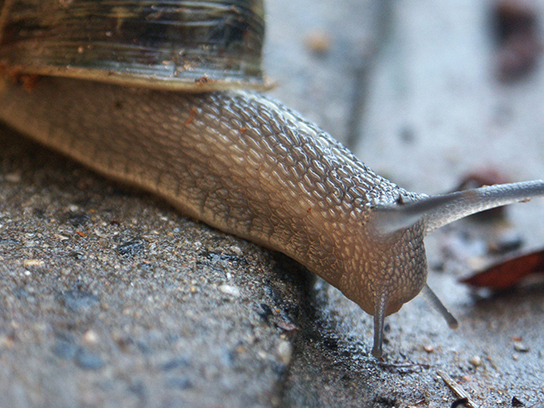

Figure 43.5図 43.5
Many snails are hermaphrodites. When two individuals mate, they can produce up to one hundred eggs each. (credit: Assaf Shtilman)
多くのカタツムリは雌雄同体である。2個体が交尾すると、それぞれが最大100個の卵を作ることができる。(出典:Assaf Shtilman)
Sex Determination性決定
Mammalian sex determination is determined genetically by the presence of X and Y chromosomes. Individuals homozygous for X (XX) are female and heterozygous individuals (XY) are male. The presence of a Y chromosome causes the development of male characteristics and its absence results in female characteristics. The XY system is also found in some insects and plants.
英語のヒント
哺乳類の性は、X染色体とY染色体の有無によって遺伝的に決定される。Xについてホモ接合の個体(XX)は雌、ヘテロ接合の個体(XY)は雄である。Y染色体があると雄の特徴が発達し、ない場合は雌の特徴が生じる。XY型の仕組みは、一部の昆虫や植物にも見られる。
Avian sex determination is dependent on the presence of Z and W chromosomes. Homozygous for Z (ZZ) results in a male and heterozygous (ZW) results in a female. The W appears to be essential in determining the sex of the individual, similar to the Y chromosome in mammals. Some fish, crustaceans, insects (such as butterflies and moths), and reptiles use this system.
英語のヒント
鳥類の性決定は、Z染色体とW染色体の有無による。Zについてホモ接合(ZZ)なら雄、ヘテロ接合(ZW)なら雌になる。W染色体は、哺乳類のY染色体と同じように、個体の性の決定に不可欠と考えられる。一部の魚類、甲殻類、昆虫(チョウやガなど)、爬虫類も、この仕組みを使う。
The sex of some species is not determined by genetics but by some aspect of the environment. Sex determination in some crocodiles and turtles, for example, is often dependent on the temperature during critical periods of egg development. This is referred to as environmental sex determination, or more specifically as temperature-dependent sex determination. In many turtles, cooler temperatures during egg incubation produce males and warm temperatures produce females. In some crocodiles, moderate temperatures produce males and both warm and cool temperatures produce females. In some species, sex is both genetic- and temperature-dependent. Note that in this discussion and throughout the chapter, we are speaking only about sex, not gender, when referring to males and females. (Gender is a more complex construct; beyond having social aspects, it is not universal in the animal kingdom.)
英語のヒント
一部の種の性は、遺伝ではなく環境の何らかの要因によって決まる。例えば、一部のワニやカメでは、卵の発生の重要な時期の温度によって性が決まることが多い。これを環境依存性決定、より具体的には温度依存性決定という。多くのカメでは、卵を温める間の温度が低いと雄、高いと雌になる。一部のワニでは、中程度の温度で雄、高温でも低温でも雌になる。性が遺伝と温度の両方に依存する種もある。ここでの議論、およびこの章全体で雄・雌というときは、ジェンダーではなく、生物学的な性だけを指している点に注意しよう。(ジェンダーは、より複雑な概念である。社会的な側面をもつことに加え、動物界に普遍的なものではない。)
Individuals of some species change their sex during their lives, alternating between male and female. If the individual is female first, it is termed protogyny or “first female,” if it is male first, its termed protandry or “first male.” Oysters, for example, are born male, grow, and become female and lay eggs; some oyster species change sex multiple times.
英語のヒント
一部の種では、個体が一生のうちに性を変え、雄と雌が入れ替わる。最初が雌なら雌性先熟、すなわち「雌が先」と呼ばれ、最初が雄なら雄性先熟、すなわち「雄が先」と呼ばれる。例えばカキは、雄として生まれ、成長すると雌になって産卵する。一部のカキの種は、何度も性を変える。
Section Summary節のまとめ
Reproduction may be asexual when one individual produces genetically identical offspring, or sexual when the genetic material from two individuals is combined to produce genetically diverse offspring. Asexual reproduction occurs through fission, budding, and fragmentation. Sexual reproduction may mean the joining of sperm and eggs within animals’ bodies or it may mean the release of sperm and eggs into the environment. An individual may be one sex, or both; it may start out as one sex and switch during its life, or it may stay male or female.
生殖には、1個体が遺伝的に同一の子を作る無性生殖と、2個体の遺伝物質が組み合わされて遺伝的に多様な子を作る有性生殖がある。無性生殖は分裂、出芽、断片化によって起こる。有性生殖では、動物の体内で精子と卵が結合する場合と、精子と卵が環境中へ放出される場合がある。個体は一方の性だけをもつことも、両方をもつこともある。一方の性で生まれて一生の間に性を変える場合も、一生を通じて雄または雌である場合もある。