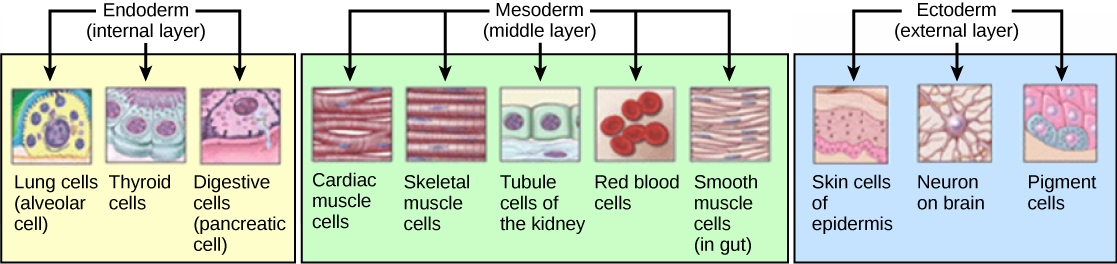
The typical blastula is a ball of cells. The next stage in embryonic development is the formation of the body plan. The cells in the blastula rearrange themselves spatially to form three layers of cells. This process is called gastrulation . During gastrulation, the blastula folds upon itself to form the three layers of cells. Each of these layers is called a germ layer and each germ layer differentiates into different organ systems.
英語のヒント 典型的な胞胚は、細胞からなる球である。胚発生の次の段階では、体の基本構造が形成される。胞胚内の細胞が空間的に並び替わり、3つの細胞層を作る。この過程を原腸形成という。 原腸形成中、胞胚は自ら折れ込んで、3つの細胞層を形成する。各層を胚葉といい、それぞれが異なる器官系へ分化する。
Are Designer Babies in Our Future? 未来にはデザイナーベビーが現れるのか
Figure 43.27 図 43.27
This logo from the Second International Eugenics Conference in New York City in September of 1921 shows how eugenics attempted to merge several fields of study with the goal of producing a genetically superior human race.
1921年9月にニューヨーク市で開かれた第2回国際優生学会議のロゴ。遺伝的に優れた人類を生み出す目的で、優生学が複数の研究分野を統合しようとしたことを示している。
If you could prevent your child from getting a devastating genetic disease, would you do it? Would you select the sex of your child or select for their attractiveness, strength, or intelligence? How far would you go to maximize the possibility of resistance to disease? The genetic engineering of a human child, the production of "designer babies" with desirable phenotypic characteristics, was once a topic restricted to science fiction. This is the case no longer: science fiction is now overlapping into science fact. Many phenotypic choices for offspring are already available, with many more likely to be possible in the not too distant future. Which traits should be selected and how they should be selected are topics of much debate within the worldwide medical community. The ethical and moral line is not always clear or agreed upon, and some fear that modern reproductive technologies could lead to a new form of eugenics.
英語のヒント 子どもが重い遺伝性疾患になるのを防げるなら、あなたはそうするだろうか。子どもの性別を選んだり、容姿、強さ、知能を選んだりするだろうか。病気への抵抗力をもつ可能性を最大限に高めるために、どこまで行うだろうか。 望ましい表現型の特徴をもつ「デザイナーベビー」を作る、ヒトの子どもの遺伝子操作は、かつてはSFだけの話題だった。今はもうそうではない。SFが科学的な現実と重なり始めている。子の表現型についてすでに多くの選択が可能であり、そう遠くない将来には、さらに多くが可能になると考えられる。 どの形質を、どのように選ぶべきかは、世界の医学界で大きな議論の対象となっている。倫理と道徳の境界は、必ずしも明確でも、合意されているわけでもない。現代の生殖技術が、新しい形の優生学につながると懸念する人もいる。
Eugenics is the use of information and technology from a variety of sources to improve the genetic makeup of the human race. The goal of creating genetically superior humans was quite prevalent (although controversial) in several countries during the early 20th century, but fell into disrepute when Nazi Germany developed an extensive eugenics program in the 1930s and 40s. The Nazis forcibly sterilized hundreds of thousands of the so-called "unfit" and killed tens of thousands of people with disabilities who resided in institutions, both as part of a systematic program to develop a genetically superior race of Germans known as Aryans. Ever since, eugenic ideas have not been as publicly expressed, but there are still those who promote them.
英語のヒント 優生学とは、さまざまな分野の情報や技術を使って、人類の遺伝的構成を改善しようとすることである。遺伝的に優れた人間を作るという目標は、20世紀初頭、論争を伴いながらも複数の国に広く見られた。しかし、1930~40年代にナチス・ドイツが大規模な優生政策を展開すると、信用を失った。 ナチスは、いわゆる「不適格者」数十万人に強制不妊手術を行い、施設に暮らす障害者数万人を殺害した。いずれも、アーリア人と呼ばれる遺伝的に優れたドイツ民族を作るための組織的な計画の一環だった。それ以来、優生思想は以前ほど公には表明されなくなったが、今も推進する人々はいる。
Efforts have been made in the past to control traits in human children using donated sperm from people with desired traits. In fact, eugenicist Robert Klark Graham established a sperm bank in 1980 that included samples exclusively from donors with high IQs. The "genius" sperm bank failed to capture the public's imagination and the operation closed in 1999.
英語のヒント 望ましい形質をもつ人の提供精子を使い、人間の子どもの形質を制御しようとする試みは、過去にも行われてきた。実際、優生学者ロバート・クラーク・グラハムは1980年、高いIQをもつ提供者の精子だけを扱う精子バンクを設立した。この「天才」精子バンクは世間の関心をつかめず、1999年に事業を終了した。
In more recent times, the procedure known as prenatal genetic diagnosis (PGD) has been developed. PGD involves the screening of human embryos as part of the process of in vitro fertilization, during which embryos are conceived and grown outside the mother's body for some period of time before they are implanted. The term PGD usually refers to both the diagnosis, selection, and the implantation of the selected embryos.
英語のヒント より近年には、出生前遺伝子診断(PGD)と呼ばれる手順が開発された。PGDでは、体外受精の過程の一部として、ヒトの胚を検査する。体外受精では、胚は母体外で成立し、着床させるまでの一定期間、体外で育てられる。PGDという語は通常、診断、選択、および選択した胚の移植をまとめて指す。
In the least controversial use of PGD, embryos are tested for the presence of alleles which cause genetic diseases such as sickle cell disease, muscular dystrophy, and hemophilia, in which a single disease-causing allele or pair of alleles has been identified. By excluding embryos containing these alleles from implantation into the mother, the disease is prevented, and the unused embryos are either donated to science or discarded. There are relatively few in the worldwide medical community that question the ethics of this type of procedure, which allows individuals scared to have children because of the alleles they carry to do so successfully. The major limitation to this procedure is its expense. Not usually covered by medical insurance and thus out of reach financially for most people, only a very small percentage of all live births use such complicated methodologies. Yet, even in cases like these where the ethical issues may seem to be clear-cut, not everyone agrees with the morality of these types of procedures. For example, to those who take the position that human life begins at conception, the discarding of unused embryos, a necessary result of PGD, is unacceptable under any circumstances.
英語のヒント PGDのうち最も論争が少ない利用法では、鎌状赤血球症、筋ジストロフィー、血友病などの遺伝性疾患を引き起こす対立遺伝子が胚にあるか調べる。これらの病気では、原因となる1個または1対の対立遺伝子が特定されている。該当する対立遺伝子をもつ胚を母体への移植から除くことで、病気を防ぐ。使わない胚は研究へ提供されるか、廃棄される。 自分がもつ対立遺伝子のために子をもつことを恐れている人が、子をもてるようにするこの種の手順について、世界の医学界で倫理を疑問視する人は比較的少ない。大きな制約は費用である。通常は医療保険の対象にならず、大多数の人には経済的に手が届かないため、このような複雑な方法を使うのは、出生全体のごくわずかな割合にとどまる。 それでも、このように倫理上の問題が明確に見える場合でさえ、誰もが手順の道徳性に賛成するわけではない。例えば、人の生命は受精時に始まるという立場では、PGDで必然的に生じる未使用胚の廃棄は、どのような状況でも受け入れられない。
A murkier ethical situation is found in the selection of a child's sex, which is easily performed by PGD. Currently, countries such as Great Britain have banned the selection of a child's sex for reasons other than preventing sex-linked diseases. Other countries allow the procedure for "family balancing", based on the desire of some parents to have at least one child of each sex. Still others, including the United States, have taken a scattershot approach to regulating these practices, essentially leaving it to the individual practicing physician to decide which practices are acceptable and which are not.
英語のヒント 子どもの性別の選択では、倫理的な状況はさらに曖昧になる。性別の選択はPGDで容易に行える。現在、英国などは、伴性遺伝病の予防以外の理由で子どもの性別を選ぶことを禁止している。ほかの国では、男女少なくとも1人ずつの子をもちたいという親の希望に基づく「家族の性別構成の調整」のために、この手順を認めている。 米国を含むさらに別の国々では、こうした実施への規制が一貫せず、何を認め何を認めないかの判断は、基本的に個々の臨床医に委ねられている。
Even murkier are rare instances of people with disabilities who select embryos via PGD to ensure that they share their disability. These parents usually cite many positive aspects of their disabilities and associated culture as reasons for their choice, which they see as their moral right. To others, to purposely cause a disability in a child violates the basic medical principle of Primum non nocere, "first, do no harm." This procedure, although not illegal in most countries, demonstrates the complexity of ethical issues associated with choosing genetic traits in offspring.
英語のヒント さらに判断が難しいのは、自分と同じ障害を子にもたせるために、障害のある人がPGDで胚を選ぶ、まれな事例である。こうした親は通常、自分の障害や、それに結び付く文化の多くの肯定的な側面を選択の理由に挙げ、その選択を自分たちの道徳的な権利と考える。 ほかの人々にとっては、意図的に子へ障害を生じさせることは、「まず害をなすな」という医学の基本原則Primum non nocereに反する。この手順は、ほとんどの国では違法ではないが、子の遺伝的形質を選ぶことに伴う倫理的問題の複雑さを示している。
Where could this process lead? Will this technology become more affordable and how should it be used? With the ability of technology to progress rapidly and unpredictably, a lack of definitive guidelines for the use of reproductive technologies before they arise might make it difficult for legislators to keep pace once they are in fact realized, assuming the process needs any government regulation at all. Other bioethicists argue that we should only deal with technologies that exist now, and not in some uncertain future. They argue that these types of procedures will always be expensive and rare, so the fears of eugenics and "master" races are unfounded and overstated. The debate continues.
英語のヒント この過程はどこへ向かうのだろうか。技術の費用はより手頃になり、どのように使われるべきなのだろうか。技術は急速に、予測できない形で進歩し得る。生殖技術が登場する前に、その利用について明確な指針がなければ、実現した後で立法者が追いつくのは難しくなるかもしれない。そもそも何らかの政府規制が必要だと仮定しての話ではある。 ほかの生命倫理学者は、不確かな未来の技術ではなく、今存在する技術だけを扱うべきだと主張する。こうした手順は常に高価でまれなものにとどまるので、優生学や「支配民族」への恐れには根拠がなく、誇張されているというのである。議論は続いている。