第32章植物の生殖
Cutting挿し木
Plants such as coleus and money plant are propagated through stem cuttings, where a portion of the stem containing nodes and internodes is placed in moist soil and allowed to root. In some species, stems can start producing a root even when placed only in water. For example, leaves of the African violet will root if kept in water undisturbed for several weeks.
コリウスやマネープラントなどは、節と節間を含む茎の一部を湿った土へ挿し、発根させる挿し木によって増やす。一部の種では、水に入れるだけでも茎から根が出始める。たとえばセントポーリアの葉は、水に入れて数週間動かさずにおくと発根する。
Layering取り木
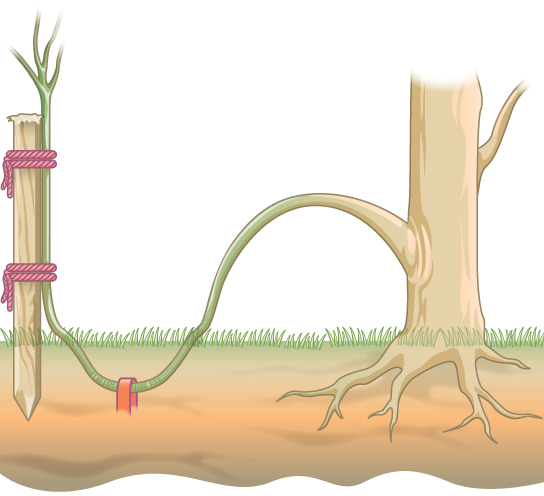
Layering is a method in which a stem attached to the plant is bent and covered with soil. Young stems that can be bent easily without any injury are preferred. Jasmine and bougainvillea (paper flower) can be propagated this way (Figure 32.27). In some plants, a modified form of layering known as air layering is employed. A portion of the bark or outermost covering of the stem is removed and covered with moss, which is then taped. Some gardeners also apply rooting hormone. After some time, roots will appear, and this portion of the plant can be removed and transplanted into a separate pot.
英語のヒント
取り木は、親植物につながったままの茎を曲げ、土で覆う方法である。傷をつけずに簡単に曲げられる若い茎が適している。ジャスミンやブーゲンビリアは、この方法で増やせる(図32.27)。一部の植物では、高取り法という取り木の変法を使う。樹皮、すなわち茎のもっとも外側の覆いを一部取り除き、コケで覆ってテープで固定する。発根ホルモンを使う園芸家もいる。しばらくすると根が現れ、その部分を切り離して別の鉢へ移植できる。
OpenStax, Rice University; Biology 2e. (credit: modification of work by Pearson Scott Foresman, donated to the Wikimedia Foundation) · CC BY 4.0 · Source出典
Figure 32.27図 32.27
In layering, a part of the stem is buried so that it forms a new plant. (credit: modification of work by Pearson Scott Foresman, donated to the Wikimedia Foundation)
取り木では、茎の一部を埋めて新しい植物を作らせる。(クレジット:Wikimedia Foundationに寄贈されたPearson Scott Foresmanの作品を改変)
Micropropagation微細繁殖
Micropropagation (also called plant tissue culture) is a method of propagating a large number of plants from a single plant in a short time under laboratory conditions (Figure 32.28). This method allows propagation of rare, endangered species that may be difficult to grow under natural conditions, are economically important, or are in demand as disease-free plants.
英語のヒント
微細繁殖は植物組織培養とも呼ばれ、実験室の条件下で、一つの植物から短時間に多数の植物を増やす方法である(図32.28)。この方法によって、自然条件では育てにくい希少種や絶滅危惧種、経済的に重要な種、病原体のない植物として需要のある種を増殖できる。
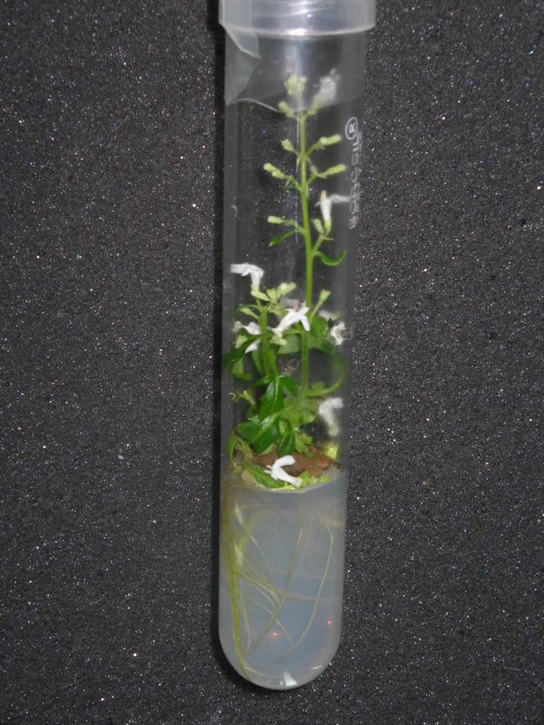
Figure 32.28図 32.28
Micropropagation is used to propagate plants in sterile conditions. (credit: Nikhilesh Sanyal)
微細繁殖は、無菌条件下で植物を増やすために使われる。(クレジット:Nikhilesh Sanyal)
To start plant tissue culture, a part of the plant such as a stem, leaf, embryo, anther, or seed can be used. The plant material is thoroughly sterilized using a combination of chemical treatments standardized for that species. Under sterile conditions, the plant material is placed on a plant tissue culture medium that contains all the minerals, vitamins, and hormones required by the plant. The plant part often gives rise to an undifferentiated mass known as callus, from which individual plantlets begin to grow after a period of time. These can be separated and are first grown under greenhouse conditions before they are moved to field conditions.
英語のヒント
植物組織培養を始める材料として、茎、葉、胚、葯、種子など、植物の一部を使うことができる。材料は、その種に合わせて標準化された化学処理を組み合わせ、十分に滅菌する。無菌条件下で、植物に必要なすべての無機栄養分、ビタミン、ホルモンを含む植物組織培養用培地へ材料を置く。材料からはしばしば、カルスという未分化な細胞の塊が生じ、しばらくすると、そこから個々の小植物体が育ち始める。それらは分離でき、まず温室で育ててから、屋外の条件へ移す。
Plant Life Spans植物の寿命
The length of time from the beginning of development to the death of a plant is called its life span. The life cycle, on the other hand, is the sequence of stages a plant goes through from seed germination to seed production of the mature plant. Some plants, such as annuals, only need a few weeks to grow, produce seeds and die. Other plants, such as the bristlecone pine, live for thousands of years. Some bristlecone pines have a documented age of 4,500 years (Figure 32.29). Even as some parts of a plant, such as regions containing meristematic tissue—the area of active plant growth consisting of undifferentiated cells capable of cell division—continue to grow, some parts undergo programmed cell death (apoptosis). The cork found on stems, and the water-conducting tissue of the xylem, for example, are composed of dead cells.
植物の発生の始まりから死までの時間を寿命という。一方、生活環とは、種子の発芽から、成熟した植物が種子を作るまでに経る段階の連続である。一年生植物などは、わずか数週間で成長し、種子を作って死ぬ。ブリスルコーンパインのように数千年も生きる植物もある。樹齢4,500年と記録されている個体もある(図32.29)。植物の一部は成長を続ける一方、別の部分ではプログラム細胞死(アポトーシス)が起こる。成長を続ける部分の例が、分裂組織を含む領域である。これは細胞分裂できる未分化な細胞からなり、植物が活発に成長する場所である。たとえば、茎にあるコルクや、木部の水を通す組織は、死んだ細胞からできている。
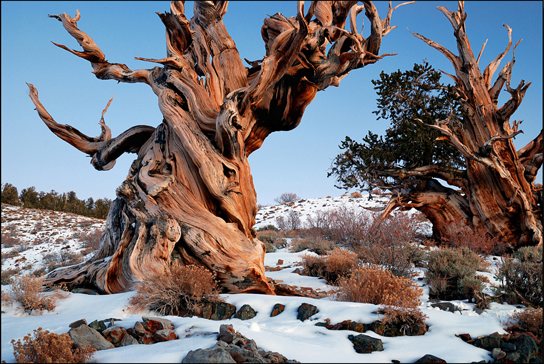


Figure 32.29図 32.29
The bristlecone pine, shown here in the Ancient Bristlecone Pine Forest in the White Mountains of eastern California, has been known to live for 4,500 years. (credit: Rick Goldwaser)
カリフォルニア州東部のホワイト山脈にあるエンシェント・ブリスルコーン・パイン・フォレストのブリスルコーンパイン。4,500年生きる例が知られている。(クレジット:Rick Goldwaser)
Plant species that complete their lifecycle in one season are known as annuals, an example of which is Arabidopsis, or mouse-ear cress. Biennials such as carrots complete their lifecycle in two seasons. In a biennial’s first season, the plant has a vegetative phase, whereas in the next season, it completes its reproductive phase. Commercial growers harvest the carrot roots after the first year of growth, and do not allow the plants to flower. Perennials, such as the magnolia, complete their lifecycle in two years or more.
一つの季節で生活環を完結する植物種を一年生植物といい、シロイヌナズナ(Arabidopsis)がその例である。ニンジンのような二年生植物は、二つの季節で生活環を完結する。最初の季節には栄養成長期を過ごし、次の季節に生殖成長期を完了する。商業生産では、ニンジンの根は1年目の成長後に収穫され、開花させない。モクレンなどの多年生植物は、2年以上かけて生活環を完結する。
In another classification based on flowering frequency, monocarpic plants flower only once in their lifetime; examples include bamboo and yucca. During the vegetative period of their life cycle (which may be as long as 120 years in some bamboo species), these plants may reproduce asexually and accumulate a great deal of food material that will be required during their once-in-a-lifetime flowering and setting of seed after fertilization. Soon after flowering, these plants die. Polycarpic plants form flowers many times during their lifetime. Fruit trees, such as apple and orange trees, are polycarpic; they flower every year. Other polycarpic species, such as perennials, flower several times during their life span, but not each year. By this means, the plant does not require all its nutrients to be channelled towards flowering each year.
英語のヒント
開花頻度による別の分類では、一回結実性植物は生涯に一度だけ開花する。タケやユッカがその例である。栄養成長期の間に、これらの植物は無性生殖を行い、生涯に一度の開花と、受精後の種子形成に必要な大量の養分を蓄えることがある。一部のタケでは、栄養成長期が120年にもなる。開花すると、ほどなく枯れる。多回結実性植物は、生涯に何度も花をつける。リンゴやオレンジなどの果樹は多回結実性で、毎年開花する。多年生植物など、ほかの多回結実性の種には、生涯に何度か咲くが毎年は咲かないものもある。こうすることで、毎年すべての栄養分を開花へ回す必要がなくなる。
As is the case with all living organisms, genetics and environmental conditions have a role to play in determining how long a plant will live. Susceptibility to disease, changing environmental conditions, drought, cold, and competition for nutrients are some of the factors that determine the survival of a plant. Plants continue to grow, despite the presence of dead tissue such as cork. Individual parts of plants, such as flowers and leaves, have different rates of survival. In many trees, the older leaves turn yellow and eventually fall from the tree. Leaf fall is triggered by factors such as a decrease in photosynthetic efficiency, due to shading by upper leaves, or oxidative damage incurred as a result of photosynthetic reactions. The components of the part to be shed are recycled by the plant for use in other processes, such as development of seed and storage. This process is known as nutrient recycling.
英語のヒント
すべての生物と同様、植物がどれほど長く生きるかの決定には、遺伝と環境条件が関わる。病気へのかかりやすさ、環境条件の変化、干ばつ、寒さ、栄養分をめぐる競争などが、植物の生存を決める要因となる。コルクのような死んだ組織が存在していても、植物は成長を続ける。花や葉など、植物の各部分では生存の程度が異なる。多くの樹木では、古い葉が黄色くなり、やがて落ちる。落葉は、上の葉に遮光されることによる光合成効率の低下や、光合成反応によって生じた酸化的損傷などにより引き起こされる。落ちる部分の構成成分は植物内で再利用され、種子の発達や貯蔵など、ほかの過程に使われる。これを栄養分の再利用という。
The aging of a plant and all the associated processes is known as senescence, which is marked by several complex biochemical changes. One of the characteristics of senescence is the breakdown of chloroplasts, which is characterized by the yellowing of leaves. The chloroplasts contain components of photosynthetic machinery such as membranes and proteins. Chloroplasts also contain DNA. The proteins, lipids, and nucleic acids are broken down by specific enzymes into smaller molecules and salvaged by the plant to support the growth of other plant tissues.
英語のヒント
植物が年を取り、それに伴うすべての過程が進むことを老化という。老化には、いくつかの複雑な生化学的変化が見られる。その特徴の一つが葉緑体の分解であり、葉の黄化として現れる。葉緑体には、膜やタンパク質など光合成装置の構成要素が含まれる。またDNAも含まれる。タンパク質、脂質、核酸は特定の酵素によって小さな分子へ分解され、植物によって回収され、ほかの組織の成長を支えるために使われる。
The complex pathways of nutrient recycling within a plant are not well understood. Hormones are known to play a role in senescence. Applications of cytokinins and ethylene delay or prevent senescence; in contrast, abscissic acid causes premature onset of senescence.
植物体内の栄養分再利用の複雑な経路は、十分には理解されていない。老化にホルモンが関わることは知られている。サイトカイニンとエチレンを与えると老化が遅れるか防がれる一方、アブシシン酸は老化の開始を早める。