第32章植物の生殖
Pollination by Insects昆虫による送粉
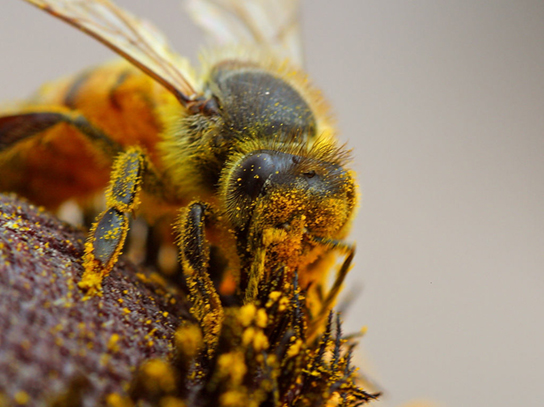
Bees are perhaps the most important pollinator of many garden plants and most commercial fruit trees (Figure 32.12). The most common species of bees are bumblebees and honeybees. Since bees cannot see the color red, bee-pollinated flowers usually have shades of blue, yellow, or other colors. Bees collect energy-rich pollen or nectar for their survival and energy needs. They visit flowers that are open during the day, are brightly colored, have a strong aroma or scent, and have a tubular shape, typically with the presence of a nectar guide. A nectar guide includes regions on the flower petals that are visible only to bees, and not to humans; it helps to guide bees to the center of the flower, thus making the pollination process more efficient. The pollen sticks to the bees’ fuzzy hair, and when the bee visits another flower, some of the pollen is transferred to the second flower. Recently, there have been many reports about the declining population of honeybees. Many flowers will remain unpollinated and not bear seed if honeybees disappear. The impact on commercial fruit growers could be devastating.
英語のヒント
ハチは、多くの園芸植物と大部分の商業的な果樹にとって、おそらくもっとも重要な送粉者である(図32.12)。もっともよく見られるのはマルハナバチとミツバチである。ハチは赤色を見ることができないため、ハチが送粉する花は通常、青、黄、その他の色合いをもつ。ハチは、生存とエネルギーの必要を満たすため、エネルギーに富む花粉や蜜を集める。ハチが訪れる花は、日中に開き、鮮やかな色と強い香りをもち、筒状で、通常は蜜標がある。蜜標には、人には見えずハチだけに見える花弁上の領域が含まれる。ハチを花の中央へ導き、送粉をより効率よくする。花粉はハチの細かな毛に付着し、ハチが別の花を訪れると、その一部が次の花へ移される。近年、ミツバチの個体数減少が数多く報告されている。ミツバチが消えれば、多くの花は受粉せず、種子をつけられない。商業的な果樹生産者への影響は、壊滅的になる可能性がある。
OpenStax, Rice University; Biology 2e. (credit: modification of work by Jon Sullivan) · CC BY 4.0 · Source出典
Figure 32.12図 32.12
Insects, such as bees, are important agents of pollination. (credit: modification of work by Jon Sullivan)
ハチなどの昆虫は、重要な送粉者である。(クレジット:Jon Sullivanの作品を改変)
Many flies are attracted to flowers that have a decaying smell or an odor of rotting flesh. These flowers, which produce nectar, usually have dull colors, such as brown or purple. They are found on the corpse flower or voodoo lily (Amorphophallus), dragon arum (Dracunculus), and carrion flower (Stapleia, Rafflesia). The nectar provides energy, whereas the pollen provides protein. Wasps are also important insect pollinators, and pollinate many species of figs.
多くのハエは、腐敗臭や腐った肉のにおいがする花に引き寄せられる。蜜を作るこれらの花は、通常、褐色や紫色などのくすんだ色をしている。ショクダイオオコンニャクなどのコンニャク属(Amorphophallus)、ドラゴンアルム(Dracunculus)、腐肉花と呼ばれるスタペリア(Stapleia)やラフレシア(Rafflesia)に見られる。蜜はエネルギーを、花粉はタンパク質を供給する。スズメバチ類も重要な昆虫送粉者で、多くのイチジク属の種に送粉する。
Butterflies, such as the monarch, pollinate many garden flowers and wildflowers, which usually occur in clusters. These flowers are brightly colored, have a strong fragrance, are open during the day, and have nectar guides to make access to nectar easier. The pollen is picked up and carried on the butterfly’s limbs. Moths, on the other hand, pollinate flowers during the late afternoon and night. The flowers pollinated by moths are pale or white and are flat, enabling the moths to land. One well-studied example of a moth-pollinated plant is the yucca plant, which is pollinated by the yucca moth. The shape of the flower and moth have adapted in such a way as to allow successful pollination. The moth deposits pollen on the sticky stigma for fertilization to occur later. The female moth also deposits eggs into the ovary. As the eggs develop into larvae, they obtain food from the flower and developing seeds. Thus, both the insect and flower benefit from each other in this symbiotic relationship. The corn earworm moth and Gaura plant have a similar relationship (Figure 32.13).
オオカバマダラなどのチョウは、庭の花や野生の花の多くに送粉する。これらの花は通常集まって咲き、鮮やかな色と強い香りをもち、日中に開き、蜜にたどり着きやすくする蜜標がある。花粉はチョウの脚などに付着して運ばれる。一方、ガは午後遅くから夜に花へ送粉する。ガが送粉する花は淡色または白色で、着地できるよう平たい形をしている。よく研究された例に、ユッカガが送粉するユッカがある。花とガの形は、送粉がうまくいくように適応している。ガは粘着性のある柱頭へ花粉をつけ、後で受精が起こるようにする。雌のガは子房へ卵も産む。卵から幼虫が発達すると、花や発達中の種子から食物を得る。この共生関係では、昆虫も花も相手から利益を得る。アメリカタバコガとガウラにも、同様の関係がある(図32.13)。
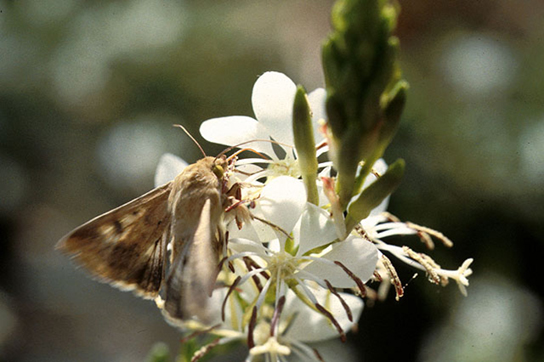
Figure 32.13図 32.13
A corn earworm sips nectar from a night-blooming Gaura plant. (credit: Juan Lopez, USDA ARS)
夜に咲くガウラから蜜を吸うアメリカタバコガ。(クレジット:Juan Lopez, USDA ARS)
Pollination by Batsコウモリによる送粉
In the tropics and deserts, bats are often the pollinators of nocturnal flowers such as agave, guava, and morning glory. The flowers are usually large and white or pale-colored; thus, they can be distinguished from the dark surroundings at night. The flowers have a strong, fruity, or musky fragrance and produce large amounts of nectar. They are naturally large and wide-mouthed to accommodate the head of the bat. As the bats seek the nectar, their faces and heads become covered with pollen, which is then transferred to the next flower.
熱帯や砂漠では、リュウゼツラン、グアバ、アサガオなど、夜に咲く花の送粉者はコウモリであることが多い。花は通常大きく、白色または淡色なので、夜の暗い周囲から見分けられる。果実のような香りや麝香のような香りを強く放ち、多量の蜜を作る。コウモリの頭が入るように、花は大きく開口部も広い。コウモリが蜜を探すと、顔や頭に花粉がつき、次の花へ運ばれる。
Pollination by Birds鳥による送粉
Many species of small birds, such as the hummingbird (Figure 32.14) and sun birds, are pollinators for plants such as orchids and other wildflowers. Flowers visited by birds are usually sturdy and are oriented in such a way as to allow the birds to stay near the flower without getting their wings entangled in the nearby flowers. The flower typically has a curved, tubular shape, which allows access for the bird’s beak. Brightly colored, odorless flowers that are open during the day are pollinated by birds. As a bird seeks energy-rich nectar, pollen is deposited on the bird’s head and neck and is then transferred to the next flower it visits. Botanists have been known to determine the range of extinct plants by collecting and identifying pollen from 200-year-old bird specimens from the same site.
英語のヒント
ハチドリ(図32.14)やタイヨウチョウなど、多くの小鳥は、ランやほかの野生の花の送粉者である。鳥が訪れる花は通常丈夫で、鳥が近くの花に翼を絡めずにとどまれる向きについている。典型的には、くちばしが入る、曲がった筒状の花である。日中に開く、鮮やかな色で無臭の花が鳥によって送粉される。鳥がエネルギーに富む蜜を探すと、花粉が頭や首につき、次に訪れる花へ運ばれる。植物学者が、同じ場所から得られた200年前の鳥の標本に付着する花粉を採集・同定し、絶滅した植物の分布域を調べた例も知られている。
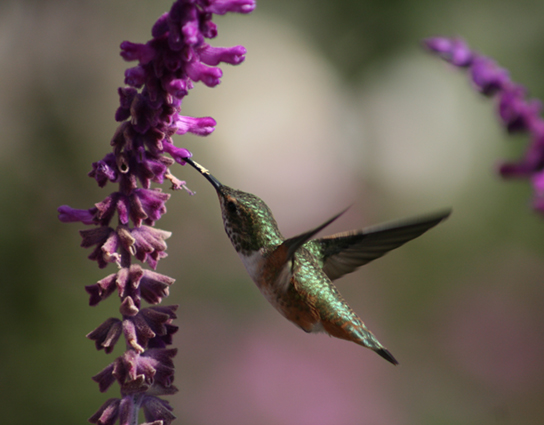


Figure 32.14図 32.14
Hummingbirds have adaptations that allow them to reach the nectar of certain tubular flowers. (credit: Lori Branham)
ハチドリは、特定の筒状の花の蜜へ届くための適応をもつ。(クレジット:Lori Branham)