第45章個体群と群集の生態学
Parasitism寄生
A parasite is an organism that lives in or on another living organism and derives nutrients from it. In this relationship, the parasite benefits, but the host is harmed. The host is usually weakened by the parasite as it siphons resources the host would normally use to maintain itself. The parasite, however, is unlikely to kill the host, especially not quickly, because this would allow no time for the organism to complete its reproductive cycle by spreading to another host.
英語のヒント
寄生生物は、別の生きた生物の内部または表面で暮らし、そこから栄養を得る。この関係では寄生生物が利益を得るが、宿主は害を受ける。宿主が通常は自己の維持に使う資源を奪うため、一般に宿主は弱る。しかし、寄生生物は宿主を殺すことは少なく、特に急速には殺しにくい。そうすると、別の宿主へ広がって繁殖周期を完了する時間がなくなるためである。
The reproductive cycles of parasites are often very complex, sometimes requiring more than one host species. A tapeworm is a parasite that causes disease in humans when contaminated, undercooked meat is consumed (Figure 45.27). The tapeworm can live inside the intestine of the host for several years, benefiting from the food the host is eating, and may grow to be over 50 ft long by adding segments. The parasite moves from species to species in a cycle, making two hosts necessary to complete its life cycle.
英語のヒント
寄生生物の繁殖周期は複雑なことが多く、複数の宿主種を必要とする場合もある。条虫は、汚染された加熱不十分な肉を食べると、人に病気を起こす寄生生物である(図45.27)。宿主の腸内に数年住み、宿主が食べる食物から利益を得る。体節を増やして、長さ50フィートを超えることもある。この寄生生物は周期的に種から種へ移り、生活環を完了するには2つの宿主が必要になる。
Another common parasite is Plasmodium falciparum, the protozoan cause of malaria, a significant disease in many parts of the world. Living in human liver and red blood cells, the organism reproduces asexually in the gut of blood-feeding mosquitoes to complete its life cycle. Thus malaria is spread from human to human by mosquitoes, one of many arthropod-borne infectious diseases.
英語のヒント
よく見られる別の寄生生物が熱帯熱マラリア原虫(Plasmodium falciparum)で、世界の多くの地域で重要な病気であるマラリアの原因となる。人の肝臓と赤血球に住み、吸血する蚊の腸内で無性生殖して生活環を完了する。このようにマラリアは、蚊によって人から人へ広がる、節足動物媒介感染症の1つである。
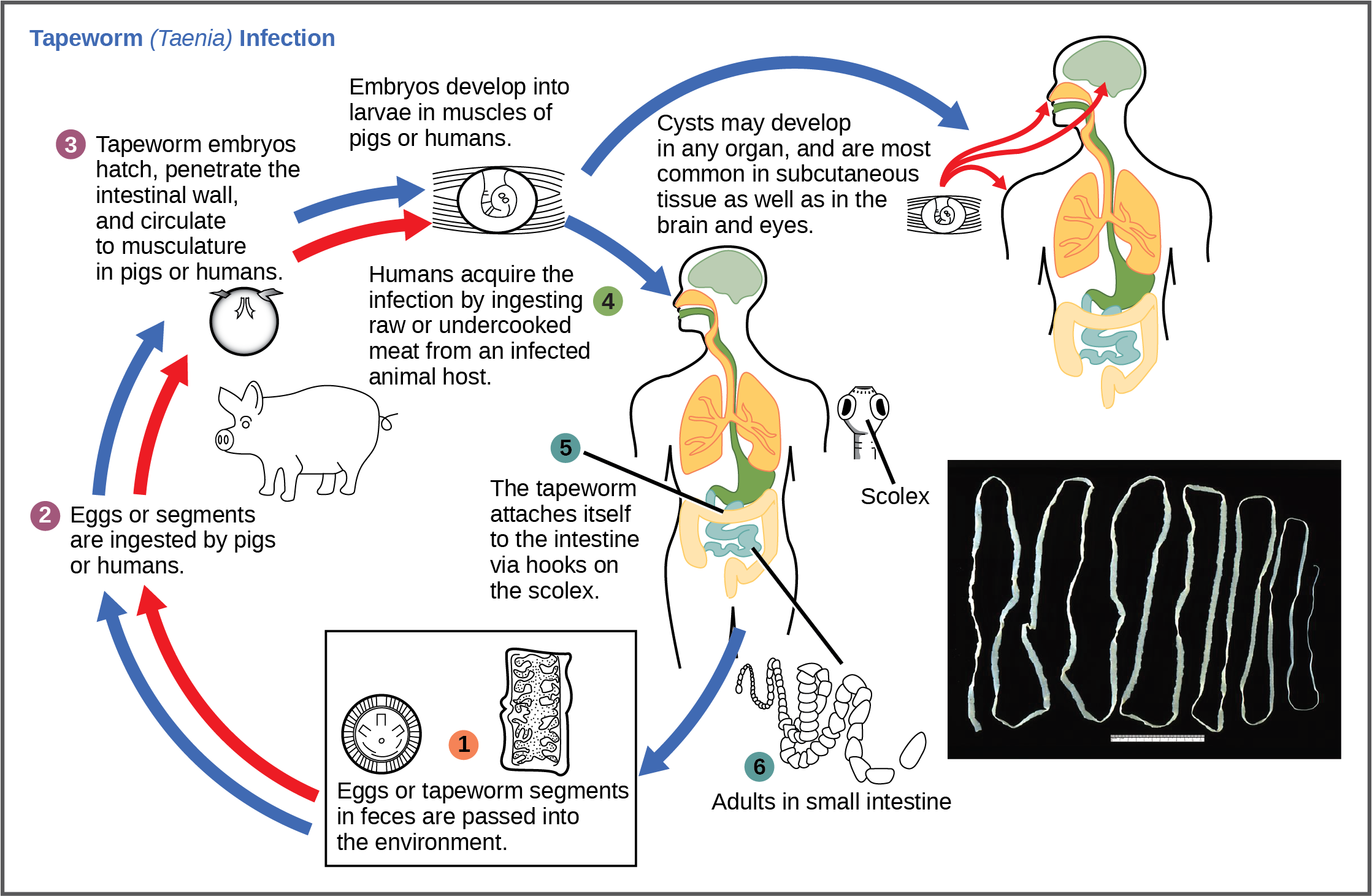

Figure 45.27図 45.27
This diagram shows the life cycle of a pork tapeworm (Taenia solium), a human worm parasite. (credit: modification of work by CDC)
人に寄生する有鉤条虫(Taenia solium)の生活環。(出典:CDCの作品を改変)
Characteristics of Communities群集の特徴
Communities are complex entities that can be characterized by their structure (the types and numbers of species present) and dynamics (how communities change over time). Understanding community structure and dynamics enables community ecologists to manage ecosystems more effectively.
英語のヒント
群集は複雑な存在であり、その構造(どの種が、何種存在するか)と動態(時間とともにどう変わるか)で特徴付けられる。群集生態学者は、構造と動態を理解することで、生態系をより効果的に管理できる。
Foundation Species基盤種
Foundation species are considered the “base” or “bedrock” of a community, having the greatest influence on its overall structure. They are usually the primary producers: organisms that bring most of the energy into the community. Kelp, or brown algae, is a foundation species, forming the basis of the kelp forests off the coast of California.
英語のヒント
基盤種は群集の「土台」や「基礎」と見なされ、全体の構造へ最も大きな影響を与える。通常は、群集へ大部分のエネルギーを取り込む一次生産者である。大型褐藻のケルプは基盤種で、カリフォルニア沖のケルプ林の基礎を作る。
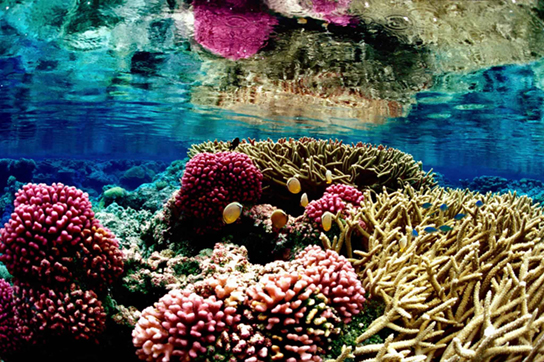
Foundation species may physically modify the environment to produce and maintain habitats that benefit the other organisms that use them. An example is the photosynthetic corals of the coral reef (Figure 45.28). Corals themselves are not photosynthetic, but harbor symbionts within their body tissues (dinoflagellates called zooxanthellae) that perform photosynthesis; this is another example of a mutualism. The exoskeletons of living and dead coral make up most of the reef structure, which protects many other species from waves and ocean currents.
英語のヒント
基盤種は、環境を物理的に変え、ほかの生物に利益となる生息場所を作り、維持することがある。サンゴ礁の光合成するサンゴが例である(図45.28)。サンゴ自体は光合成しないが、体の組織内に褐虫藻という渦鞭毛藻を住まわせている。これが光合成を行うため、相利共生の別の例となる。生きたサンゴと死んだサンゴの外骨格は、礁の構造の大部分を作り、ほかの多くの種を波や海流から守る。
OpenStax, Rice University; Biology 2e. (credit: Jim E. Maragos, USFWS) Embedded rights notice: Jim E Maragos, U.S. Fish and Wildlife Service · CC BY 4.0 · Source出典

Figure 45.28図 45.28
Coral is the foundation species of coral reef ecosystems. (credit: Jim E. Maragos, USFWS)
サンゴは、サンゴ礁生態系の基盤種である。(出典:Jim E. Maragos, USFWS)
Biodiversity, Species Richness, and Relative Species Abundance生物多様性、種の豊富さ、種の相対的個体数
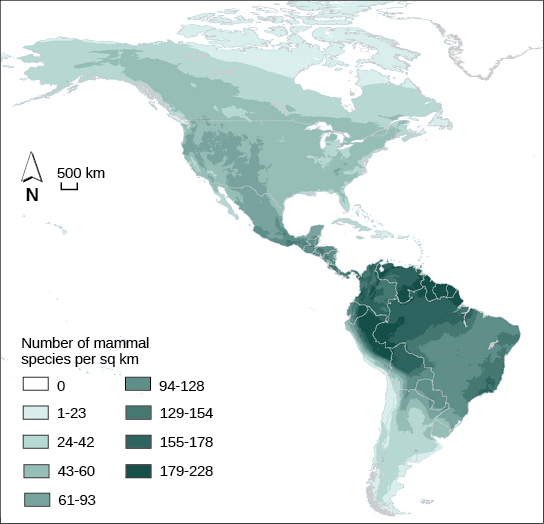
Biodiversity describes a community’s biological complexity: it is measured by the number of different species (species richness) in a particular area and their relative abundance (species evenness). The area in question could be a habitat, a biome, or the entire biosphere. Species richness is the term that is used to describe the number of species living in a habitat or biome. Species richness varies across the globe (Figure 45.29). One factor in determining species richness is latitude, with the greatest species richness occurring in ecosystems near the equator, which often have warmer temperatures, large amounts of rainfall, and low seasonality. The lowest species richness occurs near the poles, which are much colder, drier, and thus less conducive to life in recent geologic time (time since glaciations). The predictability of climate or productivity is also an important factor. Other factors influence species richness as well. For example, the study of island biogeography attempts to explain the relatively high species richness found in certain isolated island chains, including the Galápagos Islands that inspired the young Darwin. Relative species abundance is the number of individuals in a species relative to the total number of individuals in all species within a habitat, ecosystem, or biome. Foundation species often have the highest relative abundance of species.
英語のヒント
生物多様性は、群集の生物学的な複雑さを表す。ある地域の種の数(種の豊富さ)と、それらの相対的な多さ(種の均等度)によって測る。対象は、生息地、バイオーム、生物圏全体のいずれでもよい。種の豊富さは、生息地やバイオームの種数を表す語で、地球上の場所によって変わる(図45.29)。それを決める要因の1つが緯度である。赤道付近の生態系は、暖かく雨が多く、季節変化が小さいことが多く、種数が最も多い。最も少ないのは極地付近で、はるかに寒く乾燥し、最近の地質時代、すなわち氷河期以降では、生物の生存に適しにくい。気候の予測可能性や生産力も重要である。ほかの要因も関わる。例えば島嶼生物地理学は、若きダーウィンに影響を与えたガラパゴス諸島など、孤立した一部の島々で種数が比較的多い理由を説明しようとする。種の相対的個体数とは、生息地、生態系、バイオーム内の全種の総個体数に対する、ある種の個体数の割合である。基盤種は、この割合が最も高いことが多い。
OpenStax, Rice University; Biology 2e. (credit: modification of work by NASA, CIESIN, Columbia University) · CC BY 4.0 · Source出典

Figure 45.29図 45.29
The greatest species richness for mammals in North and South America is associated with the equatorial latitudes. (credit: modification of work by NASA, CIESIN, Columbia University)
南北アメリカで哺乳類の種数が最も多いのは、赤道付近の緯度である。(出典:NASA、CIESIN、Columbia Universityの作品を改変)