第45章個体群と群集の生態学
Competitive Exclusion Principle競争排除則
Resources are often limited within a habitat and multiple species may compete to obtain them. All species have an ecological niche in the ecosystem, which describes how they acquire the resources they need and how they interact with other species in the community. The competitive exclusion principle states that two species cannot occupy the same niche in a habitat. In other words, different species cannot coexist in a community if they are competing for all the same resources. An example of this principle is shown in Figure 45.24, with two protozoan species, Paramecium aurelia and Paramecium caudatum. When grown individually in the laboratory, they both thrive. But when they are placed together in the same test tube (habitat), P. aurelia outcompetes P. caudatum for food, leading to the latter’s eventual extinction.
英語のヒント
生息地内の資源はしばしば限られ、複数の種が獲得をめぐって競争する。すべての種は生態系内に生態的地位(ニッチ)をもつ。これは、必要な資源を得る方法や、群集のほかの種との関わり方を表す。競争排除則は、2種が同じ生息地で同じニッチを占めることはできないというものだ。つまり、すべて同じ資源をめぐって競争しているなら、異なる種は同じ群集で共存できない。図45.24は、原生動物のParamecium aureliaとParamecium caudatumの2種による例である。実験室で別々に培養すると両方ともよく増える。しかし同じ試験管という生息地へ一緒に入れると、P. aureliaが餌をめぐる競争でP. caudatumに勝ち、後者はやがて絶滅する。
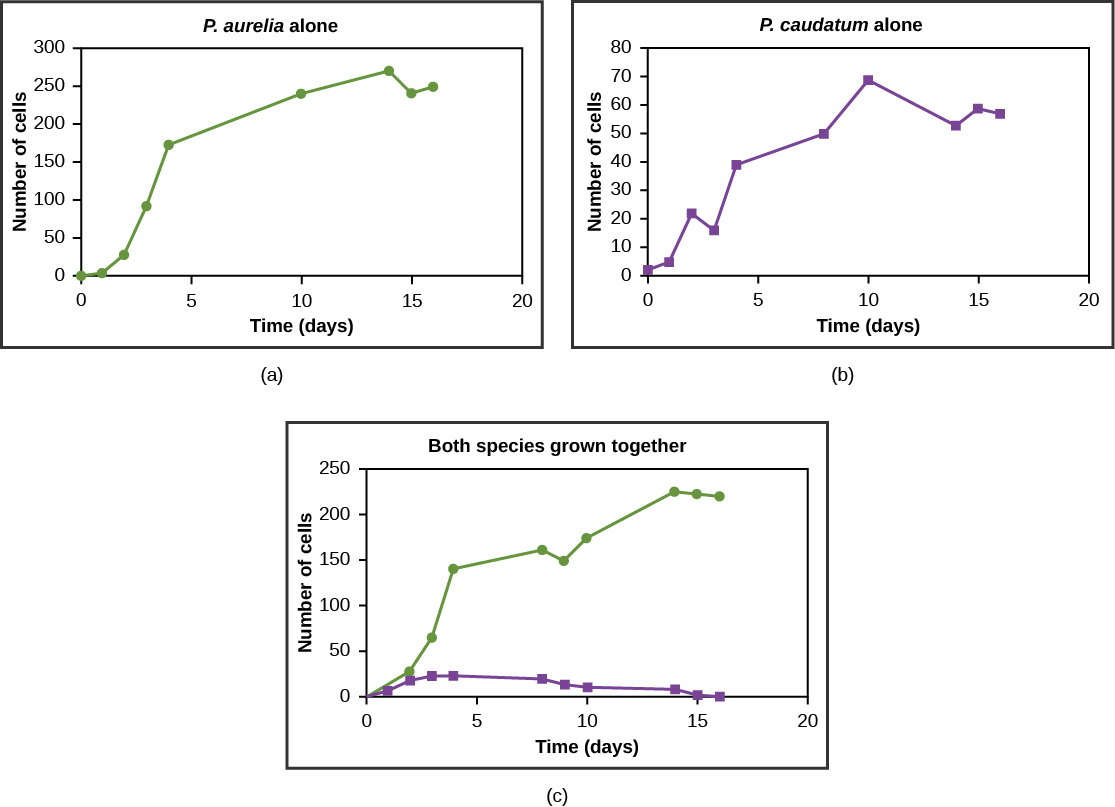
Figure 45.24図 45.24
Paramecium aurelia and Paramecium caudatum grow well individually, but when they compete for the same resources, the P. aurelia outcompetes the P. caudatum.
Paramecium aureliaとParamecium caudatumは単独ならよく増えるが、同じ資源をめぐって競争すると、P. aureliaがP. caudatumに勝る。
This exclusion may be avoided if a population evolves to make use of a different resource, a different area of the habitat, or feeds during a different time of day, called resource partitioning. The two organisms are then said to occupy different microniches. These organisms coexist by minimizing direct competition.
英語のヒント
個体群が、別の資源や生息地内の別の場所を使ったり、異なる時刻に採食したりするよう進化すれば、競争排除を避けられることがある。これを資源分割という。2つの生物は、異なる微小ニッチを占めるといえる。直接の競争を最小にすることで共存するのである。
Symbiosis共生
Symbiotic relationships, or symbioses (plural), are close interactions between individuals of different species over an extended period of time which impact the abundance and distribution of the associating populations. Most scientists accept this definition, but some restrict the term to only those species that are mutualistic, where both individuals benefit from the interaction. In this discussion, the broader definition will be used.
英語のヒント
共生(symbiosis、複数形はsymbioses)とは、異なる種の個体どうしが長期間にわたって密接に関わり、その個体群の多さや分布に影響を与える関係である。多くの科学者はこの定義を使うが、双方が利益を受ける相利共生だけに限定する人もいる。ここでは広い定義を用いる。
Commensalism片利共生
A commensal relationship occurs when one species benefits from the close, prolonged interaction, while the other neither benefits nor is harmed. Birds nesting in trees provide an example of a commensal relationship (Figure 45.25). The tree is not harmed by the presence of the nest among its branches. The nests are light and produce little strain on the structural integrity of the branch, and most of the leaves, which the tree uses to get energy by photosynthesis, are above the nest so they are unaffected. The bird, on the other hand, benefits greatly. If the bird had to nest in the open, its eggs and young would be vulnerable to predators. Another example of a commensal relationship is the pilot fish and the shark. The pilot fish feed on the leftovers of the host's meals, and the host is not affected in any way.
英語のヒント
片利共生は、密接で長期的な関わりから一方の種が利益を得る一方、他方には利益も害もない関係である。木に巣を作る鳥が例になる(図45.25)。枝の間に巣があっても、木は害を受けない。巣は軽く、枝の構造への負担は小さい。また、光合成でエネルギーを得る葉の多くは巣より上にあり、影響されない。鳥は大きな利益を得る。開けた場所に巣を作らなければならなければ、卵やひなは捕食されやすくなる。ブリモドキとサメも例である。ブリモドキは宿主の食べ残しを食べるが、宿主には何の影響もない。
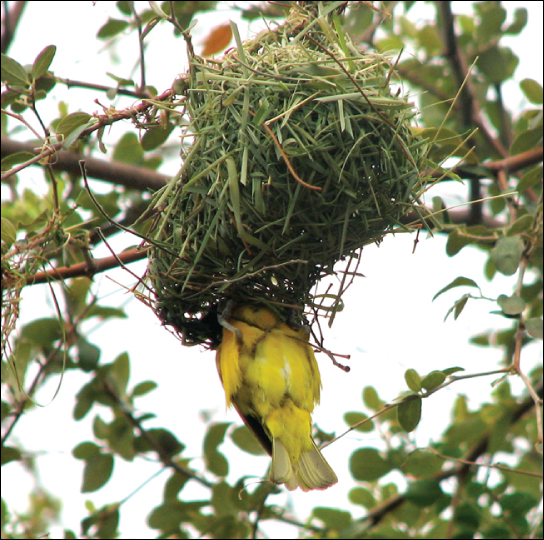


Figure 45.25図 45.25
The southern masked-weaver bird is starting to make a nest in a tree in Zambezi Valley, Zambia. This is an example of a commensal relationship, in which one species (the bird) benefits, while the other (the tree) neither benefits nor is harmed. (credit: “Hanay”/Wikimedia Commons)
ザンビアのザンベジ渓谷で、サザンマスクドウィーバーが木に巣を作り始めている。一方の種(鳥)が利益を得て、他方(木)には利益も害もない、片利共生の例である。(出典:“Hanay”/Wikimedia Commons)
Mutualism相利共生
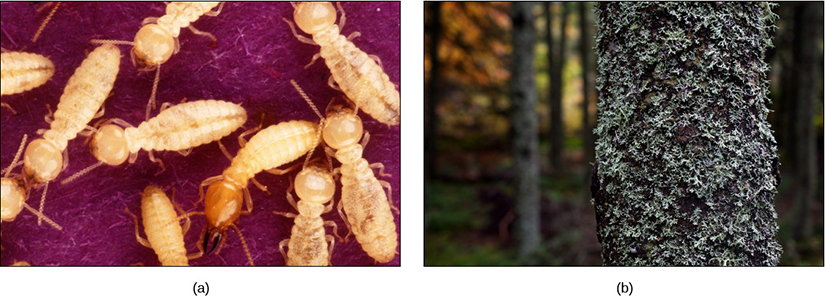
A second type of symbiotic relationship is called mutualism, where two species benefit from their interaction. Some scientists believe that these are the only true examples of symbiosis. For example, termites have a mutualistic relationship with protozoa that live in the insect’s gut (Figure 45.26a). The termite benefits from the ability of bacterial symbionts within the protozoa to digest cellulose. The termite itself cannot do this, and without the protozoa, it would not be able to obtain energy from its food (cellulose from the wood it chews and eats). The protozoa and the bacterial symbionts benefit by having a protective environment and a constant supply of food from the wood chewing actions of the termite. Lichens have a mutualistic relationship between fungus and photosynthetic algae or bacteria (Figure 45.26b). As these symbionts grow together, the glucose produced by the algae provides nourishment for both organisms, whereas the physical structure of the lichen protects the algae from the elements and makes certain nutrients in the atmosphere more available to the algae.
英語のヒント
2つ目の共生関係は相利共生で、2種が関わりから利益を得る。一部の科学者は、これだけを真の共生と考える。例えばシロアリは、腸内の原生動物と相利共生する(図45.26a)。シロアリは、原生動物の中の共生細菌がセルロースを消化する能力から利益を得る。シロアリ自身は消化できないため、原生動物がいなければ、かんで食べた木のセルロースからエネルギーを得られない。原生動物と共生細菌は、守られた環境と、シロアリが木をかむことで供給され続ける食料を得る。地衣類では、菌類と光合成を行う藻類または細菌が相利共生する(図45.26b)。一緒に育つと、藻類が作るグルコースが双方の栄養になる。一方、地衣類の構造は藻類を風雨などから守り、大気中の特定の栄養物質を利用しやすくする。
OpenStax, Rice University; Biology 2e. (credit a: modification of work by Scott Bauer, USDA; credit b: modification of work by Cory Zanker) · CC BY 4.0 · Source出典

Figure 45.26図 45.26
(a) Termites form a mutualistic relationship with symbiotic protozoa in their guts, which allow both organisms to obtain energy from the cellulose the termite consumes. (b) Lichen is a fungus that has symbiotic photosynthetic algae living inside its cells. (credit a: modification of work by Scott Bauer, USDA; credit b: modification of work by Cory Zanker)
(a)シロアリは腸内の原生動物と相利共生し、食べたセルロースから双方がエネルギーを得られる。(b)地衣類は、細胞内に光合成藻類を共生させる菌類である。(出典:a:Scott Bauer, USDA、b:Cory Zankerの各作品を改変)