第29章脊椎動物
29.4 Reptiles29.4 爬虫類
Learning Objectives学習目標
By the end of this section, you will be able to do the following:
この節を学び終えると、次のことができるようになる。
- Describe the main characteristics of amniotes有羊膜類の主な特徴を説明する。
- Explain the difference between anapsids, synapsids, and diapsids, and give an example of each無弓類、単弓類、双弓類の違いを説明し、それぞれの例を挙げる。
- Identify the characteristics of reptiles爬虫類の特徴を挙げる。
- Discuss the evolution of reptiles爬虫類の進化を論じる。
The reptiles (including dinosaurs and birds) are distinguished from amphibians by their terrestrially adapted egg, which is supported by four extraembryonic membranes: the yolk sac, the amnion, the chorion, and the allantois (Figure 29.22). The chorion and amnion develop from folds in the body wall, and the yolk sac and allantois are extensions of the midgut and hindgut respectively. The amnion forms a fluid-filled cavity that provides the embryo with its own internal aquatic environment. The evolution of the extraembryonic membranes led to less dependence on water for development and thus allowed the amniotes to branch out into drier environments.
英語のヒント
爬虫類(恐竜と鳥類を含む)は、陸上生活に適応した卵をもつ点で両生類と区別される。この卵は、卵黄嚢、羊膜、漿膜、尿膜という四つの胚膜によって支えられている(図29.22)。漿膜と羊膜は体壁のひだから発達し、卵黄嚢と尿膜は、それぞれ中腸と後腸が伸びたものである。羊膜は液体で満たされた空間を形成し、胚に専用の内部水中環境を与える。胚膜の進化によって、発生を水に依存する程度が小さくなり、有羊膜類はより乾燥した環境へ進出できるようになった。
In addition to these membranes, the eggs of birds, reptiles, and a few mammals have shells. An amniote embryo was then enclosed in the amnion, which was in turn encased in an extra-embryonic coelom contained within the chorion. Between the shell and the chorion was the albumin of the egg, which provided additional fluid and cushioning. This was a significant development that further distinguishes the amniotes from amphibians, which were and continue to be restricted to moist environments due their shell-less eggs. Although the shells of various reptilian amniotic species vary significantly, they all permit the retention of water and nutrients for the developing embryo. The egg shells of birds (avian reptiles) are hardened with calcium carbonate, making them rigid, but fragile. The shells of most nonavian reptile eggs, such as turtles, are leathery and require a moist environment. Most mammals do not lay eggs (except for monotremes such as the echidnas and platypuses). Instead, the embryo grows within the mother’s body, with the placenta derived from two of the extraembryonic membranes.
英語のヒント
これらの膜に加え、鳥類、爬虫類、そして少数の哺乳類の卵には殻がある。有羊膜類の胚は羊膜に包まれ、羊膜はさらに、漿膜の内側にある胚体外体腔に包まれるようになった。殻と漿膜の間には卵白があり、追加の液体と緩衝材を提供した。これは、有羊膜類を両生類からさらに区別する重要な発達だった。両生類の卵には殻がないため、両生類は当時も現在も、湿った環境に限られている。爬虫類のさまざまな有羊膜の種では、卵殻に大きな違いがあるが、いずれも発生中の胚のために水と栄養分を保持できる。鳥類(鳥型爬虫類)の卵殻は炭酸カルシウムで硬化しており、硬いがもろい。カメなど、鳥類以外の大部分の爬虫類の卵殻は革のような質感で、湿った環境を必要とする。大部分の哺乳類は卵を産まない(ハリモグラやカモノハシなどの単孔類を除く)。その代わり、胚は母体内で成長し、胚膜のうち二つに由来する胎盤を伴う。
Characteristics of Amniotes有羊膜類の特徴
The amniotic egg is the key characteristic of amniotes. In amniotes that lay eggs, the shell of the egg provides protection for the developing embryo while being permeable enough to allow for the exchange of carbon dioxide and oxygen. The albumin, or egg white, outside of the chorion provides the embryo with water and protein, whereas the fattier egg yolk contained in the yolk sac provides nutrients for the embryo, as is the case with the eggs of many other animals, such as amphibians. Here are the functions of the extraembryonic membranes:
英語のヒント
羊膜卵は、有羊膜類を特徴づける重要な形質である。卵を産む有羊膜類では、卵殻が発生中の胚を保護すると同時に、二酸化炭素と酸素が交換できるだけの透過性をもつ。漿膜の外にある卵白は胚に水とタンパク質を供給する。一方、卵黄嚢に収められた、より脂肪分の多い卵黄は、両生類など多くのほかの動物の卵と同様に、胚に栄養分を供給する。胚膜の機能は次のとおりである。
- Blood vessels in the yolk sac transport yolk nutrients to the circulatory system of the embryo.卵黄嚢内の血管は、卵黄の栄養分を胚の循環系へ運ぶ。
- The chorion facilitates exchange of oxygen and carbon dioxide between the embryo and the egg’s external environment.漿膜は、胚と卵の外部環境との間の酸素と二酸化炭素の交換を促す。
- The allantois stores nitrogenous wastes produced by the embryo and also facilitates respiration.尿膜は、胚が生み出す窒素性老廃物を蓄えるとともに、呼吸を促す。
- The amnion protects the embryo from mechanical shock and supports hydration.羊膜は胚を機械的な衝撃から守り、水分の維持を助ける。
In mammals, the yolk sac is very reduced, but the embryo is still cushioned and enclosed within the amnion. The placenta, which transports nutrients and functions in gas exchange and waste management, is derived from the chorion and allantois.
英語のヒント
哺乳類では卵黄嚢は著しく縮小しているが、胚はやはり羊膜の内側に包まれ、衝撃から守られている。栄養分を運び、ガス交換と老廃物の処理を担う胎盤は、漿膜と尿膜に由来する。
Additional derived characteristics of amniotes include a waterproof skin, accessory keratinized structures, and costal (rib) ventilation of the lungs.
有羊膜類にはほかにも、水を通しにくい皮膚、角質化した付属構造、肋骨による肺の換気などの派生形質がある。
Evolution of Amniotes有羊膜類の進化
The first amniotes evolved from tetrapod ancestors approximately 340 million years ago during the Carboniferous period. The early amniotes quickly diverged into two main lines: synapsids and sauropsids. Synapsids included the therapsids, a clade from which mammals evolved. Sauropsids were further divided into anapsids and diapsids. Diapsids gave rise to the reptiles, including the dinosaurs and birds. The key differences between the synapsids, anapsids, and diapsids are the structures of the skull and the number of temporal fenestrae (“windows”) behind each eye (Figure 29.23). Temporal fenestrae are post-orbital openings in the skull that allow muscles to expand and lengthen. Anapsids have no temporal fenestrae, synapsids have one (fused ancestrally from two fenestrae), and diapsids have two (although many diapsids such as birds have highly modified diapsid skulls). Anapsids include extinct organisms and traditionally included turtles. However, more recent molecular and fossil evidence clearly shows that turtles arose within the diapsid line and secondarily lost the temporal fenestrae; thus they appear to be anapsids because modern turtles do not have fenestrae in the temporal bones of the skull. The canonical diapsids include dinosaurs, birds, and all other extinct and living reptiles.
英語のヒント
最初の有羊膜類は、約3億4000万年前の石炭紀に、四肢動物の祖先から進化した。初期の有羊膜類は、ほどなく単弓類と竜弓類という二つの主要な系統に分岐した。単弓類には、哺乳類の祖先となった系統群である獣弓類が含まれていた。竜弓類はさらに無弓類と双弓類に分かれた。双弓類からは、恐竜や鳥類を含む爬虫類が生じた。単弓類、無弓類、双弓類の重要な違いは、頭骨の構造と、左右それぞれの眼の後方にある側頭窓(「窓」)の数である(図29.23)。側頭窓は、頭骨の眼窩後方にある開口部で、筋肉が広がり、長くなることを可能にする。無弓類には側頭窓がなく、単弓類には一つ(祖先の二つの側頭窓が融合したもの)、双弓類には二つある。ただし、鳥類など多くの双弓類では、双弓型の頭骨が大きく変形している。無弓類には絶滅した生物が含まれ、従来はカメ類も含められていた。しかし、近年の分子学的証拠と化石証拠は、カメ類が双弓類の系統内で生じ、二次的に側頭窓を失ったことを明確に示している。現生のカメでは頭骨の側頭骨に窓がないため、無弓類のように見えるのである。典型的な双弓類には、恐竜、鳥類、そしてそのほかの絶滅・現生爬虫類すべてが含まれる。
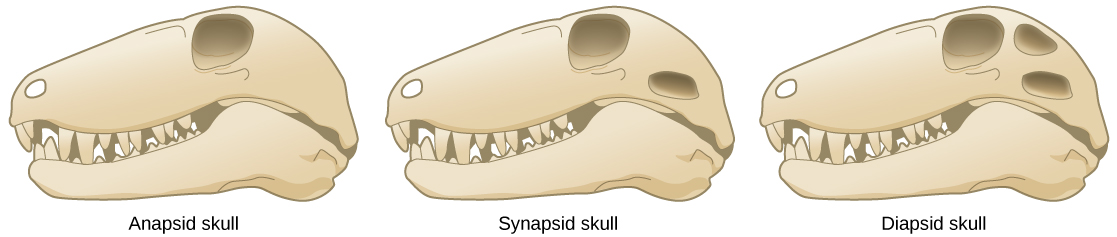

Figure 29.23図 29.23
Amniote skulls. Compare the skulls and temporal fenestrae of anapsids, synapsids, and diapsids. Anapsids have no openings, synapsids have one opening, and diapsids have two openings.
有羊膜類の頭骨。無弓類、単弓類、双弓類の頭骨と側頭窓を比較しよう。無弓類には開口部がなく、単弓類には一つ、双弓類には二つある。
The diapsids in turn diverged into two groups, the Archosauromorpha (“ancient lizard form”) and the Lepidosauromorpha (“scaly lizard form”) during the Mesozoic period (Figure 29.24). The lepidosaurs include modern lizards, snakes, and tuataras. The archosaurs include modern crocodiles and alligators, the extinct ichthyosaurs (“fish lizards” superficially resembling dolphins) and, pterosaurs (“winged lizard”), dinosaurs (“terrible lizard”), and birds. (We should note that clade Dinosauria includes birds, which evolved from a branch of maniraptoran theropod dinosaurs in the Mesozoic.)
英語のヒント
双弓類は中生代に、さらに主竜形類(Archosauromorpha、「古代のトカゲの形」)と鱗竜形類(Lepidosauromorpha、「鱗のあるトカゲの形」)の二群に分岐した(図29.24)。鱗竜類には、現生のトカゲ、ヘビ、ムカシトカゲが含まれる。主竜類には、現生のクロコダイルとアリゲーター、絶滅した魚竜(「魚のトカゲ」、外見はイルカに似る)、翼竜(「翼のあるトカゲ」)、恐竜(「恐ろしいトカゲ」)、鳥類が含まれる。(恐竜類という系統群には鳥類も含まれることに注意しよう。鳥類は中生代に、マニラプトル類に属する獣脚類恐竜の一系統から進化した。)
The evolutionarily derived characteristics of amniotes include the amniotic egg and its four extraembryonic membranes, a thicker and more waterproof skin, and rib ventilation of the lungs (ventilation is performed by drawing air into and out of the lungs by muscles such as the costal rib muscles and the diaphragm).
有羊膜類の進化的な派生形質には、羊膜卵とその四つの胚膜、より厚く水を通しにくい皮膚、そして肋骨による肺の換気が含まれる。換気は、肋間筋や横隔膜などの筋肉によって、空気を肺の内外へ出し入れして行われる。
In the past, the most common division of amniotes has been into the classes Mammalia, Reptilia, and Aves. However, both birds and mammals are descended from different amniote branches: the synapsids giving rise to the therapsids and mammals, and the diapsids giving rise to the lepidosaurs and archosaurs. We will consider both the birds and the mammals as groups distinct from reptiles for the purpose of this discussion with the understanding that this does not accurately reflect phylogenetic history and relationships.
英語のヒント
従来、有羊膜類は哺乳綱、爬虫綱、鳥綱に分けるのが最も一般的だった。しかし、鳥類と哺乳類は、有羊膜類の異なる枝に由来する。単弓類からは獣弓類と哺乳類が生じ、双弓類からは鱗竜類と主竜類が生じた。この説明では、系統の歴史と類縁関係を正確には反映しないことを理解したうえで、鳥類と哺乳類をそれぞれ爬虫類とは別の群として扱う。