第35章神経系
Attention Deficit Hyperactivity Disorder (ADHD)注意欠如・多動症(ADHD)
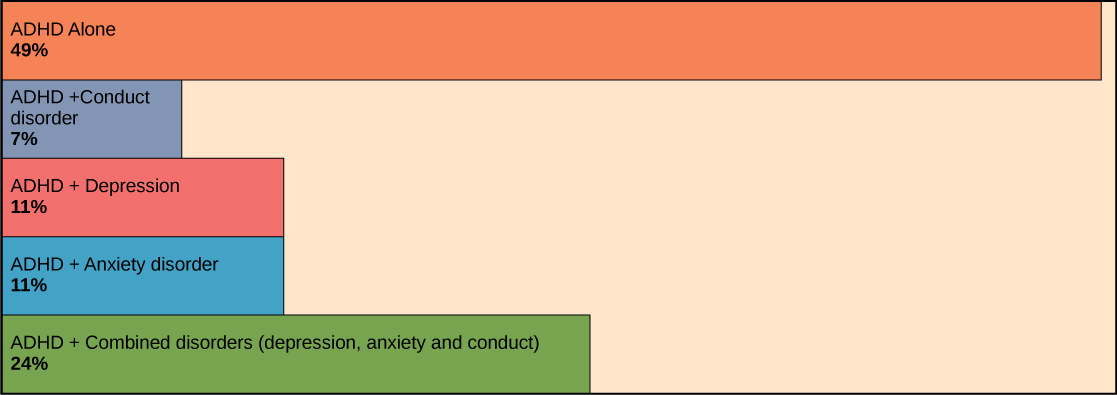
Approximately three to five percent of children and adults are affected by attention deficit/hyperactivity disorder (ADHD). Like ASD, ADHD is more prevalent in males than females. Symptoms of the disorder include inattention (lack of focus), executive functioning difficulties, impulsivity, and hyperactivity beyond what is characteristic of the normal developmental stage. Some patients do not have the hyperactive component of symptoms and are diagnosed with a subtype of ADHD: attention deficit disorder (ADD). Many people with ADHD also show comorbitity, in that they develop secondary disorders in addition to ADHD. Examples include depression or obsessive compulsive disorder (OCD). Figure 35.31 provides some statistics concerning comorbidity with ADHD.
英語のヒント
子どもと成人のおよそ3~5%が、注意欠如・多動症(ADHD)の影響を受けている。ASDと同じく、ADHDも女性より男性に多い。症状には、不注意(集中の不足)、実行機能の困難、衝動性、正常な発達段階の特徴を超える多動がある。多動の症状がない人もおり、ADHDの下位型である注意欠如症(ADD)と診断される。ADHDのある人の多くは、ADHDに加えて二次的な疾患を発症するという意味で、併存症も示す。例として、うつ病や強迫症(OCD)がある。図35.31に、ADHDの併存症に関する統計を示す。
The cause of ADHD is unknown, although research points to a delay and dysfunction in the development of the prefrontal cortex and disturbances in neurotransmission. According to studies of twins, the disorder has a strong genetic component. There are several candidate genes that may contribute to the disorder, but no definitive links have been discovered. Environmental factors, including exposure to certain pesticides, may also contribute to the development of ADHD in some patients. Treatment for ADHD often involves behavioral therapies and the prescription of stimulant medications, which paradoxically cause a calming effect in these patients.
英語のヒント
ADHDの原因は不明だが、前頭前皮質の発達の遅れや機能不全、神経伝達の障害を示す研究がある。双生児研究によれば、強い遺伝的要因がある。関わる可能性のある候補遺伝子はいくつかあるものの、決定的なつながりは見つかっていない。特定の農薬への曝露などの環境要因も、一部の患者では発症に関わる可能性がある。治療では、行動療法と中枢刺激薬の処方を行うことが多い。逆説的だが、こうした薬はADHDのある人には落ち着かせる作用をもたらす。
OpenStax, Rice University; Biology 2e. (credit “chart design and illustration”: modification of work by Leigh Coriale; credit “data”: Drs. Biederman and Faraone, Massachusetts General Hospital). · CC BY 4.0 · Source出典

Figure 35.31図 35.31
Many people with ADHD have one or more other neurological disorders. (credit “chart design and illustration”: modification of work by Leigh Coriale; credit “data”: Drs. Biederman and Faraone, Massachusetts General Hospital).
ADHDのある人の多くは、ほかにも一つ以上の神経系の疾患をもつ。(「図表のデザインと作画」の出典:Leigh Corialeの作品を改変。「データ」の出典:マサチューセッツ総合病院のBiederman博士およびFaraone博士)
Mental Illnesses精神疾患
Mental illnesses are nervous system disorders that result in problems with thinking, mood, or relating with other people. These disorders are severe enough to affect a person’s quality of life and often make it difficult for people to perform the routine tasks of daily living. Debilitating mental disorders affect approximately 12.5 million Americans (about 1 in 17 people) at an annual cost of more than $300 billion. There are several types of mental disorders including schizophrenia, major depression, bipolar disorder, anxiety disorders and phobias, post-traumatic stress disorders, and obsessive-compulsive disorder (OCD), among others. The American Psychiatric Association publishes the Diagnostic and Statistical Manual of Mental Disorders (or DSM), which describes the symptoms required for a patient to be diagnosed with a particular mental disorder. Each newly released version of the DSM contains different symptoms and classifications as scientists learn more about these disorders, their causes, and how they relate to each other. A more detailed discussion of two mental illnesses—schizophrenia and major depression—is given below.
精神疾患は、思考、気分、他者との関係に問題を生じさせる神経系の疾患である。生活の質に影響するほど重く、日常の決まった作業を行うのも困難になることが多い。生活機能を大きく損なう精神疾患のある米国人は約1,250万人、約17人に1人で、年間の費用は3,000億ドルを超える。種類には、統合失調症、大うつ病、双極症、不安症や恐怖症、心的外傷後ストレス障害、強迫症(OCD)などがある。米国精神医学会は、特定の精神疾患と診断するために必要な症状を記載した『精神疾患の診断・統計マニュアル』(DSM)を出版している。疾患、その原因、疾患同士の関係について理解が進むにつれ、DSMの新版では症状や分類が変わる。以下では、統合失調症と大うつ病の二つを詳しく取り上げる。