第35章神経系
35.4 The Peripheral Nervous System35.4 末梢神経系
Learning Objectives学習目標
By the end of this section, you will be able to do the following:
この節を学び終えると、次のことができるようになる。
- Describe the organization and functions of the sympathetic and parasympathetic nervous systems交感神経系と副交感神経系の構成と機能を説明する。
- Describe the organization and function of the sensory-somatic nervous system感覚・体性神経系の構成と機能を説明する。
The peripheral nervous system (PNS) is the connection between the central nervous system and the rest of the body. The CNS is like the power plant of the nervous system. It creates the signals that control the functions of the body. The PNS is like the wires that go to individual houses. Without those “wires,” the signals produced by the CNS could not control the body (and the CNS would not be able to receive sensory information from the body either).
英語のヒント
末梢神経系(PNS)は、中枢神経系と体の他の部分をつなぐ。中枢神経系(CNS)は神経系の発電所のようなもので、体の機能を制御する信号をつくる。末梢神経系は、個々の家へ向かう電線に相当する。その「電線」がなければ、中枢神経系がつくった信号で体を制御できない。中枢神経系が体から感覚情報を受け取ることもできなくなる。
The PNS can be broken down into the autonomic nervous system, which controls bodily functions without conscious control, and the sensory-somatic nervous system, which transmits sensory information from the skin, muscles, and sensory organs to the CNS and sends motor commands from the CNS to the muscles.
末梢神経系は、自律神経系と感覚・体性神経系に分けられる。自律神経系は、意識的な制御を受けずに体の機能を調節する。感覚・体性神経系は、皮膚、筋肉、感覚器から中枢神経系へ感覚情報を伝え、中枢神経系から筋肉へ運動指令を送る。
Autonomic Nervous System自律神経系
The autonomic nervous system serves as the relay between the CNS and the internal organs. It controls the lungs, the heart, smooth muscle, and exocrine and endocrine glands. The autonomic nervous system controls these organs largely without conscious control; it can continuously monitor the conditions of these different systems and implement changes as needed. Signaling to the target tissue usually involves two synapses: a preganglionic neuron (originating in the CNS) synapses to a neuron in a ganglion that, in turn, synapses on the target organ, as illustrated in Figure 35.25. There are two divisions of the autonomic nervous system that often have opposing effects: the sympathetic nervous system and the parasympathetic nervous system.
自律神経系は、中枢神経系と内臓を中継する。肺、心臓、平滑筋、外分泌腺、内分泌腺を制御する。その制御の大部分は意識にのぼらず、各系の状態を絶えず監視し、必要に応じて変化を起こす。標的組織への信号伝達には、通常、二つのシナプスが関わる。図35.25のように、中枢神経系から始まる節前ニューロンが神経節内のニューロンとシナプスをつくり、そのニューロンが今度は標的器官にシナプスをつくる。自律神経系には、交感神経系と副交感神経系という二つの部門があり、その作用はしばしば逆向きになる。
Sympathetic Nervous System交感神経系
The sympathetic nervous system is responsible for the “fight or flight” response that occurs when an animal encounters a dangerous situation. One way to remember this is to think of the surprise a person feels when encountering a snake (“snake” and “sympathetic” both begin with “s”). Examples of functions controlled by the sympathetic nervous system include an accelerated heart rate and inhibited digestion. These functions help prepare an organism’s body for the physical strain required to escape a potentially dangerous situation or to fend off a predator.
英語のヒント
交感神経系は、動物が危険な状況に遭遇したときの「闘争・逃走」反応を担う。覚え方として、ヘビに出会ったときの驚きを思い浮かべるとよい。snake(ヘビ)もsympathetic(交感神経の)もsで始まる。交感神経系が制御する機能には、心拍数の増加や消化の抑制がある。危険になりうる状況から逃げたり、捕食者を撃退したりするには、体に負荷がかかる。こうした機能は、その負荷に体を備えさせる。
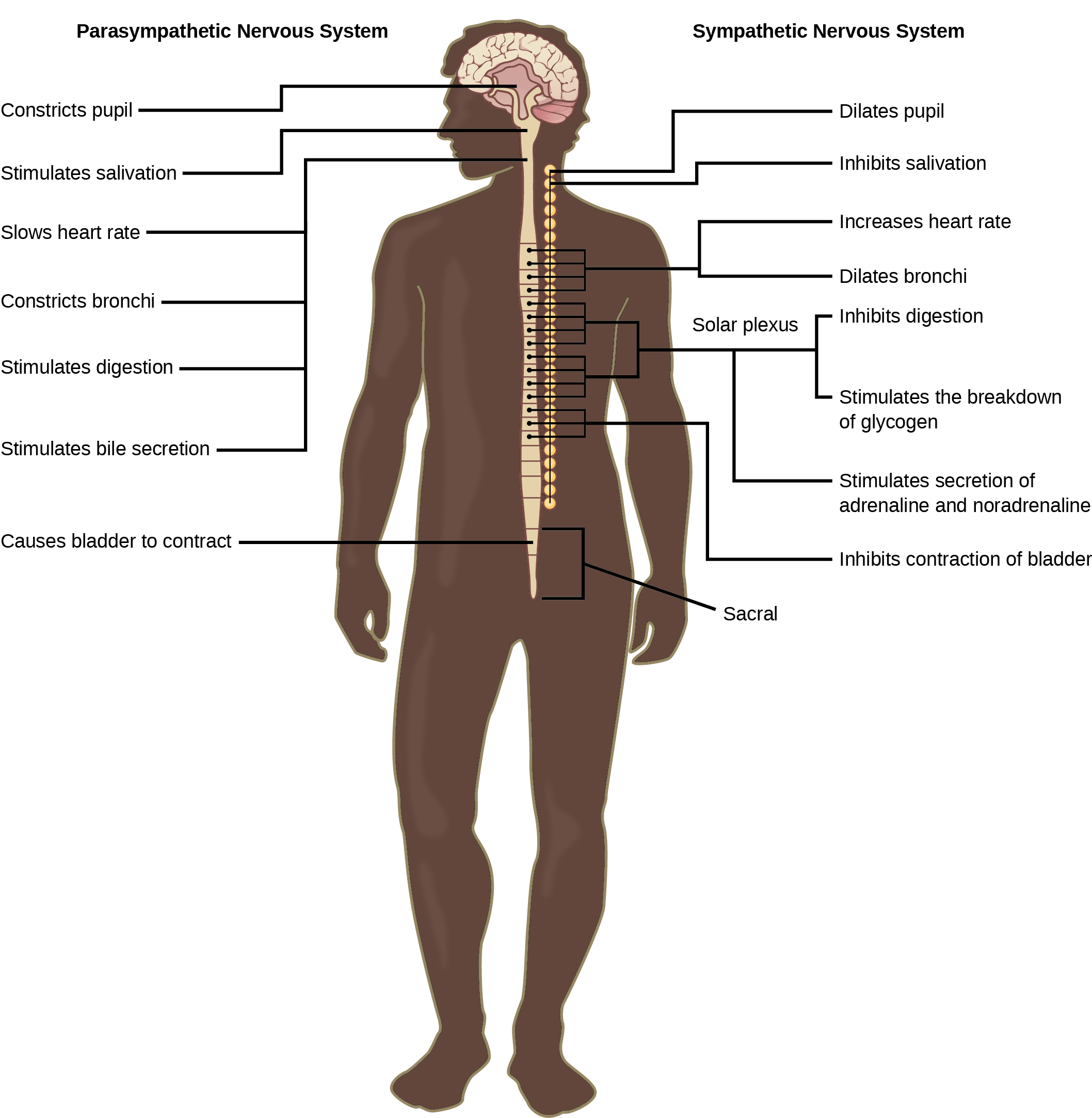

Figure 35.26図 35.26
The sympathetic and parasympathetic nervous systems often have opposing effects on target organs.
交感神経系と副交感神経系は、標的器官に対してしばしば逆向きの作用を及ぼす。
Most preganglionic neurons in the sympathetic nervous system originate in the spinal cord, as illustrated in Figure 35.26. The axons of these neurons release acetylcholine on postganglionic neurons within sympathetic ganglia (the sympathetic ganglia form a chain that extends alongside the spinal cord). The acetylcholine activates the postganglionic neurons. Postganglionic neurons then release norepinephrine onto target organs. As anyone who has ever felt a rush before a big test, speech, or athletic event can attest, the effects of the sympathetic nervous system are quite pervasive. This is both because one preganglionic neuron synapses on multiple postganglionic neurons, amplifying the effect of the original synapse, and because the adrenal gland also releases norepinephrine (and the closely related hormone epinephrine) into the bloodstream. The physiological effects of this norepinephrine release include dilating the trachea and bronchi (making it easier for the animal to breathe), increasing heart rate, and moving blood from the skin to the heart, muscles, and brain (so the animal can think and run). The strength and speed of the sympathetic response helps an organism avoid danger, and scientists have found evidence that it may also increase LTP—allowing the animal to remember the dangerous situation and avoid it in the future.
英語のヒント
図35.26のように、交感神経系の節前ニューロンの大部分は脊髄から始まる。その軸索は、交感神経節内の節後ニューロンにアセチルコリンを放出する。交感神経節は、脊髄に沿って鎖状に並んでいる。アセチルコリンが節後ニューロンを活性化すると、節後ニューロンは標的器官にノルアドレナリンを放出する。大きな試験、スピーチ、競技の前に高揚を感じたことのある人ならわかるように、交感神経系の作用は体の広い範囲に及ぶ。その理由は二つある。一つの節前ニューロンが複数の節後ニューロンとシナプスをつくり、最初のシナプスの作用を増幅することと、副腎もノルアドレナリンと、それによく似たホルモンであるアドレナリンを血中に放出することである。ノルアドレナリンの放出による生理的作用には、呼吸しやすくする気管と気管支の拡張、心拍数の増加、皮膚から心臓・筋肉・脳への血流の移動がある。これによって動物は考え、走ることができる。交感神経の反応の強さと速さは、危険の回避に役立つ。科学者は、この反応が長期増強(LTP)も高める可能性を示す証拠を見いだしている。それにより、動物は危険な状況を記憶し、次には避けられるようになる。