第44章生態学と生物圏
44.3 Terrestrial Biomes44.3 陸上のバイオーム
Learning Objectives学習目標
By the end of this section, you will be able to do the following:
この節を学ぶと、次のことができるようになる。
- Identify the two major abiotic factors that determine terrestrial biomes陸上バイオームを決める2つの主要な非生物的要因を特定する。
- Recognize distinguishing characteristics of each of the eight major terrestrial biomes8つの主要な陸上バイオームの、それぞれを特徴付ける性質を理解する。
The Earth’s biomes are categorized into two major groups: terrestrial and aquatic. Terrestrial biomes are based on land, while aquatic biomes include both ocean and freshwater biomes. The eight major terrestrial biomes on Earth are each distinguished by characteristic temperatures and amount of precipitation. Comparing the annual totals of precipitation and fluctuations in precipitation from one biome to another provides clues as to the importance of abiotic factors in the distribution of biomes. Temperature variation on a daily and seasonal basis is also important for predicting the geographic distribution of the biome and the vegetation type in the biome. The distribution of these biomes shows that the same biome can occur in geographically distinct areas with similar climates (Figure 44.12).
英語のヒント
地球のバイオームは、陸上と水界の2つの大きな群に分類される。陸上のバイオームは陸地にあり、水界のバイオームには海洋と淡水の両方が含まれる。地球の8つの主要な陸上バイオームは、それぞれ特徴的な温度と降水量によって区別される。年間の総降水量と降水の変動をバイオーム間で比べると、その分布における非生物的要因の重要性を知る手掛かりになる。日単位・季節単位の温度変化も、バイオームの地理的分布と、そこにある植生の種類を予測するうえで重要である。これらの分布は、地理的に離れていても、気候が似た地域には同じバイオームが存在し得ることを示す(図44.12)。
Tropical Wet Forest熱帯湿潤林
Tropical wet forests are also referred to as tropical rainforests. This biome is found in equatorial regions (Figure 44.12). The vegetation is characterized by plants with broad leaves that fall and are replaced throughout the year. Unlike the trees of deciduous forests, the trees in this biome do not have a seasonal loss of leaves associated with variations in temperature and sunlight; these forests are “evergreen” year-round.
英語のヒント
熱帯湿潤林は熱帯雨林とも呼ばれ、赤道地域に見られる(図44.12)。植生は、年間を通じて葉が落ちて生え替わる広葉の植物を特徴とする。落葉樹林の木々と異なり、このバイオームの樹木には、温度や日光の変化に伴う季節的な落葉期がない。森林は一年中「常緑」である。
The temperature and sunlight profiles of tropical wet forests are very stable in comparison to that of other terrestrial biomes, with the temperatures ranging from 20 °C to 34 °C (68 °F to 93 °F). When one compares the annual temperature variation of tropical wet forests with that of other forest biomes, the lack of seasonal temperature variation in the tropical wet forest becomes apparent. This lack of seasonality leads to year-round plant growth, rather than the seasonal (spring, summer, and fall) growth seen in other more temperate biomes. In contrast to other ecosystems, tropical ecosystems do not have long days and short days during the yearly cycle. Instead, a constant daily amount of direct overhead sunlight (11–12 hrs per day) provides more solar radiation, thereby, increased plant growth.
英語のヒント
熱帯湿潤林の温度と日照の特徴は、ほかの陸上バイオームに比べて非常に安定し、温度は20~34℃(68~93℉)の範囲にある。ほかの森林バイオームと年内の温度変化を比べると、熱帯湿潤林には季節的な温度変化が乏しいことが分かる。この季節性の乏しさにより、より温帯的なバイオームで見られる春・夏・秋の季節的な成長と異なり、植物は一年中成長する。ほかの生態系とは違い、熱帯の生態系には年周期の中で長日と短日の差がない。毎日ほぼ一定の時間、頭上から直接日光が当たり(1日11~12時間)、より多くの太陽放射を受けるため、植物の成長が増す。
The annual rainfall in tropical wet forests ranges from 125 cm to 660 cm (50–200 in) with some monthly variation. While sunlight and temperature remain fairly consistent, annual rainfall is highly variable. Tropical wet forests typically have wet months in which there can be more than 30 cm (11–12 in) of precipitation, as well as dry months in which there are fewer than 10 cm (3.5 in) of rainfall. However, the driest month of a tropical wet forest still exceeds the annual rainfall of some other biomes, such as deserts.
英語のヒント
熱帯湿潤林の年間降水量は125~660 cm(50~200インチ)で、月ごとにある程度変化する。日光と温度は比較的一定だが、年間降水量の変動は大きい。典型的には、降水量が30 cm(11~12インチ)を超える湿潤な月と、10 cm(3.5インチ)未満の乾燥した月がある。それでも最も乾いた月の降水量さえ、砂漠など一部のほかのバイオームの年間降水量を上回る。
Tropical wet forests have high net primary productivity because the annual temperatures and precipitation values in these areas are ideal for plant growth. Therefore, the extensive biomass present in the tropical wet forest leads to plant communities with very high species diversities (Figure 44.13). Tropical wet forests have more species of trees than any other biome; on average between 100 and 300 species of trees are present in a single hectare (2.5 acres) of South American Amazonian rain forest. One way to visualize this is to compare the distinctive horizontal layers within the tropical wet forest biome. On the forest floor is a sparse layer of plants and decaying plant matter. Above that is an understory of short shrubby foliage. A layer of trees rises above this understory and is topped by a closed upper canopy—the uppermost overhead layer of branches and leaves. Some additional trees emerge through this closed upper canopy. These layers provide diverse and complex habitats for the variety of plants, fungi, animals, and other organisms within the tropical wet forests.
英語のヒント
熱帯湿潤林では、年間の温度と降水量が植物の成長に理想的なので、純一次生産力が高い。そのため、大量のバイオマスが、非常に高い種多様性をもつ植物群集につながる(図44.13)。熱帯湿潤林には、ほかのどのバイオームより多くの樹種がある。南米のアマゾン熱帯雨林では、1ヘクタール(2.5エーカー)に平均100~300種の樹木が存在する。これを思い描く方法の1つは、森林内の特徴的な水平の層を比べることである。林床には、植物がまばらに生え、腐りつつある植物体がある。その上には、背の低い低木状の葉が茂る下層がある。さらに樹木の層が立ち上がり、最上部は枝と葉からなる閉じた林冠に覆われる。その林冠から、さらに一部の樹木が突き出る。こうした層が、熱帯湿潤林の多様な植物、菌類、動物、その他の生物に、複雑で多様な生息場所を提供する。
For example, epiphytes are plants that grow on other plants, which typically are not harmed. Epiphytes are found throughout tropical wet forest biomes. Many species of animals use the variety of plants and the complex structure of the tropical wet forests for food and shelter. Some organisms live several meters above ground and have adapted to this arboreal lifestyle.
英語のヒント
例えば着生植物は、ほかの植物の上に生える植物で、土台となる植物は通常、害を受けない。着生植物は熱帯湿潤林全体で見られる。多くの動物種は、この森林の多様な植物と複雑な構造を、餌や隠れ場所に利用する。地上数メートルの高さに暮らし、樹上生活に適応した生物もいる。
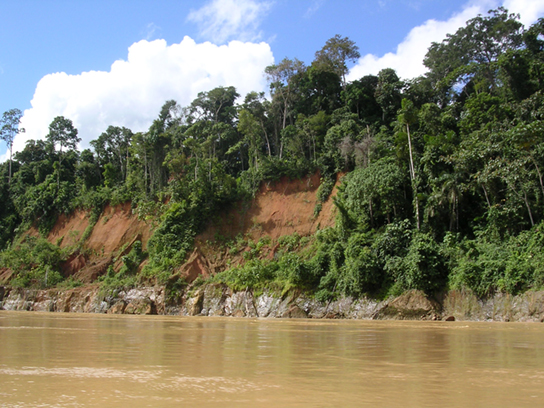

Figure 44.13図 44.13
Tropical wet forests, such as these forests along the Madre de Dios river, Peru, near the Amazon River, have high species diversity. (credit: Roosevelt Garcia)
アマゾン川に近いペルーのマドレ・デ・ディオス川沿いのような熱帯湿潤林は、高い種多様性をもつ。(出典:Roosevelt Garcia)