第44章生態学と生物圏
Documented Results of Climate Change: Past and Present記録されている気候変動の結果:過去と現在
Scientists have geological evidence of the consequences of long-ago climate change. Modern-day phenomena such as retreating glaciers and melting polar ice cause a continual rise in sea level. Meanwhile, changes in climate can negatively affect organisms.
英語のヒント
科学者は、大昔の気候変動がもたらした結果について、地質学的な証拠を得ている。現在の氷河の後退や極地の氷の融解といった現象は、海面を継続的に上昇させている。また、気候の変化は生物にも悪影響を及ぼしうる。
Geological Climate Change地質時代の気候変動
Global warming has been associated with at least one planet-wide extinction event during the geological past. The Permian extinction event occurred about 251 million years ago toward the end of the roughly 50-million-year-long geological time span known as the Permian period. This geologic time period was one of the three warmest periods in Earth’s geologic history. Scientists estimate that approximately 70 percent of the terrestrial plant and animal species and 84 percent of marine species became extinct, vanishing forever near the end of the Permian period.
英語のヒント
地質時代の過去には、地球温暖化が、少なくとも1度の地球全体に及ぶ絶滅事変と関連している。ペルム紀の絶滅事変は、ペルム紀と呼ばれる約5,000万年間の地質時代の終わり近く、約2億5,100万年前に起きた。ペルム紀は、地球の地質史で最も暖かかった3つの時代の1つである。科学者の推定では、ペルム紀の終わり近くに、陸上の動植物種の約70%、海洋生物種の84%が絶滅し、永久に姿を消した。
Organisms that had adapted to wet and warm climatic conditions, such as annual rainfall of 300–400 cm (118–157 in) and 20 °C–30 °C (68 °F–86 °F) in the tropical wet forest, may not have been able to survive the Permian climate change.
英語のヒント
例えば、年間降水量300〜400 cm(118〜157インチ)、気温20〜30 ℃(68〜86 ℉)の熱帯多雨林のような、湿潤で暖かい気候に適応した生物は、ペルム紀の気候変動を生き延びられなかった可能性がある。
Present Climate Change現在の気候変動
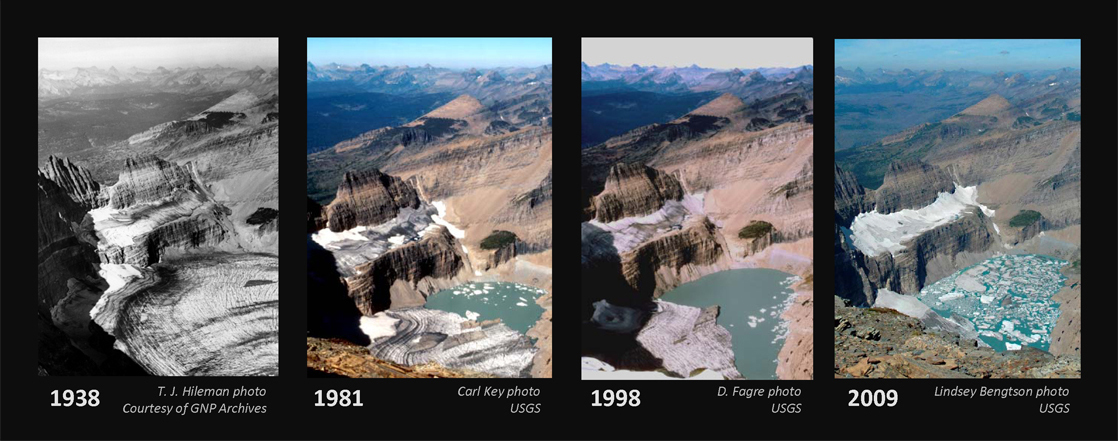
A number of global events have occurred that may be attributed to climate change during our lifetimes. Glacier National Park in Montana is undergoing the retreat of many of its glaciers, a phenomenon known as glacier recession. In 1850, the area contained approximately 150 glaciers. By 2010, however, the park contained only about 24 glaciers greater than 25 acres in size. One of these glaciers is the Grinnell Glacier (Figure 44.30) at Mount Gould. Between 1966 and 2005, the size of Grinnell Glacier shrank by 40 percent. Similarly, the mass of the ice sheets in Greenland and the Antarctic is decreasing: Greenland lost 150–250 km3 of ice per year between 2002 and 2006. In addition, the size and thickness of the Arctic sea ice is decreasing.
英語のヒント
私たちが生きている間にも、気候変動に起因する可能性のある出来事が世界で数多く起きている。モンタナ州のグレイシャー国立公園では、多くの氷河が後退している。1850年には、この地域に約150の氷河があった。しかし2010年には、面積25エーカーを超える氷河は約24しか残っていなかった。その1つが、グールド山のグリンネル氷河である(図44.30)。1966〜2005年の間に、その面積は40%縮小した。同様に、グリーンランドと南極の氷床の質量も減少している。グリーンランドでは2002〜2006年に、毎年150〜250 km3の氷が失われた。さらに、北極海の海氷も、面積と厚さが減少している。
OpenStax, Rice University; Biology 2e. (credit: modification of work by USGS) · CC BY 4.0 · Source出典

Figure 44.30図 44.30
The effect of global warming can be seen in the continuing retreat of Grinnel Glacier. The mean annual temperature in the park has increased 1.33 °C since 1900. The loss of a glacier results in the loss of summer meltwaters, sharply reducing seasonal water supplies and severely affecting local ecosystems. (credit: modification of work by USGS)
グリンネル氷河の継続的な後退には、地球温暖化の影響が見られる。公園の年平均気温は、1900年以来1.33 ℃上昇した。氷河を失うと、夏の融け水も失われるため、季節的な水の供給が急減し、地域の生態系に深刻な影響を及ぼす。(出典:USGSの作品を改変)
This loss of ice is leading to increases in the global sea level. On average, the sea is rising at a rate of 1.8 mm per year. However, between 1993 and 2010 the rate of sea level increase ranged between 2.9 and 3.4 mm per year. A variety of factors affect the volume of water in the ocean, especially the temperature of the water (the density of water is related to its temperature: water volume expands as it warms, thus raising sea levels), as well as the amount of water found in rivers, lakes, glaciers, polar ice caps, and sea ice. As glaciers and polar ice caps melt, there is a significant contribution of liquid water that was previously frozen.
英語のヒント
氷の消失は、世界の海面上昇につながっている。平均すると、海面は年1.8 mmの速度で上昇している。ただし、1993〜2010年には、年2.9〜3.4 mmの範囲だった。海水の体積にはさまざまな要因が影響する。特に重要なのは水温である。水の密度は温度に関係し、温まると体積が膨張して海面が上がる。また、河川、湖、氷河、極地の氷冠、海氷にある水の量も影響する。氷河や極地の氷冠が融けると、それまで凍っていた水が液体となって、相当量加わる。
In addition to some abiotic conditions changing in response to climate change, many organisms are also being affected by the changes in temperature. Temperature and precipitation play key roles in determining the geographic distribution and phenology of plants and animals. (Phenology is the study of the effects of climatic conditions on the timing of periodic life cycle events, such as flowering in plants or migration in birds.) Researchers have shown that 385 plant species in Great Britain are flowering 4.5 days sooner than was recorded earlier during the previous 40 years. In addition, insect-pollinated species were more likely to flower earlier than wind-pollinated species. The impact of changes in flowering date would be mitigated if the insect pollinators emerged earlier. This mismatched timing of plants and pollinators could result in injurious ecosystem effects because, for continued survival, insect-pollinated plants must flower when their pollinators are present.
英語のヒント
気候変動に応じて変わる非生物的条件に加えて、多くの生物も気温変化の影響を受けている。気温と降水量は、動植物の地理的分布と生物季節を決める重要な要因である。生物季節学は、植物の開花や鳥の渡りなど、生活環の周期的な出来事が起こる時期に、気候条件が与える影響を研究する。研究者は、英国の385種の植物が、過去40年間の以前の記録より4.5日早く開花していることを示した。また、虫媒種は風媒種より、早く開花する傾向があった。送粉昆虫も早く現れるなら、開花日の変化の影響は和らぐだろう。植物と送粉者の時期が合わなくなると、生態系に有害な影響が生じうる。虫媒植物は生存し続けるために、送粉者がいる時期に花を咲かせなければならないからである。