第44章生態学と生物圏
44.2 Biogeography44.2 生物地理学
Learning Objectives学習目標
By the end of this section, you will be able to do the following:
この節を学ぶと、次のことができるようになる。
- Define biogeography生物地理学を定義する。
- List and describe abiotic factors that affect the global distribution of plant and animal species植物種と動物種の世界的な分布に影響する非生物的要因を挙げ、説明する。
- Compare the impact of abiotic forces on aquatic and terrestrial environments非生物的な作用が水界と陸上環境へ与える影響を比較する。
- Summarize the effects of abiotic factors on net primary productivity非生物的要因が純一次生産力へ与える影響をまとめる。
Many forces influence the communities of living organisms present in different parts of the biosphere (all of the parts of Earth inhabited by life). The biosphere extends into the atmosphere (several kilometers above Earth) and into the depths of the oceans. Despite its apparent vastness to an individual human, the biosphere occupies only a minute space when compared to the known universe. Many abiotic forces influence where life can exist and the types of organisms found in different parts of the biosphere. The abiotic factors influence the distribution of biomes: large areas of land with similar climate, flora, and fauna.
英語のヒント
生物圏、すなわち生命が暮らす地球上のすべての領域の各所に存在する生物群集は、多くの作用の影響を受ける。生物圏は大気中の地上数キロメートルまで、また深い海の底まで広がる。1人の人間から見れば広大だが、既知の宇宙と比べれば、ごく小さな空間しか占めていない。多くの非生物的な作用が、生物圏のどこに生命が存在でき、各地にどのような生物がいるかに影響する。非生物的要因はバイオームの分布にも影響する。バイオームとは、気候、植物相、動物相の似た広い陸域である。
Biogeography生物地理学
Biogeography is the study of the geographic distribution of living things and the abiotic factors that affect their distribution. Abiotic factors such as temperature and rainfall vary based mainly on latitude and elevation. As these abiotic factors change, the composition of plant and animal communities also changes. For example, if you were to begin a journey at the equator and walk north, you would notice gradual changes in plant communities. At the beginning of your journey, you would see tropical wet forests with broad-leaved evergreen trees, which are characteristic of plant communities found near the equator. As you continued to travel north, you would see these broad-leaved evergreen plants eventually give rise to seasonally dry forests with scattered trees. You would also begin to notice changes in temperature and moisture. At about 30 degrees north, these forests would give way to deserts, which are characterized by low precipitation and high insolation (sunlight).
英語のヒント
生物地理学は、生物の地理的分布と、それに影響する非生物的要因を研究する学問である。温度や降水量などの非生物的要因は、主に緯度と標高によって変わる。それらが変わるにつれ、植物・動物群集の構成も変わる。例えば、赤道から北へ歩く旅を始めたとしたら、植物群集が徐々に変化することに気付くだろう。出発点では、赤道付近の植物群集の特徴である常緑広葉樹の熱帯湿潤林が見える。北へ進むと、やがて常緑広葉樹の植生は、樹木がまばらな季節的に乾燥する森林へ変わる。温度と水分の変化にも気付き始める。北緯約30度では、森林は砂漠へ置き換わる。砂漠は降水量が少なく、日射が強いことを特徴とする。
Moving farther north, you would see that deserts are replaced by grasslands or prairies. Eventually, grasslands are replaced by deciduous temperate forests. These deciduous forests give way to the boreal forests and taiga found in the subarctic, the area south of the Arctic Circle. Finally, you would reach the Arctic tundra, which is found at the most northern latitudes. This trek north reveals gradual changes in both climate and the types of organisms that have adapted to environmental factors associated with ecosystems found at different latitudes. However, different ecosystems exist at the same latitude due in part to abiotic factors such as jet streams, the Gulf Stream, and ocean currents. If you were to hike up a mountain, the changes you would see in the vegetation would parallel in many ways those as you move to higher latitudes.
英語のヒント
さらに北へ進むと、砂漠は草原やプレーリーへ置き換わる。やがて草原は温帯の落葉樹林に、さらにその森林は北極圏の南に位置する亜寒帯の北方林やタイガに変わる。最後には、最も高い北緯に分布する北極ツンドラへ到達する。北へ向かうこの旅は、気候と、それぞれの緯度の生態系に関わる環境要因に適応した生物の種類が、徐々に変わることを示す。しかし、ジェット気流、メキシコ湾流、海流などの非生物的要因も関わるため、同じ緯度にも異なる生態系が存在する。山を登った場合に見られる植生の変化は、多くの点で、高緯度へ進む際の変化と対応する。
Ecologists who study biogeography examine patterns of species distribution. No species exists everywhere; for example, the Venus flytrap (Dionaea muscipula) is endemic to a small area in North and South Carolina. An endemic species is one which is naturally found only in a specific geographic area that is usually restricted in size. Other species are generalists: species which live in a wide variety of geographic areas; the raccoon (Procyon spp.) for example, is native to most of North and Central America.
英語のヒント
生物地理学を研究する生態学者は、種の分布パターンを調べる。どこにでも存在する種はない。例えばハエトリグサ(Dionaea muscipula)は、ノースカロライナ州とサウスカロライナ州の小さな地域に固有である。固有種とは、通常は範囲の限られた特定の地域にだけ、自然に分布する種をいう。一方、幅広い地域に暮らすジェネラリストの種もいる。例えばアライグマ(Procyon属)は、北米と中米の大部分にもともと分布している。
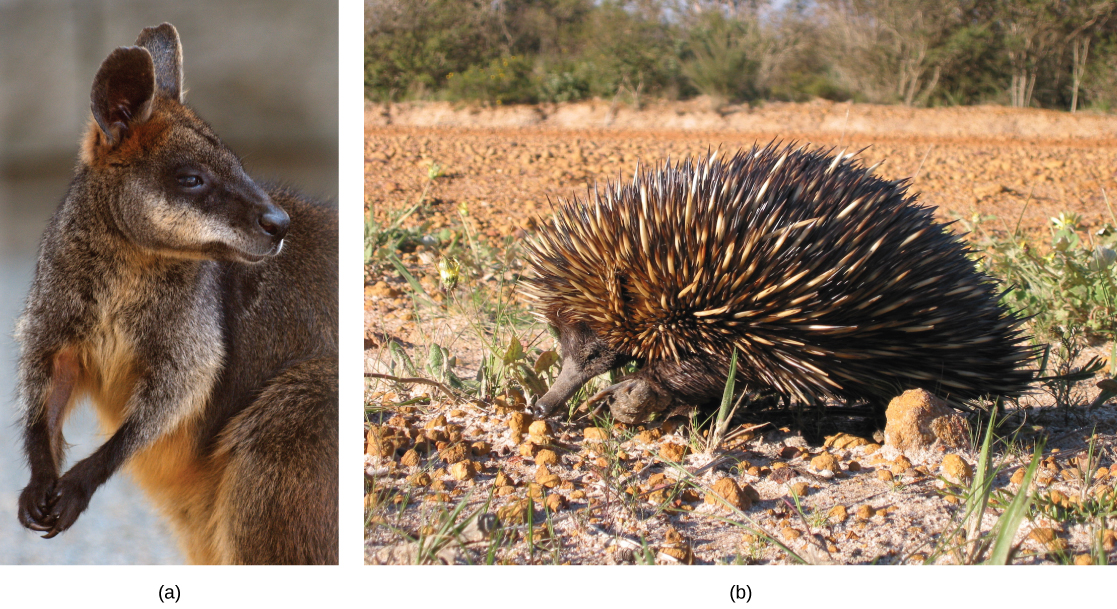
Species distribution patterns are based on biotic and abiotic factors and their influences during the very long periods of time required for species evolution; therefore, early studies of biogeography were closely linked to the emergence of evolutionary thinking in the eighteenth century. Some of the most distinctive assemblages of plants and animals occur in regions that have been physically separated for millions of years by geographic barriers. Biologists estimate that Australia, for example, has between 600,000 and 700,000 species of plants and animals. Approximately 3/4 of living plant and mammal species are endemic species found solely in Australia (Figure 44.6ab).
英語のヒント
種の分布パターンは、生物的・非生物的要因と、種の進化に必要な非常に長い時間の中でのそれらの影響に基づく。そのため、生物地理学の初期の研究は、18世紀の進化思想の出現と密接につながっていた。地理的な障壁によって何百万年も隔てられてきた地域には、特に独特な動植物の組み合わせが見られる。例えば生物学者は、オーストラリアには60万~70万種の動植物がいると推定している。生きている植物種と哺乳類種の約4分の3は、オーストラリアにしかいない固有種である(図44.6ab)。
OpenStax, Rice University; Biology 2e. (credit a: modification of work by Derrick Coetzee; credit b: modification of work by Allan Whittome) · CC BY 4.0 · Source出典
Figure 44.6図 44.6
Australia is home to many endemic species. The (a) wallaby (Wallabia bicolor), a medium-sized member of the kangaroo family, is a pouched mammal, or marsupial. The (b) echidna (Tachyglossus aculeatus) is an egg-laying mammal. (credit a: modification of work by Derrick Coetzee; credit b: modification of work by Allan Whittome)
オーストラリアには多くの固有種が暮らす。(a)ワラビー(Wallabia bicolor)は、カンガルー科の中型の動物で、育児嚢をもつ哺乳類、すなわち有袋類である。(b)ハリモグラ(Tachyglossus aculeatus)は卵を産む哺乳類である。(aの出典:Derrick Coetzeeの作品を改変。bの出典:Allan Whittomeの作品を改変)
Sometimes ecologists discover unique patterns of species distribution by determining where species are not found. Despite being tropical, Hawaii, for example, has no native land species of reptiles or amphibians, only a few native species of butterflies, and only one native terrestrial mammal, the hoary bat. Most of New Guinea, as another example, lacks placental mammals.
英語のヒント
生態学者は、種がいない場所を調べることで、独特な分布パターンを発見することもある。例えばハワイは熱帯にあるにもかかわらず、在来の陸生爬虫類や両生類がなく、在来のチョウも数種しかいない。在来の陸生哺乳類はハイイロコウモリ1種だけである。別の例として、ニューギニアの大部分には有胎盤哺乳類がいない。
Like animals, plants can be endemic or generalists: endemic plants are found only on specific regions of the Earth, while generalists are found on many regions. Isolated land masses—such as Australia, Hawaii, and Madagascar—often have large numbers of endemic plant species. Some of these plants are endangered due to human activity. The forest gardenia (Gardenia brighamii), for instance, is endemic to Hawaii; only an estimated 15–20 trees are thought to exist (Figure 44.7).
英語のヒント
動物と同じく、植物にも固有種とジェネラリストがいる。固有の植物は地球の特定の地域にだけ見られ、ジェネラリストは多くの地域に分布する。オーストラリア、ハワイ、マダガスカルなど、孤立した陸地には、多くの固有植物がいることが多い。その一部は、人間の活動によって絶滅の危機にある。例えば、フォレストガーデニア(Gardenia brighamii)はハワイ固有で、残っているのは推定15~20本だけと考えられている(図44.7)。
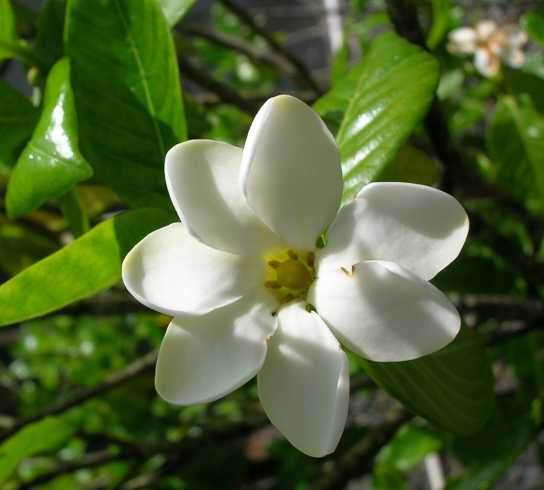


Figure 44.7図 44.7
Listed as federally endangered, the forest gardenia is a small tree with distinctive flowers. It is found only in five of the Hawaiian Islands in small populations consisting of a few individual specimens. (credit: Forest & Kim Starr)
連邦政府の絶滅危惧種に指定されているフォレストガーデニアは、特徴的な花をもつ小高木である。ハワイ諸島の5島にだけ見られ、数個体からなる小さな個体群を作る。(出典:Forest & Kim Starr)