第44章生態学と生物圏
Estuaries: Where the Ocean Meets Fresh Water河口域:海と淡水の出会う場所
Estuaries are biomes that occur where a source of fresh water, such as a river, meets the ocean. Therefore, both fresh water and salt water are found in the same vicinity; mixing results in a diluted (brackish) saltwater. Estuaries form protected areas where many of the young offspring of crustaceans, mollusks, and fish begin their lives, which also creates important breeding grounds for other animals. Salinity is a very important factor that influences the organisms and the adaptations of the organisms found in estuaries. The salinity of estuaries varies considerably and is based on the rate of flow of its freshwater sources, which may depend on the seasonal rainfall. Once or twice a day, high tides bring salt water into the estuary. Low tides occurring at the same frequency reverse the current of salt water.
英語のヒント
河口域は、川などの淡水の供給源が海に出会う場所に生じるバイオームである。淡水と海水が近接して存在し、混ざると薄い塩水、すなわち汽水になる。河口域には保護された水域ができ、多くの甲殻類、軟体動物、魚の幼体がそこで生活を始める。また、ほかの動物にとっても重要な繁殖場所となる。塩分濃度は、河口域にいる生物とその適応に影響する、非常に重要な要因である。塩分濃度は大きく変動し、淡水の流入量によって決まる。流入量は季節的な降雨に左右されることがある。1日に1~2回、満潮によって海水が入り、同じ頻度で起こる干潮が、塩水の流れを逆転させる。
The short-term and rapid variation in salinity due to the mixing of fresh water and salt water is a difficult physiological challenge for the plants and animals that inhabit estuaries. Many estuarine plant species are halophytes: plants that can tolerate salty conditions. Halophytic plants are adapted to deal with the salinity resulting from saltwater on their roots or from sea spray. In some halophytes, filters in the roots remove the salt from the water that the plant absorbs. Other plants are able to pump oxygen into their roots. Animals, such as mussels and clams (phylum Mollusca), have developed behavioral adaptations that expend a lot of energy to function in this rapidly changing environment. When these animals are exposed to low salinity, they stop feeding, close their shells, and switch from aerobic respiration (in which they use gills to remove oxygen from the water) to anaerobic respiration (a process that does not require oxygen and takes place in the cytoplasm of the animal’s cells). When high tide returns to the estuary, the salinity and oxygen content of the water increases, and these animals open their shells, begin feeding, and return to aerobic respiration.
英語のヒント
淡水と海水の混合による、短期間で急速な塩分濃度の変化は、河口域の動植物にとって厳しい生理的課題である。河口域の多くの植物は、塩分の多い条件に耐える塩生植物である。根に接する塩水や海水の飛沫に由来する塩分に対処する適応をもつ。根のフィルターで吸収する水から塩を除くものも、根へ酸素を送り込めるものもある。イガイやハマグリなどの軟体動物は、急変する環境で活動するため、多くのエネルギーを使う行動的適応を発達させた。塩分濃度が低くなると、摂食をやめ、殻を閉じ、鰓で水中の酸素を取り込む好気呼吸から、酸素を必要とせず細胞質で行われる嫌気呼吸へ切り替える。満潮が戻ると、水の塩分濃度と酸素含量が上がり、これらの動物は殻を開いて摂食を始め、好気呼吸へ戻る。
Freshwater Biomes淡水のバイオーム
Freshwater biomes include lakes and ponds (standing water) as well as rivers and streams (flowing water). They also include wetlands, which will be discussed later. Humans rely on freshwater biomes to provide ecosystem benefits, which are aquatic resources for drinking water, crop irrigation, sanitation, and industry. Lakes and ponds are connected with abiotic and biotic factors influencing their terrestrial biomes.
英語のヒント
淡水バイオームには、静水の湖や池と、流水の河川や小川がある。後で扱う湿地も含まれる。人間は、飲料水、作物の灌漑、衛生、工業に使う水資源という生態系の恩恵を、淡水バイオームに依存している。湖や池は、周囲の陸上バイオームに影響する非生物的・生物的要因と結び付いている。
Lakes and Ponds湖と池
Lakes and ponds can range in area from a few square meters to thousands of square kilometers. Temperature is an important abiotic factor affecting living things found in lakes and ponds. In the summer, as we have seen, thermal stratification of lakes and ponds occurs when the upper layer of water is warmed by the sun and does not mix with deeper, cooler water. Light can penetrate within the photic zone of the lake or pond. Phytoplankton (algae and cyanobacteria) are found here and carry out photosynthesis, providing the base of the food web of lakes and ponds. Zooplankton, such as rotifers and larvae and adult crustaceans, consume these phytoplankton. At the bottom of lakes and ponds, bacteria in the aphotic zone break down dead organisms that sink to the bottom.
英語のヒント
湖や池の面積は、数平方メートルから数千平方キロメートルまでさまざまである。温度は、そこにいる生物に影響する重要な非生物的要因である。先に見たように、夏には上層の水が太陽に暖められ、深く冷たい水と混ざらなくなることで、温度による成層が生じる。有光層には光が届き、藻類やシアノバクテリアなどの植物プランクトンが光合成を行って、湖や池の食物網の基礎を作る。ワムシ、甲殻類の幼生や成体などの動物プランクトンが、それらを食べる。湖や池の底では、無光層の細菌が、沈んだ生物の死骸を分解する。
Nitrogen and phosphorus are important limiting nutrients in lakes and ponds. Because of this, they are the determining factors in the amount of phytoplankton growth that takes place in lakes and ponds. When there is a large input of nitrogen and phosphorus (from sewage and runoff from fertilized lawns and farms, for example), the growth of algae skyrockets, resulting in a large accumulation of algae called an algal bloom. Algal blooms (Figure 44.24) can become so extensive that they reduce light penetration in water. They may also release toxic byproducts into the water, contaminating any drinking water taken from that source. In addition, the lake or pond becomes aphotic, and photosynthetic plants cannot survive. When the algae die and decompose, severe oxygen depletion of the water occurs. Fishes and other organisms that require oxygen are then more likely to die, resulting in a dead zone. Lake Erie and the Gulf of Mexico represent freshwater and marine habitats where phosphorus control and storm water runoff pose significant environmental challenges.
英語のヒント
窒素とリンは、湖や池の重要な制限栄養物質である。そのため、植物プランクトンがどれだけ成長するかを決める要因となる。例えば、下水や、肥料を施した芝生・農地からの流出によって、大量の窒素とリンが入ると、藻類が急増して大量に蓄積し、藻類ブルームが起こる。藻類ブルーム(図44.24)は、水中への光の透過を減らすほど広がることがある。有毒な副産物を放出し、その水源から取る飲料水を汚染する場合もある。さらに、湖や池に光が届かなくなり、光合成植物が生存できなくなる。藻類が死んで分解すると、水中の酸素が著しく消耗する。すると酸素を必要とする魚やほかの生物が死にやすくなり、デッドゾーンが生じる。エリー湖とメキシコ湾は、それぞれ淡水と海洋の例で、リンの管理と雨水流出が重大な環境課題になっている。
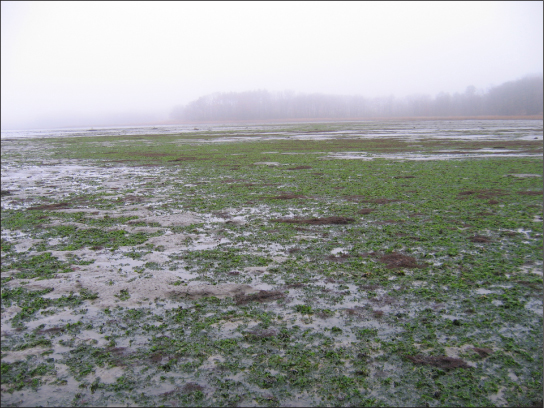

Figure 44.24図 44.24
The uncontrolled growth of algae in this lake has resulted in an algal bloom. (credit: Jeremy Nettleton)
この湖では、制御されない藻類の増殖によって藻類ブルームが起きている。(出典:Jeremy Nettleton)