第44章生態学と生物圏
44.4 Aquatic Biomes44.4 水界のバイオーム
Learning Objectives学習目標
By the end of this section, you will be able to do the following:
この節を学ぶと、次のことができるようになる。
- Describe the effects of abiotic factors on the composition of plant and animal communities in aquatic biomes水界バイオームの動植物群集の構成に対する、非生物的要因の影響を説明する。
- Compare and contrast the characteristics of the ocean zones海洋の各帯の特徴について、共通点と相違点を比較する。
- Summarize the characteristics of standing water and flowing water freshwater biomes静水と流水の淡水バイオームの特徴をまとめる。
Abiotic Factors Influencing Aquatic Biomes水界バイオームに影響する非生物的要因
Like terrestrial biomes, aquatic biomes are influenced by a series of abiotic factors. The aquatic medium—water— has different physical and chemical properties than air, however. Even if the water in a pond or other body of water is perfectly clear (there are no suspended particles), water, on its own, absorbs light. As one descends into a deep body of water, there will eventually be a depth which the sunlight cannot reach. While there are some abiotic and biotic factors in a terrestrial ecosystem that might obscure light (like fog, dust, or insect swarms), usually these are not permanent features of the environment. The importance of light in aquatic biomes is central to the communities of organisms found in both freshwater and marine ecosystems. In freshwater systems, stratification due to differences in density is perhaps the most critical abiotic factor and is related to the energy aspects of light. The thermal properties of water (rates of heating and cooling and the ability to store much larger amounts of energy than the air) are significant to the function of marine systems and have major impacts on global climate and weather patterns. Marine systems are also influenced by large-scale physical water movements, such as currents; these are less important in most freshwater lakes.
英語のヒント
陸上と同じく、水界のバイオームも多くの非生物的要因の影響を受ける。ただし、水界の媒体である水は、空気とは物理的・化学的性質が異なる。池などの水が完全に透明で、懸濁粒子がまったくなくても、水そのものが光を吸収する。深い水域を下ると、やがて日光の届かない深さに達する。陸上にも霧、ほこり、昆虫の大群など光を遮る生物的・非生物的要因はあるが、通常は環境の永続的な特徴ではない。水界では、光が淡水と海洋の両方の生物群集にとって中心的な意味をもつ。淡水系では、密度の違いによる成層が、おそらく最も重要な非生物的要因であり、光のエネルギー面と関連している。水の熱的性質、つまり暖まる速さ、冷える速さ、空気よりはるかに多くのエネルギーを蓄える能力は、海洋系の機能に重要であり、地球の気候と気象パターンに大きく影響する。海洋系は海流など大規模な水の物理的移動にも影響されるが、これは大部分の淡水湖ではそれほど重要ではない。
The ocean is categorized by several areas or zones (Figure 44.21). All of the ocean’s open water is referred to as the pelagic realm (or zone). The benthic realm (or zone) extends along the ocean bottom from the shoreline to the deepest parts of the ocean floor. Within the pelagic realm is the photic zone, which is the portion of the ocean that light can penetrate (approximately 200 m or 650 ft). At depths greater than 200 m, light cannot penetrate; thus, this is referred to as the aphotic zone. The majority of the ocean is aphotic and lacks sufficient light for photosynthesis. The deepest part of the ocean, the Challenger Deep (in the Mariana Trench, located in the western Pacific Ocean), is about 11,000 m (about 6.8 mi) deep. To give some perspective on the depth of this trench, the ocean is, on average, 4267 m or 14,000 ft deep. These realms and zones are relevant to freshwater lakes as well.
英語のヒント
海洋は複数の領域や帯に分けられる(図44.21)。海底の上にあるすべての水域を漂泳域といい、底生域は海岸線から最深部まで、海底に沿って広がる。漂泳域の中には、光が届く有光層があり、深さ約200 m(650フィート)までに当たる。200 mより深い場所には光が届かないため、無光層という。海の大部分は無光層で、光合成に十分な光がない。最深部のチャレンジャー海淵は、西太平洋のマリアナ海溝にあり、深さは約11,000 m(約6.8マイル)である。この海溝の深さを比較する目安として、海の平均深度は4,267 m(14,000フィート)である。こうした領域や帯の区分は、淡水湖にも当てはまる。
Marine Biomes海洋のバイオーム
The ocean is the largest marine biome. It is a continuous body of salt water that is relatively uniform in chemical composition; in fact, it is a weak solution of mineral salts and decayed biological matter. Within the ocean, coral reefs are a second kind of marine biome. Estuaries, coastal areas where salt water and fresh water mix, form a third unique marine biome.
英語のヒント
大洋は最も大きい海洋バイオームである。化学組成が比較的均一な塩水が連続した水域で、実際には無機塩類と分解した生物由来物質の薄い溶液である。海の中では、サンゴ礁が第2の種類の海洋バイオームとなる。塩水と淡水が混ざる沿岸の河口域は、第3の独特な海洋バイオームを作る。
Ocean大洋
The physical diversity of the ocean is a significant influence on plants, animals, and other organisms. The ocean is categorized into different zones based on how far light reaches into the water. Each zone has a distinct group of species adapted to the biotic and abiotic conditions particular to that zone.
英語のヒント
海洋の物理的な多様性は、植物、動物、その他の生物に大きく影響する。海は、水中に光がどこまで届くかによって、異なる帯へ分類される。各帯には、そこに特有の生物的・非生物的条件に適応した、特徴的な種の集まりがある。
The intertidal zone, which is the zone between high and low tide, is the oceanic region that is closest to land (Figure 44.21). Generally, most people think of this portion of the ocean as a sandy beach. In some cases, the intertidal zone is indeed a sandy beach, but it can also be rocky or muddy. The intertidal zone is an extremely variable environment because of action of tidal ebb and flow. Organisms are exposed to air and sunlight at low tide and are underwater most of the time, especially during high tide. Therefore, living things that thrive in the intertidal zone are adapted to being dry for long periods of time. The shore of the intertidal zone may also be repeatedly struck by waves, and the organisms found there are adapted to withstand damage from their pounding action (Figure 44.22). The exoskeletons of shoreline crustaceans (such as the shore crab, Carcinus maenas) are tough and protect them from desiccation (drying out) and wave damage. Another consequence of the pounding waves is that few algae and plants establish themselves in the constantly moving rocks, sand, or mud.
英語のヒント
潮間帯は、満潮位と干潮位の間にあり、海で最も陸に近い領域である(図44.21)。多くの人は砂浜を思い浮かべる。実際に砂浜である場合もあるが、岩場や泥地の場合もある。潮の満ち引きによって、環境は大きく変わる。生物は干潮時に空気と日光へさらされ、満潮時をはじめ、多くの時間は水中にある。そのため、潮間帯で繁栄する生物は、長い時間乾いた状態になることに適応している。岸には波が繰り返し打ち寄せることもあり、生物はその打撃に耐える適応をもつ(図44.22)。ヨーロッパミドリガニ(Carcinus maenas)など海岸の甲殻類の外骨格は丈夫で、乾燥と波の損傷から体を守る。打ち寄せる波の別の結果として、常に動く岩、砂、泥には、藻類や植物がほとんど定着しない。
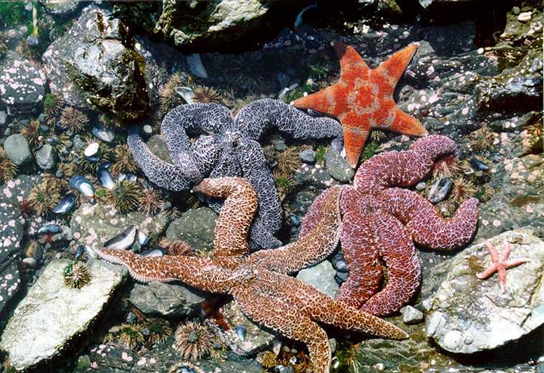

Figure 44.22図 44.22
Sea urchins, mussel shells, and starfish are often found in the intertidal zone, shown here in Kachemak Bay, Alaska. (credit: NOAA)
アラスカのカチェマック湾にあるこの潮間帯のように、ウニ、イガイの殻、ヒトデは潮間帯でよく見られる。(出典:NOAA)
The neritic zone (Figure 44.21) extends from the intertidal zone to depths of about 200 m (or 650 ft) at the edge of the continental shelf (the underwater landmass that extends from a continent). Since light can penetrate this depth, photosynthesis can still occur in the neritic zone. The water here contains silt and is well-oxygenated, low in pressure, and stable in temperature. Phytoplankton and floating Sargassum (a type of free-floating marine seaweed) provide a habitat for some sea life found in the neritic zone. Zooplankton, protists, small fishes, and shrimp are found in the neritic zone and are the base of the food chain for most of the world’s fisheries.
英語のヒント
浅海帯(図44.21)は、潮間帯から、大陸棚の縁の水深約200 m(650フィート)まで広がる。大陸棚は、大陸から海中へ続く陸地である。この深さまでは光が届くため、浅海帯でも光合成ができる。水はシルトを含み、酸素が豊富で、水圧は低く、温度は安定している。植物プランクトンと、海面を漂う海藻であるホンダワラ類は、浅海帯の一部の生物に生息場所を提供する。ここには動物プランクトン、原生生物、小魚、エビがおり、世界の漁業の大部分を支える食物連鎖の基礎となる。
Beyond the neritic zone is the open ocean area known as the pelagic or open oceanic zone (Figure 44.21). Within the oceanic zone there is thermal stratification where warm and cold waters mix because of ocean currents. Abundant plankton serve as the base of the food chain for larger animals such as whales and dolphins. Nutrients are scarce and this is a relatively less productive part of the marine biome. When photosynthetic organisms and the protists and animals that feed on them die, their bodies fall to the bottom of the ocean, where they remain. Unlike freshwater lakes, most of the open ocean lacks a process for bringing the organic nutrients back up to the surface. (Exceptions include major oceanic upwellings within the Humboldt Current along the western coast of South America.) The majority of organisms in the aphotic zone include sea cucumbers (phylum Echinodermata) and other organisms that survive on the nutrients contained in the dead bodies of organisms in the photic zone.
英語のヒント
浅海帯の外側には、漂泳帯または外洋帯と呼ばれる開けた海がある(図44.21)。外洋帯には温度による成層があり、海流によって暖水と冷水が混ざる。豊富なプランクトンが、クジラやイルカなど大きな動物の食物連鎖の基礎をなす。栄養物質は少なく、海洋バイオームの中では比較的生産力が低い。光合成生物と、それを食べる原生生物や動物が死ぬと、体は海底へ沈んでそこにとどまる。淡水湖とは異なり、外洋の大部分には有機栄養物質を表層へ戻す過程がない。南米西岸のフンボルト海流で起こる大規模な湧昇などは例外である。無光層の生物の大部分には、ナマコ(棘皮動物門)など、有光層の生物の死骸に含まれる栄養物質で生きる生物が含まれる。
Beneath the pelagic zone is the benthic realm, the water region beyond the continental shelf that starts at the shoreline and extends to the deepest regions of the ocean (Figure 44.21). The bottom of the benthic realm is composed of sand, silt, and dead organisms. Temperature decreases, remaining above freezing, as water depth increases. This is a nutrient-rich portion of the ocean because of the dead organisms that fall from the upper layers of the ocean. Because of this high level of nutrients, a diversity of fungi, sponges, sea anemones, marine worms, sea stars, fishes, and bacteria exist.
英語のヒント
漂泳域の下には底生域があり、海岸線から大陸棚を越え、海の最深部まで続く(図44.21)。底は砂、シルト、生物の死骸からなる。水深が増すと温度は下がるが、氷点より上に保たれる。上層から生物の死骸が沈むため、栄養物質に富む。その豊富な栄養のため、多様な菌類、海綿、イソギンチャク、海産の蠕虫、ヒトデ、魚、細菌が存在する。
The deepest part of the ocean is the abyssal zone, which is at depths of 4000 m or greater. The abyssal zone (Figure 44.21) is very cold and has very high pressure, very low or no oxygen content, and high nutrient content as the dead and decomposing material drifts down from the layers above. There are a variety of invertebrates and fishes found in this zone, but the abyssal zone does not have plants because of the lack of light. Hydrothermal vents are found primarily in the abyssal zone; chemosynthetic bacteria utilize the hydrogen sulfide and other minerals emitted from the vents to produce biomass. These chemosynthetic bacteria use various molecules as an energy source and serve as the base of the food chain found in the abyssal zone.
英語のヒント
海の最も深い部分は深海帯で、水深4,000 m以上にある。深海帯(図44.21)は非常に冷たく、水圧が高く、酸素はごく少ないか存在しない。上層から死んで分解しつつある物質が沈むため、栄養物質は多い。さまざまな無脊椎動物や魚がいるが、光がないので植物はいない。熱水噴出孔は主に深海帯にあり、化学合成細菌は、そこから放出される硫化水素やその他の無機物を使ってバイオマスを作る。これらの細菌はさまざまな分子をエネルギー源とし、深海帯の食物連鎖の基礎となる。