第42章免疫系
Immunological Memory免疫記憶
The adaptive immune system possesses a memory component that allows for an efficient and dramatic response upon reinvasion of the same pathogen. Memory is handled by the adaptive immune system with little reliance on cues from the innate response. During the adaptive immune response to a pathogen that has not been encountered before, called a primary response, plasma cells secreting antibodies and differentiated T cells increase, then plateau over time. As B and T cells mature into effector cells, a subset of the naïve populations differentiates into B and T memory cells with the same antigen specificities, as illustrated in Figure 42.16.
英語のヒント
獲得免疫系は記憶をもつため、同じ病原体が再侵入したとき、効率的で大きな応答ができる。記憶は獲得免疫系によって担われ、自然免疫応答からの合図にはほとんど依存しない。まだ遭遇したことのない病原体への獲得免疫応答を、一次応答という。このとき、抗体を分泌する形質細胞と分化したT細胞が増え、やがて横ばいになる。B細胞とT細胞がエフェクター細胞へ成熟するのに伴い、ナイーブ細胞集団の一部は、図42.16のように、同じ抗原特異性をもつ記憶B細胞と記憶T細胞に分化する。
A memory cell is an antigen-specific B or T lymphocyte that does not differentiate into effector cells during the primary immune response, but that can immediately become effector cells upon reexposure to the same pathogen. During the primary immune response, memory cells do not respond to antigens and do not contribute to host defenses. As the infection is cleared and pathogenic stimuli subside, the effectors are no longer needed, and they undergo apoptosis. In contrast, the memory cells persist in the circulation.
英語のヒント
記憶細胞は、抗原特異的なBリンパ球またはTリンパ球である。一次免疫応答の際にはエフェクター細胞に分化しないが、同じ病原体に再びさらされると、直ちにエフェクター細胞になれる。一次免疫応答の間、記憶細胞は抗原に応答せず、宿主の防御にも寄与しない。感染が除去され、病原体による刺激が収まると、エフェクター細胞は不要となり、アポトーシスを起こす。一方、記憶細胞は循環中に存続する。
If the pathogen is never encountered again during the individual’s lifetime, B and T memory cells will circulate for a few years or even several decades and will gradually die off, having never functioned as effector cells. However, if the host is reexposed to the same pathogen type, circulating memory cells will immediately differentiate into plasma cells and CTLs without input from APCs or TH cells. One reason the adaptive immune response is delayed is because it takes time for naïve B and T cells with the appropriate antigen specificities to be identified and activated. Upon reinfection, this step is skipped, and the result is a more rapid production of immune defenses. Memory B cells that differentiate into plasma cells output tens to hundreds-fold greater antibody amounts than were secreted during the primary response, as the graph in Figure 42.17 illustrates. This rapid and dramatic antibody response may stop the infection before it can even become established, and the individual may not realize they had been exposed.
英語のヒント
個体が一生の間に再びその病原体に出会わなければ、記憶B細胞と記憶T細胞は数年、ときには数十年間循環した後、エフェクター細胞として一度も働かずに、徐々に死んでいく。しかし、宿主が同じ種類の病原体に再びさらされると、循環中の記憶細胞は、APCやTH細胞からの入力なしに、直ちに形質細胞とCTLへ分化する。獲得免疫応答が遅れる理由の1つは、適切な抗原特異性をもつナイーブB細胞とナイーブT細胞を見いだして活性化するのに時間がかかることである。再感染ではこの段階が省かれ、免疫防御がより速く作られる。図42.17のグラフのように、形質細胞へ分化した記憶B細胞は、一次応答で分泌された量の数十〜数百倍の抗体を作り出す。この迅速で大きな抗体応答は、感染が成立する前にそれを止めることがあり、本人は病原体にさらされたことにさえ気付かない場合がある。
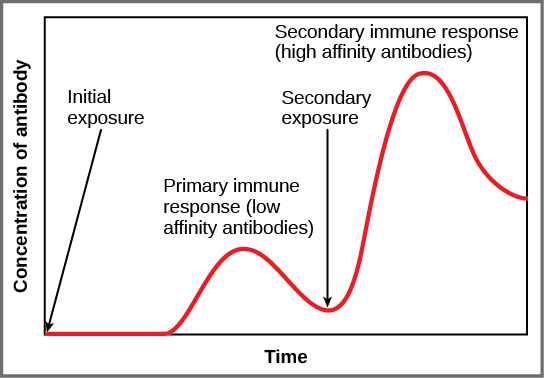

Figure 42.17図 42.17
In the primary response to infection, antibodies are secreted first from plasma cells. Upon reexposure to the same pathogen, memory cells differentiate into antibody-secreting plasma cells that output a greater amount of antibody for a longer period of time.
感染に対する一次応答では、まず形質細胞から抗体が分泌される。同じ病原体に再びさらされると、記憶細胞が抗体分泌形質細胞に分化し、より長い期間、より多くの抗体を作り出す。
Vaccination is based on the knowledge that exposure to noninfectious antigens, derived from known pathogens, generates a mild primary immune response. The immune response to vaccination may not be perceived by the host as illness but still confers immune memory. When exposed to the corresponding pathogen to which an individual was vaccinated, the reaction is similar to a secondary exposure. Because each reinfection generates more memory cells and increased resistance to the pathogen, and because some memory cells die, certain vaccine courses involve one or more booster vaccinations to mimic repeat exposures: for instance, tetanus boosters are necessary every ten years because the memory cells only live that long.
英語のヒント
ワクチン接種は、既知の病原体に由来する感染性のない抗原にさらされると、穏やかな一次免疫応答が生じるという知識に基づく。ワクチン接種への免疫応答は、宿主に病気として感じられないこともあるが、それでも免疫記憶を与える。ワクチン接種の対象である病原体にさらされると、2回目にさらされたときに似た反応が起こる。再感染のたびに記憶細胞が増え、病原体への抵抗性が高まる一方、一部の記憶細胞は死ぬ。そのため、特定のワクチンの接種日程には、繰り返しさらされる状態を模倣する、1回以上の追加接種が含まれる。例えば、破傷風の追加接種は10年ごとに必要である。記憶細胞はその期間しか生存しないためである。
Mucosal Immune Memory粘膜の免疫記憶
A subset of T and B cells of the mucosal immune system differentiates into memory cells just as in the systemic immune system. Upon reinvasion of the same pathogen type, a pronounced immune response occurs at the mucosal site where the original pathogen deposited, but a collective defense is also organized within interconnected or adjacent mucosal tissue. For instance, the immune memory of an infection in the oral cavity would also elicit a response in the pharynx if the oral cavity was exposed to the same pathogen.
英語のヒント
全身免疫系と同じように、粘膜免疫系のT細胞とB細胞の一部も記憶細胞に分化する。同じ種類の病原体が再侵入すると、最初に病原体が付着した粘膜部位で顕著な免疫応答が起こる。さらに、つながり合った、または隣接した粘膜組織でも、まとまった防御が組織される。例えば、口腔の感染による免疫記憶は、口腔が同じ病原体に再びさらされた場合、咽頭でも応答を引き起こす。