第34章動物の栄養と消化器系
34.2 Nutrition and Energy Production34.2 栄養とエネルギー産生
Learning Objectives学習目標
By the end of this section, you will be able to do the following:
この節を学ぶと、次のことができるようになる。
- Explain why an animal’s diet should be balanced and meet the needs of the body動物の食事がバランスを保ち、体の要求を満たすべき理由を説明する。
- Define the primary components of food食物の主な構成成分を定義する。
- Describe the essential nutrients required for cellular function that cannot be synthesized by the animal body細胞機能に必要だが、動物の体で合成できない必須栄養素を説明する。
- Explain how energy is produced through diet and digestion食事と消化を通じてエネルギーが生み出される仕組みを説明する。
- Describe how excess carbohydrates and energy are stored in the body余分な炭水化物とエネルギーが体内で貯蔵される仕組みを説明する。
Given the diversity of animal life on our planet, it is not surprising that the animal diet would also vary substantially. The animal diet is the source of materials needed for building DNA and other complex molecules needed for growth, maintenance, and reproduction; collectively these processes are called biosynthesis. The diet is also the source of materials for ATP production in the cells. The diet must be balanced to provide the minerals and vitamins that are required for cellular function.
英語のヒント
地球上の動物の多様さを考えれば、動物の食事も大きく異なるのは当然である。食事は、成長、維持、生殖に必要なDNAやその他の複雑な分子をつくる材料の供給源である。これらの過程をまとめて生合成と呼ぶ。食事はまた、細胞内でATPをつくるための材料の供給源でもある。細胞の機能に必要な無機質とビタミンを供給できるよう、食事はバランスが取れていなければならない。
Food Requirements食事の必要条件
What are the fundamental requirements of the animal diet? The animal diet should be well balanced and provide nutrients required for bodily function and the minerals and vitamins required for maintaining structure and regulation necessary for good health and reproductive capability. These requirements for a human are illustrated graphically in Figure 34.14
動物の食事に求められる基本的な条件は何だろうか。食事はバランスがよく、体の機能に必要な栄養素と、健康や生殖能力に必要な構造・調節を維持する無機質やビタミンを供給するものでなければならない。ヒトにおけるこれらの必要条件を図34.14に示す。
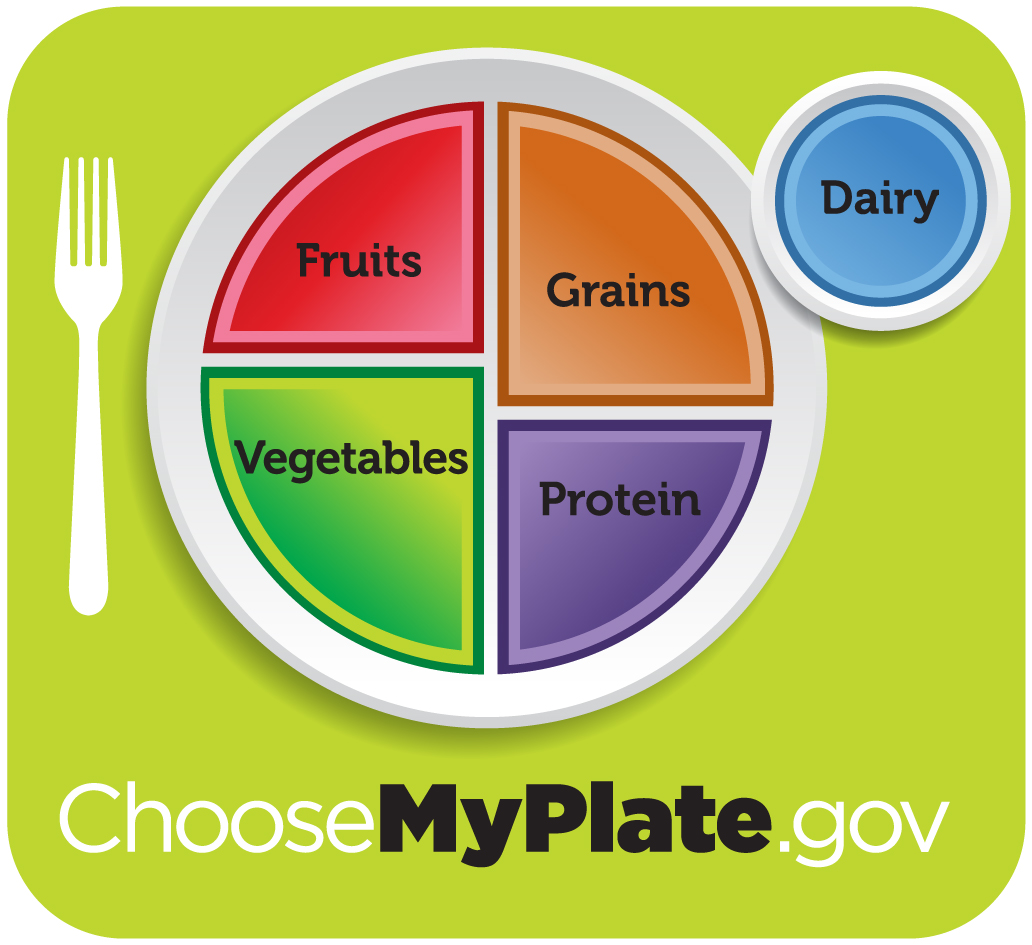

Figure 34.14図 34.14
For humans, a balanced diet includes fruits, vegetables, grains, and protein. (credit: USDA)
ヒトのバランスの取れた食事には、果物、野菜、穀物、タンパク質が含まれる。(クレジット:USDA)
Organic Precursors有機前駆体
The organic molecules required for building cellular material and tissues must come from food. Carbohydrates or sugars are the primary source of organic carbons in the animal body. During digestion, digestible carbohydrates are ultimately broken down into glucose and used to provide energy through metabolic pathways. Complex carbohydrates, including polysaccharides, can be broken down into glucose through biochemical modification; however, humans do not produce the enzyme cellulase and lack the ability to derive glucose from the polysaccharide cellulose. In humans, these molecules provide the fiber required for moving waste through the large intestine and a healthy colon. The intestinal flora in the human gut are able to extract some nutrition from these plant fibers. The excess sugars in the body are converted into glycogen and stored in the liver and muscles for later use. Glycogen stores are used to fuel prolonged exertions, such as long-distance running, and to provide energy during food shortage. Excess glycogen can be converted to fats, which are stored in the lower layer of the skin of mammals for insulation and energy storage. Excess digestible carbohydrates are stored by mammals in order to survive famine and aid in mobility.
英語のヒント
細胞の材料や組織をつくるのに必要な有機分子は、食物から得なければならない。炭水化物、すなわち糖は、動物体内の有機炭素の主な供給源である。消化可能な炭水化物は、消化の過程で最終的にグルコースに分解され、代謝経路を通じてエネルギーを供給する。多糖を含む複雑な炭水化物は、生化学的な変化によってグルコースへ分解できる。ただしヒトはセルラーゼという酵素をつくらず、多糖のセルロースからグルコースを得る能力を持たない。ヒトでは、これらの分子は、大腸内で不要物を移動させ、結腸を健康に保つために必要な繊維を供給する。ヒトの腸内細菌叢は、こうした植物繊維から一部の栄養を取り出せる。体内の余分な糖はグリコーゲンに変えられ、後で使うために肝臓や筋に貯蔵される。グリコーゲンの蓄えは、長距離走のような長時間の運動や、食物不足時のエネルギー源になる。余分なグリコーゲンは脂肪に変えられ、哺乳類の皮膚の下層に、断熱とエネルギー貯蔵のために蓄えられる。哺乳類は、飢餓を生き延び、移動を支えるため、消化可能な余分の炭水化物を貯蔵する。
Another important requirement is that of nitrogen. Protein catabolism provides a source of organic nitrogen. Amino acids are the building blocks of proteins and protein breakdown provides amino acids that are used for cellular function. The carbon and nitrogen derived from these become the building block for nucleotides, nucleic acids, proteins, cells, and tissues. Excess nitrogen must be excreted as it is toxic. Fats add flavor to food and promote a sense of satiety or fullness. Fatty foods are also significant sources of energy because one gram of fat contains nine calories. Fats are required in the diet to aid the absorption of fat-soluble vitamins and the production of fat-soluble hormones.
英語のヒント
もう一つ重要なのは窒素である。タンパク質の異化は、有機窒素の供給源となる。アミノ酸はタンパク質の構成単位で、タンパク質の分解によって、細胞の機能に使われるアミノ酸が供給される。そこから得られる炭素と窒素は、ヌクレオチド、核酸、タンパク質、細胞、組織の材料になる。余分な窒素は有毒なので、排出しなければならない。脂肪は食物に風味を加え、満腹感を促す。脂肪を多く含む食物は重要なエネルギー源でもあり、脂肪1gには9カロリーが含まれる。脂溶性ビタミンの吸収と脂溶性ホルモンの産生を助けるため、食事に脂肪が必要である。