第34章動物の栄養と消化器系
Vertebrate Digestive Systems脊椎動物の消化系
Vertebrates have evolved more complex digestive systems to adapt to their dietary needs. Some animals have a single stomach, while others have multi-chambered stomachs. Birds have developed a digestive system adapted to eating unmasticated food.
脊椎動物は、食性上の要求に適応するため、より複雑な消化系を進化させてきた。一つの胃を持つ動物もいれば、複数の部屋に分かれた胃を持つ動物もいる。鳥類は、咀嚼していない食物を食べることに適応した消化系を発達させている。
Monogastric: Single-chambered Stomach単胃:一室からなる胃
As the word monogastric suggests, this type of digestive system consists of one (“mono”) stomach chamber (“gastric”). Humans and many animals have a monogastric digestive system as illustrated in Figure 34.6ab. The process of digestion begins with the mouth and the intake of food. The teeth play an important role in masticating (chewing) or physically breaking down food into smaller particles. The enzymes present in saliva also begin to chemically break down food. The esophagus is a long tube that connects the mouth to the stomach. Using peristalsis, or wave-like smooth muscle contractions, the muscles of the esophagus push the food towards the stomach. In order to speed up the actions of enzymes in the stomach, the stomach is an extremely acidic environment, with a pH between 1.5 and 2.5. The gastric juices, which include enzymes in the stomach, act on the food particles and continue the process of digestion. Further breakdown of food takes place in the small intestine where enzymes produced by the liver, the small intestine, and the pancreas continue the process of digestion. The nutrients are absorbed into the bloodstream across the epithelial cells lining the walls of the small intestines. The waste material travels on to the large intestine where water is absorbed and the drier waste material is compacted into feces; it is stored until it is excreted through the rectum.
英語のヒント
monogastricという語が示すように、この種類の消化系の胃は一つ(mono)の部屋(gastric)からなる。ヒトをはじめ、多くの動物が図34.6abに示す単胃型の消化系を持つ。消化は、口から食物を取り込むところから始まる。歯は、食物を咀嚼して、すなわちかんで、物理的に小さな粒子へ分けるうえで重要な役割を果たす。唾液に含まれる酵素も食物の化学的分解を始める。食道は口と胃をつなぐ長い管である。食道の筋は、蠕動、すなわち波状の平滑筋収縮によって食物を胃へ押し進める。胃内の酵素の作用を速めるため、胃内はpH1.5〜2.5という非常に強い酸性環境になっている。胃の酵素を含む胃液が食物粒子に作用し、消化を続ける。小腸では、肝臓、小腸、膵臓が産生する酵素によって消化が続き、食物がさらに分解される。栄養素は、小腸の壁を裏打ちする上皮細胞を通って血流へ吸収される。不要物は大腸へ進み、水分が吸収され、乾いた不要物が固められて糞になる。糞は直腸を通って排出されるまで貯蔵される。
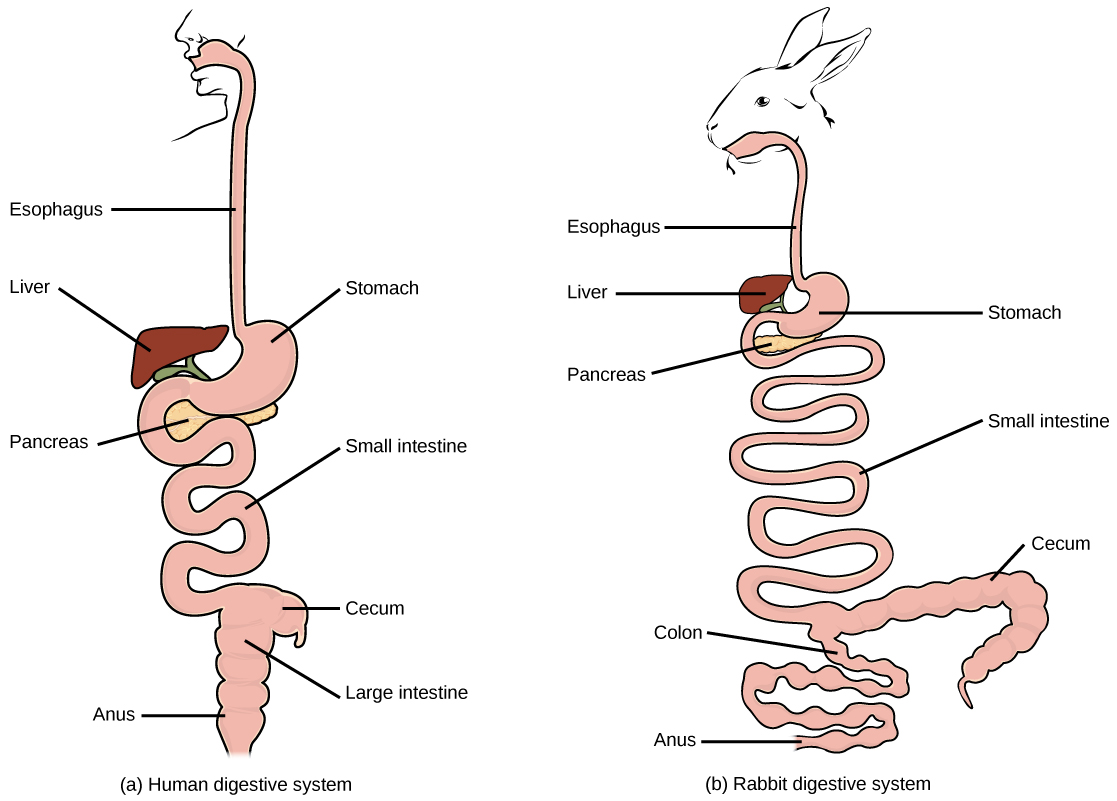
Figure 34.6図 34.6
(a) Humans and herbivores, such as the (b) rabbit, have a monogastric digestive system. However, in the rabbit the small intestine and cecum are enlarged to allow more time to digest plant material. The enlarged organ provides more surface area for absorption of nutrients. Rabbits digest their food twice: the first time food passes through the digestive system, it collects in the cecum, and then it passes as soft feces called cecotrophes. The rabbit re-ingests these cecotrophes to further digest them.
(a)ヒトや、(b)ウサギのような草食動物は、単胃型の消化系を持つ。ただしウサギでは、植物質を消化する時間を長く取れるよう、小腸と盲腸が大きくなっている。器官が大きいと、栄養吸収のための表面積も大きくなる。ウサギは食物を二度消化する。最初に食物が消化系を通るときは盲腸に集まり、その後、盲腸便という柔らかい糞として出る。ウサギはこの盲腸便を再び食べ、さらに消化する。
Avian鳥類
Birds face special challenges when it comes to obtaining nutrition from food. They do not have teeth and so their digestive system, shown in Figure 34.7, must be able to process un-masticated food. Birds have evolved a variety of beak types that reflect the vast variety in their diet, ranging from seeds and insects to fruits and nuts. Because most birds fly, their metabolic rates are high in order to efficiently process food and keep their body weight low. The stomach of birds has two chambers: the proventriculus, where gastric juices are produced to digest the food before it enters the stomach, and the gizzard, where the food is stored, soaked, and mechanically ground. The undigested material forms food pellets that are sometimes regurgitated. Most of the chemical digestion and absorption happens in the intestine and the waste is excreted through the cloaca.
英語のヒント
鳥類は食物から栄養を得る際に、特有の課題に直面する。歯がないため、図34.7の消化系は、咀嚼されていない食物を処理できなければならない。鳥類は、種子や昆虫から果実や堅果にまで及ぶ食性の多様さを反映した、さまざまな形のくちばしを進化させてきた。大半の鳥は飛ぶため、食物を効率よく処理し、体重を軽く保つように代謝率が高い。鳥類の胃は二室からなる。腺胃では、食物が胃へ入る前に消化する胃液がつくられる。砂嚢では食物が貯蔵され、水分を含ませられ、機械的にすりつぶされる。未消化物はペリットという塊になり、ときには吐き戻される。化学的消化と吸収の大半は腸で行われ、不要物は総排出腔から排出される。
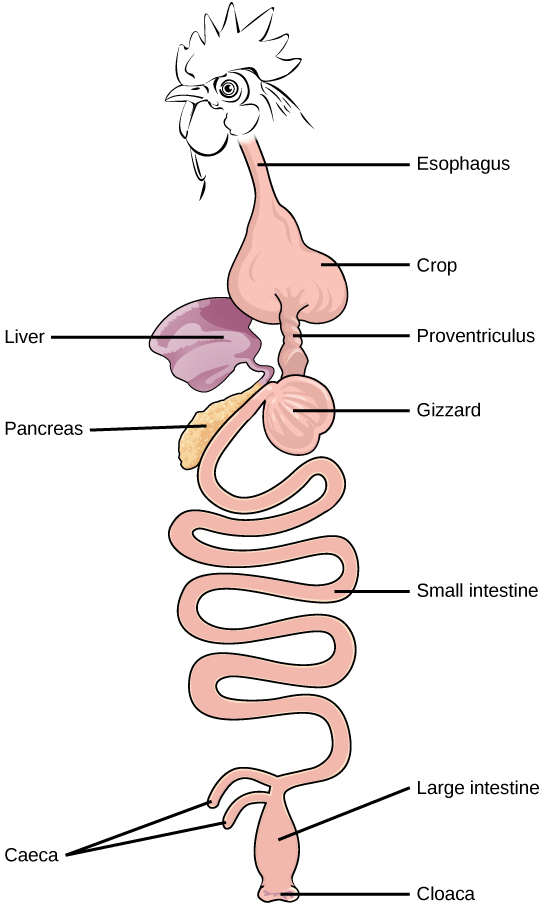


Figure 34.7図 34.7
The avian esophagus has a pouch, called a crop, which stores food. Food passes from the crop to the first of two stomachs, called the proventriculus, which contains digestive juices that break down food. From the proventriculus, the food enters the second stomach, called the gizzard, which grinds food. Some birds swallow stones or grit, which are stored in the gizzard, to aid the grinding process. Birds do not have separate openings to excrete urine and feces. Instead, uric acid from the kidneys is secreted into the large intestine and combined with waste from the digestive process. This waste is excreted through an opening called the cloaca.
鳥類の食道には、食物を貯蔵する嗉嚢という袋がある。食物は嗉嚢から、二つの胃の最初の部分である腺胃へ移る。腺胃には食物を分解する消化液がある。次に食物は二つ目の胃である砂嚢に入り、そこで粉砕される。鳥によっては石や砂粒を飲み込み、砂嚢に蓄えて粉砕を助ける。鳥類には尿と糞を別々に排出する開口部がない。代わりに、腎臓からの尿酸が大腸へ分泌され、消化過程の不要物と混ざる。この不要物は、総排出腔と呼ばれる開口部から排出される。